A fence made of small, sharp obstacles
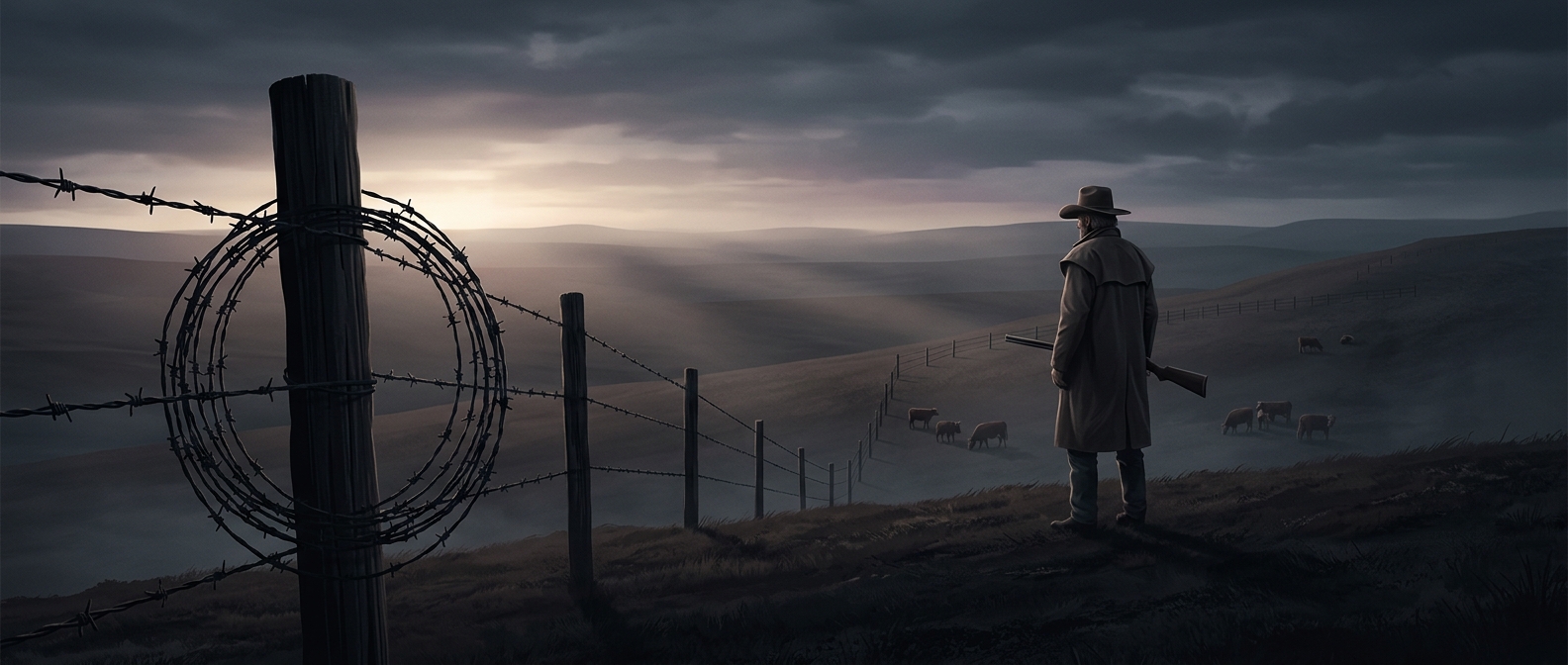
Before widespread barbed wire, enclosing a large pasture on the treeless plains was difficult. Ordinary rails required abundant timber; smooth wire was easier to stretch but could be pushed through or leaned against by cattle. Barbed wire added short points at intervals along the strands. When an animal pressed against it, the barbs made the boundary painful to cross, so a relatively light fence could contain livestock without a solid wall.
That mattered because wire could be shipped in coils and strung across open land with posts set along the route. It made fencing broad stretches of prairie far more practical than building with lumber, even where trees were scarce.
Boundaries changed the economics of the range
The open range depended on cattle moving across unfenced grassland, often over huge distances and across land that was not divided into neat, secure pastures. Barbed wire let farmers and ranchers mark property lines, protect crops, and keep animals within chosen grazing areas. Land that had functioned as shared or loosely controlled grazing space became divided by physical barriers.
The change brought sharper competition over access to water and grass. A fence could block a familiar route or close off a water source, and disputes sometimes led to wire cutting and other conflict. For cattle owners, fencing also made it easier to keep herds from wandering and to manage breeding and grazing—but it reduced the freedom to move animals across the plains as before.
The cowboy’s work changed with the landscape
Fencing did not instantly end ranching or eliminate cowboys. It changed what ranch work required: less reliance on long, open-range drives and more attention to fenced pastures, property boundaries, and livestock management. The decisive shift was not that cattle disappeared from the plains, but that access to land and grazing could now be controlled strand by strand. A thin wire barrier could redraw a vast landscape without looking like one.