How a Hidden Map Changes the Way Players Move
A fog-of-war system divides the map into places the player has never seen, places they have explored, and places they can see right now. In many strategy games, a unit reveals nearby ground as it moves. That vision may be limited by distance, terrain, or obstacles, so a hill, forest, or building can hide what lies beyond it. When a unit leaves, the ground may remain on the map while enemy positions disappear.
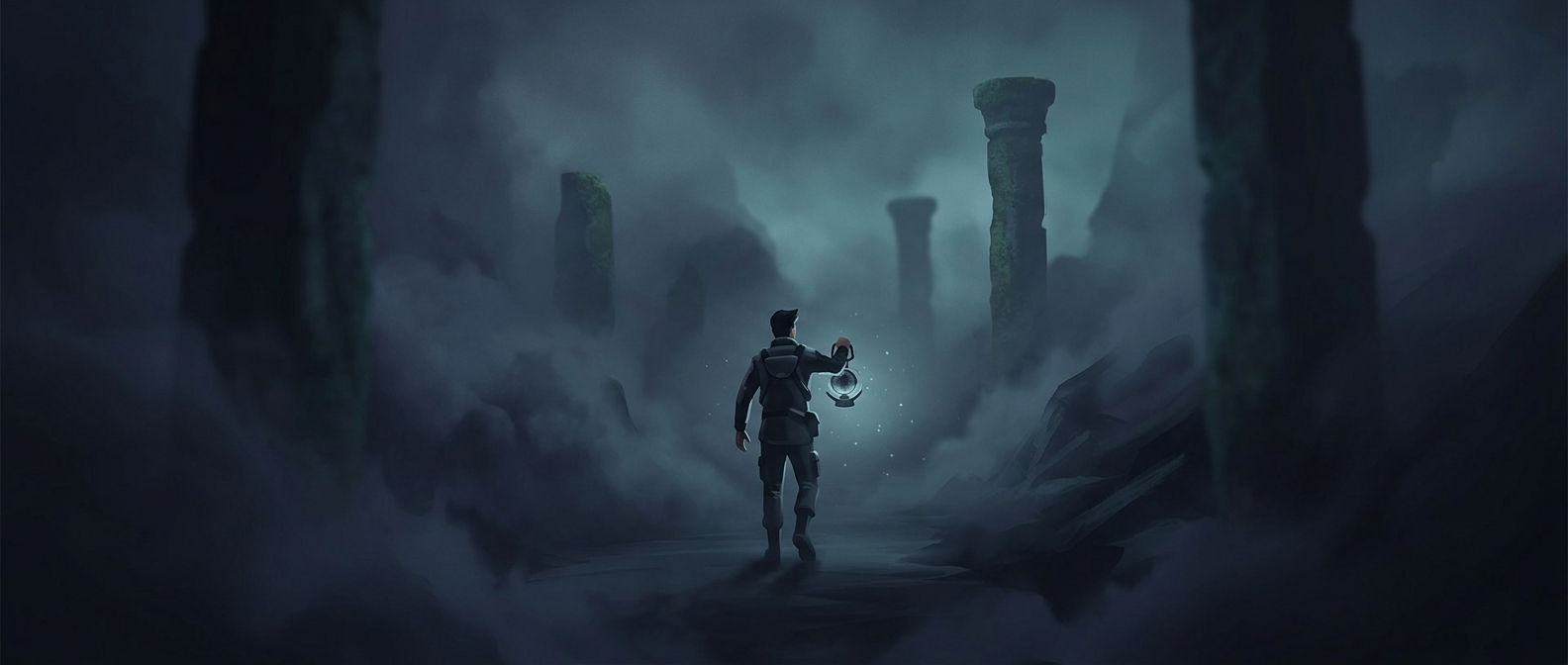
That distinction turns movement into a choice under uncertainty. A route that looks open on an old map may have changed; a narrow passage may conceal an opponent just outside the visible area. Sending one unit ahead can reveal danger, but it also risks exposing or losing that scout. The player is not just choosing where to go, but how much uncertainty to accept.
Why Designers Use the Fog
Without limits on vision, players could inspect the whole battlefield and respond with near-perfect information. Restricting what they can see makes scouting, positioning, and timing matter. It also gives opponents room to surprise one another without requiring the game to hide every detail of its rules.
The system can make a familiar map feel different from one moment to the next: a previously safe route becomes threatening when the enemy’s location is unknown. The danger comes not only from what the map hides, but from the gap between what the player remembers and what is happening there now.