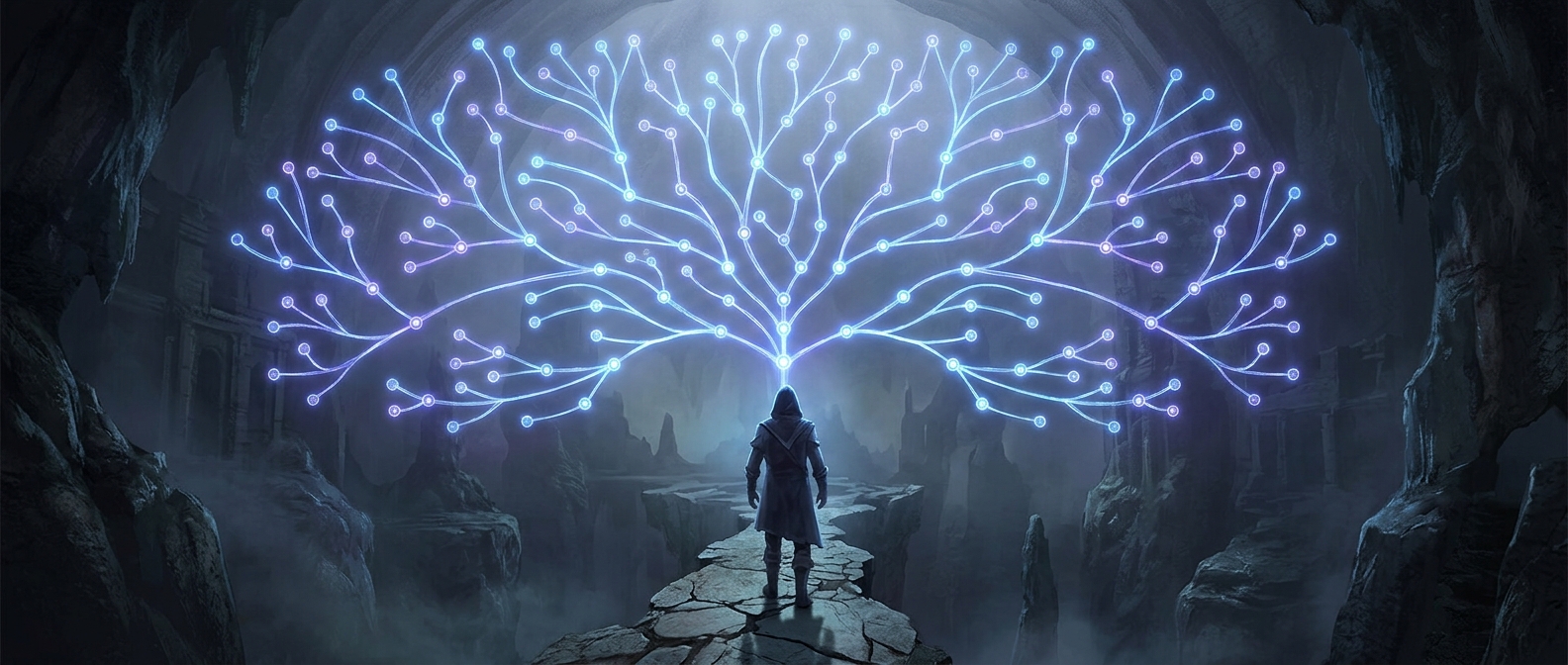
Why a skill tree can narrow to one route
A skill tree looks like a map of possibilities, but its nodes are parts of a system that can be compared. One talent might add a little damage to every attack; another might improve a move a character uses only occasionally. Once players know how often each effect applies, they can estimate which choice produces more value over a fight.
The comparison gets sharper when bonuses reinforce one another. A talent that increases critical hits may be especially strong beside one that rewards critical hits with extra damage. If a few such combinations outperform the alternatives, a tree with many branches can funnel players toward the same cluster of upgrades. Prerequisites and limited points narrow the route further: taking one useful node may require spending points on less exciting ones along the way.
How the community finds the route
Players test builds, compare results, and share what they learn. Some use spreadsheets or simulations to account for damage, cooldowns, and other interacting effects; others discover strong combinations through repeated play. As results accumulate, community guides can turn a sprawling tree into a recommended order of upgrades—a checklist that is easy to follow even if it was hard to derive.
That recommendation is usually optimal for particular assumptions: a certain character, equipment, play style, or endgame challenge. A path that wins on a damage chart may be less useful for someone who values survivability or enjoys a different rhythm of play. Still, when one setup clearly performs best under the goals most players share, the apparent freedom of the tree can shrink. The meaningful choice may be less about which node to take and more about whether to follow the proven route or accept a tradeoff for a build that feels like your own.