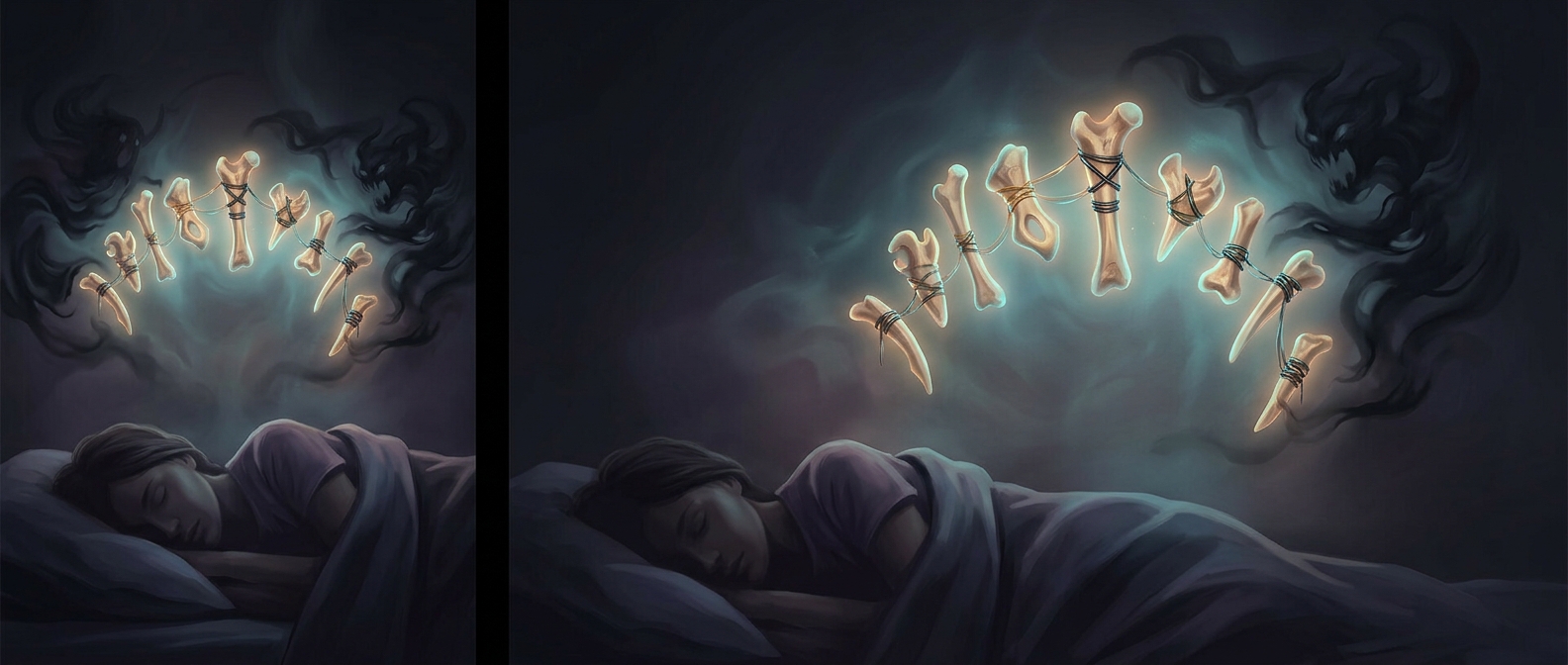
A small knot gave an invisible threat a shape
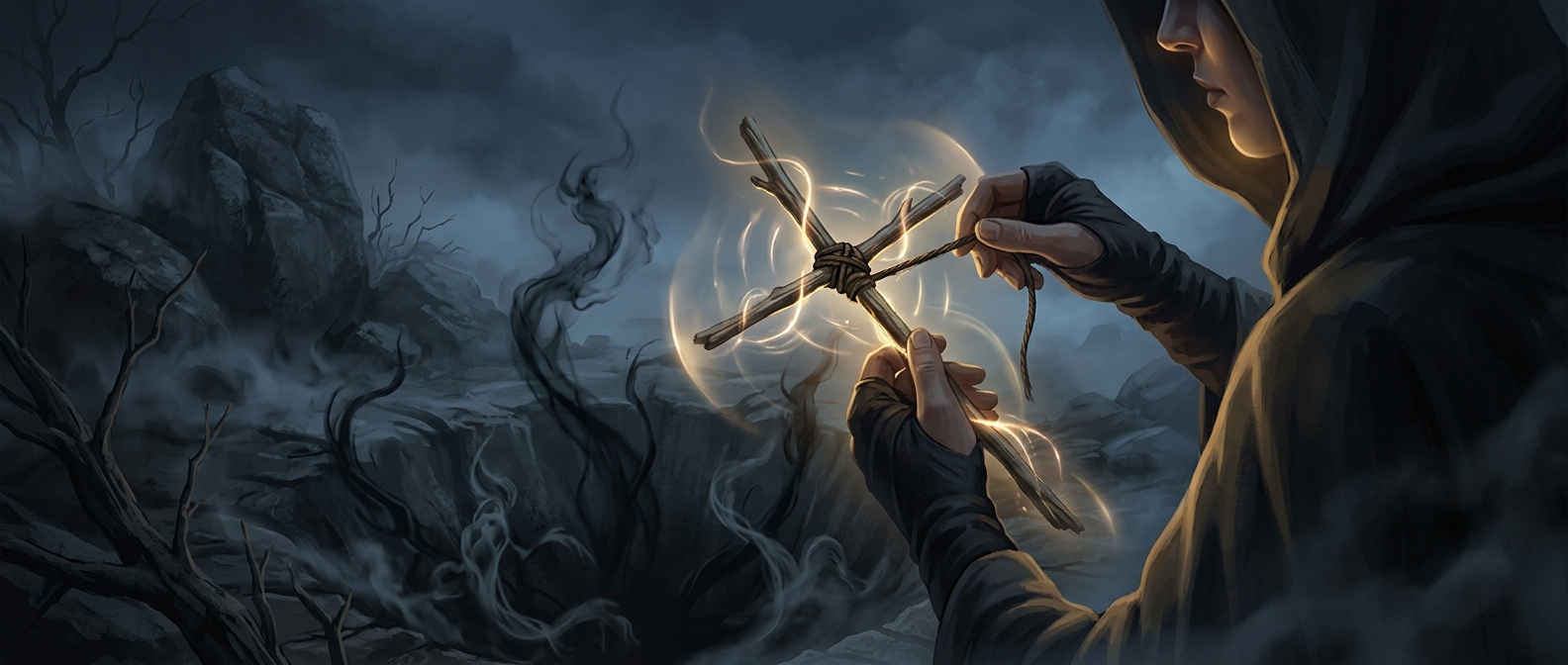
In some folk traditions, harm was imagined not only as something a person or animal could cause, but as a force that might wander or linger. Tying two twigs together made that unseen danger easier to picture: the crossed sticks stood for something being caught, and the twine supplied a literal act of restraint.
This is an example of symbolic binding—using a physical object to represent a hoped-for change in the unseen world. The gesture did not require a large or elaborate object. A few sticks and a knot turned an abstract fear into something that could be handled, placed, or set aside.
The knot made the action visible
The force of the practice lay in the correspondence between action and intention. As the cord tightened around the twigs, the person performing the act could see a threat being held in place. That did not establish that harmful forces were physically trapped; it gave the belief a concrete ritual form, one that could help people express a wish for protection or control.
The detail worth remembering is how little the ritual needed: a crossing and a knot transformed an ordinary scrap of twine into a visible sign of containment.