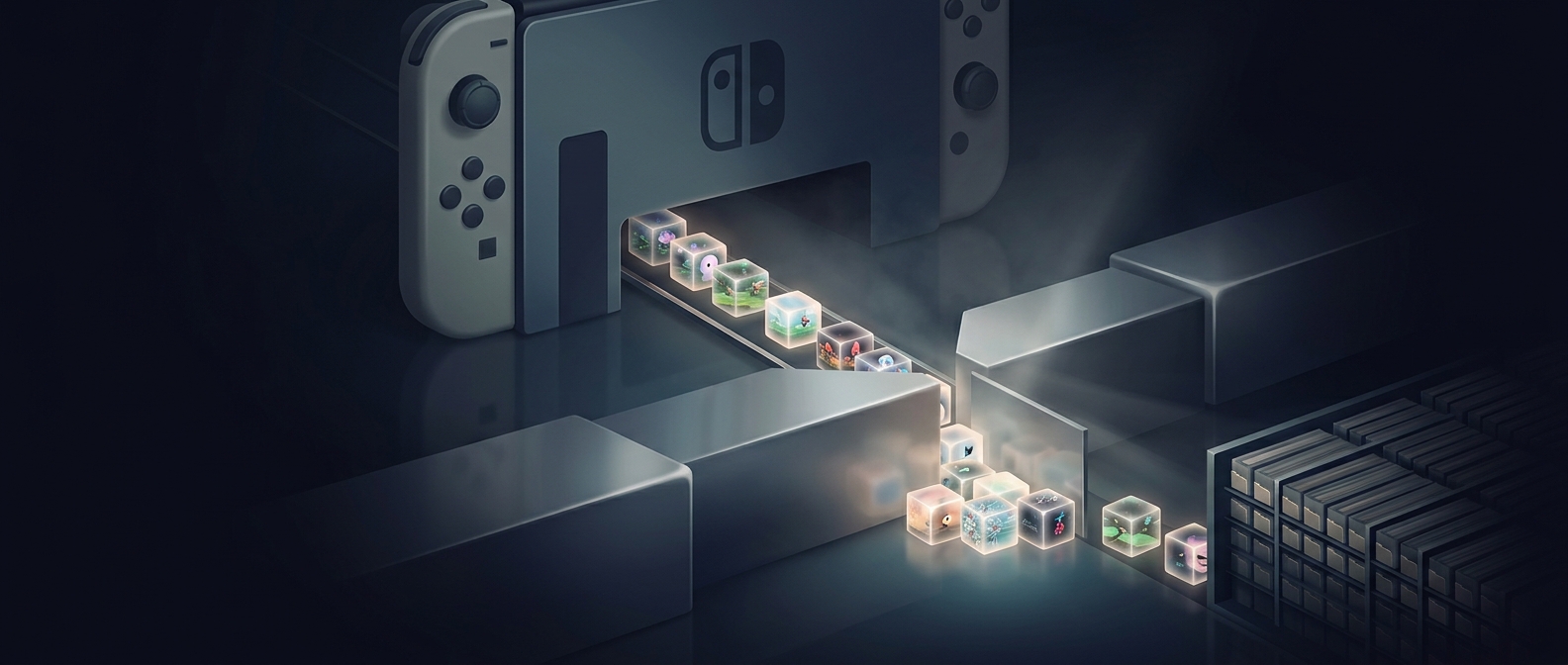
Why a Disc Can Lead to a Download
A physical game disc can serve two different jobs: it can carry the game’s files, and it can prove that the player owns a copy. Those jobs do not always overlap completely. A console may install data from the disc, then check that the disc is present when the game starts—even if much of the playable content must be fetched online.
That arrangement reflects how games are finished and shipped. Disc production has to begin before every last change can be made. Developers may still be fixing bugs, tuning performance, or preparing content when the version sent to the factory is locked. A later update can deliver those changes without delaying the physical release.
What the Download Adds
Large games can also outgrow the space available on a particular disc, especially when they include high-resolution art, sound, and many language options. In some cases, publishers put only part of the game on the disc and make the rest a download. In others, the disc contains a complete version, but a substantial update is strongly recommended—or required for online features.
The distinction matters: an update is not the same as a game that cannot be installed from the disc at all. Checking the packaging or reliable product details can help buyers tell which situation applies, though requirements may differ by edition or platform.
The Tradeoff for Players
A disc can still be useful for lending, resale, or keeping a copy on a shelf. But those benefits do not guarantee that the disc alone will preserve the full, current experience. If essential files were never pressed onto it, installing the game later may depend on the publisher’s servers and an internet connection. The practical question is not just whether a game comes on disc, but how much of the game the disc actually carries.