Why a screen bends toward its viewer
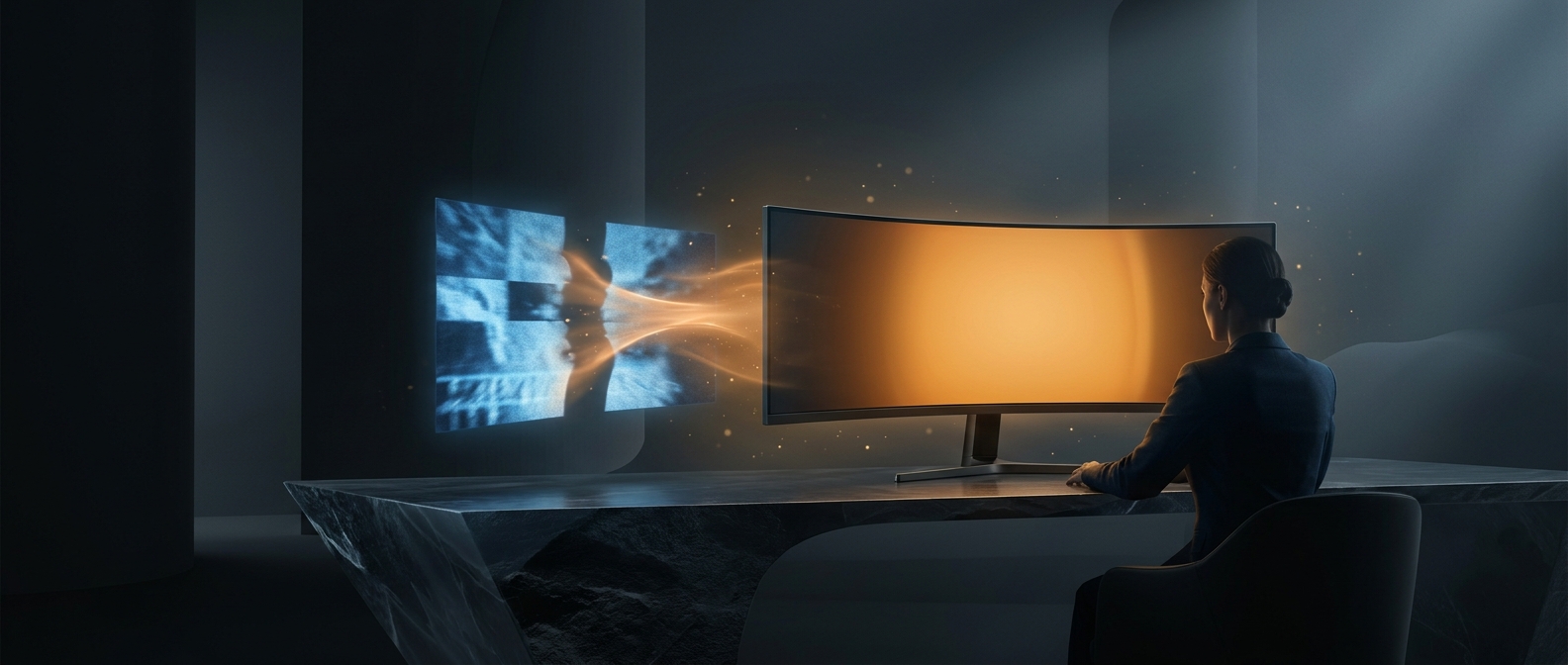
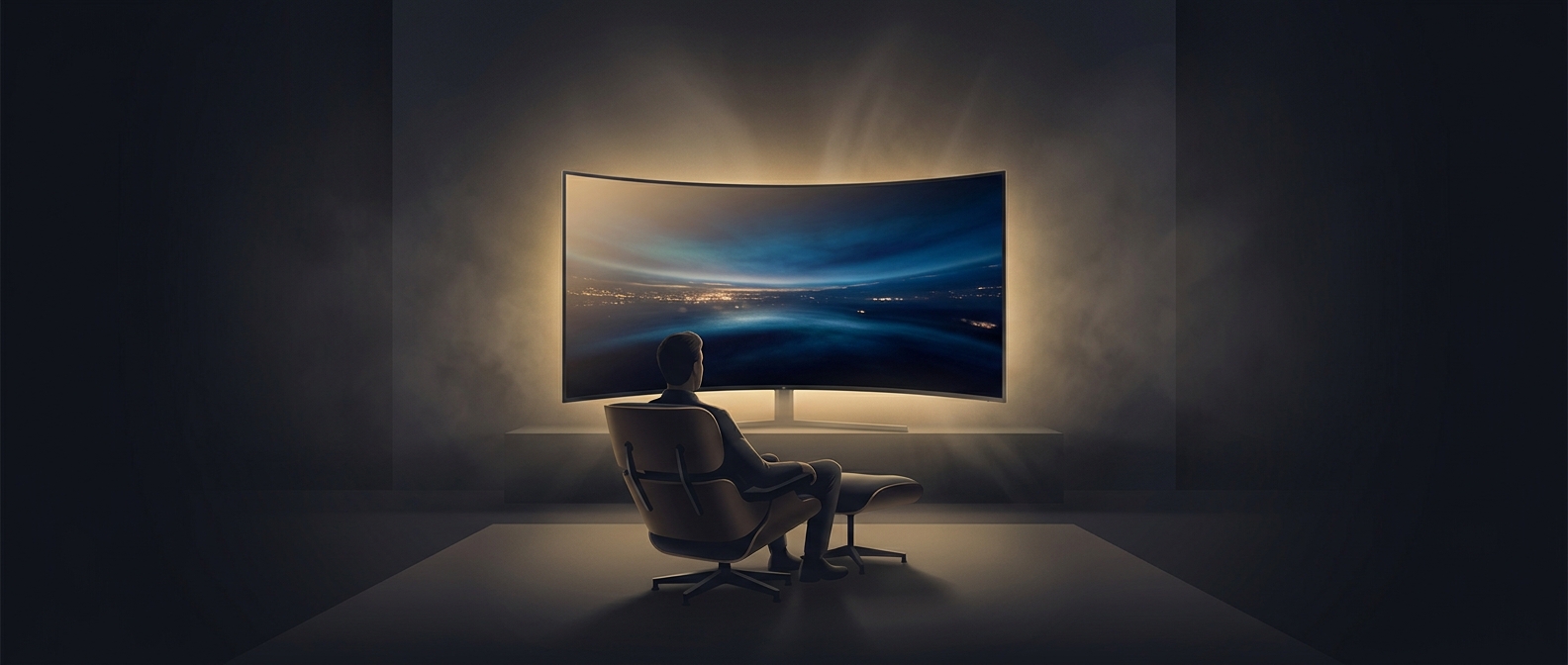
A flat, wide screen sits at different distances from a person: its center is closest, while its edges stretch farther away. A curve can bring those edges slightly nearer and angle them toward someone seated in front. The intended effect is a more enveloping view, with less of the picture at the far edges viewed obliquely.
That geometry matters most when the screen fills a large part of one person’s field of view. At a typical living-room distance, the benefit can be subtle; the curve does not add picture detail or make the display larger. It changes how the screen is oriented around a particular seat.
The tradeoff is built into the shape
A curved screen has a preferred viewing position. From that spot, its left and right sides turn toward the viewer. Move to the side, though, and one side is seen at a much sharper angle than the other. Straight lines and shapes can look skewed, and the image may feel less even across the screen.
The bend also changes how the surface reflects its surroundings. Depending on where lamps or windows are, reflections can be redirected into a viewer’s line of sight rather than disappearing; moving to another seat changes that geometry again. The curve is therefore less a universal picture upgrade than a seating-dependent design choice: it makes most sense when one person sits fairly close and centered, not when a roomful of people watch from different places.