How expansion changes the distance between galaxies
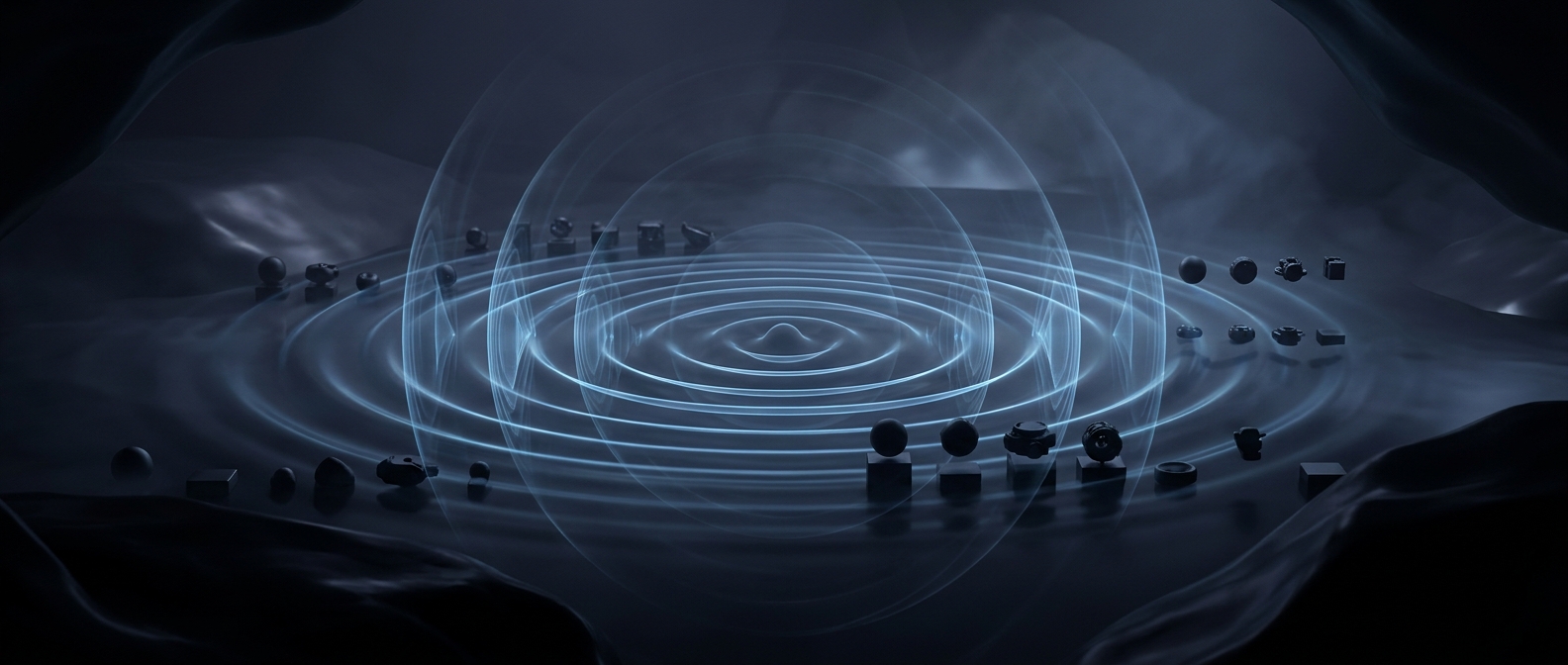
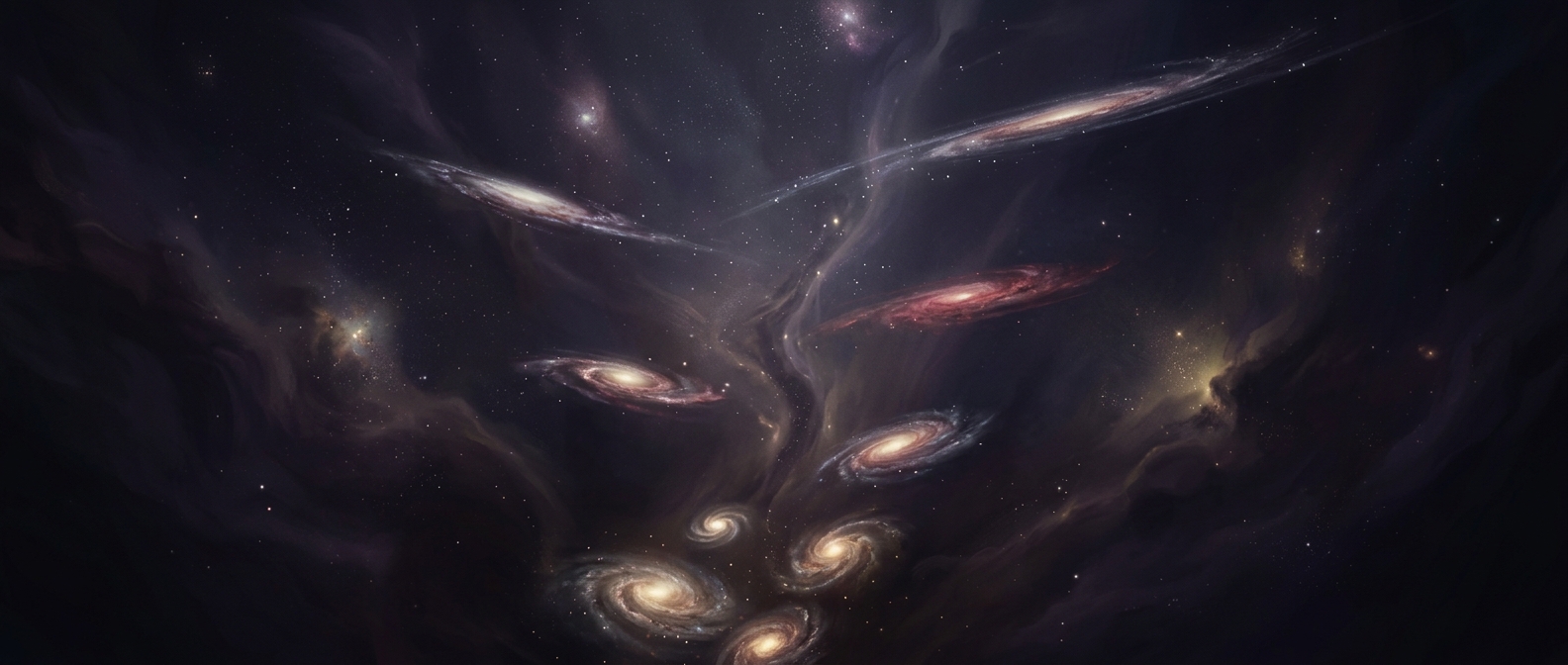
On the largest scales, the universe behaves less like empty space between moving objects and more like a changing grid. As the universe expands, the distances represented by that grid grow. A galaxy can therefore become farther from us without traveling outward through space in the manner of a ship crossing a sea.
This expansion is not a force that pulls every object apart. Gravity holds galaxies, solar systems, and atoms together; those bound structures do not simply swell with the universe. The effect matters chiefly across vast stretches of space, where gravity has not bound neighboring galaxies into one structure.
Why distant light arrives redder
Light has a wavelength—the distance between successive wave crests. As light crosses expanding space, its wavelength grows along with the universe. Because longer visible wavelengths lie toward the red end of the spectrum, astronomers call this change cosmological redshift.
The shift gives astronomers a way to study expansion: by measuring how much a galaxy’s light has stretched, they can infer how the universe’s scale changed while that light was traveling. The farther away the source, generally the longer the light has been on its way, so its signal can carry a larger accumulated stretch.
That means a telescope does not show a very distant galaxy exactly as it is now. It shows light that began its journey earlier, altered by the expansion along the way. The redshift is both a measure of cosmic change and a record of the time the light spent crossing the universe.