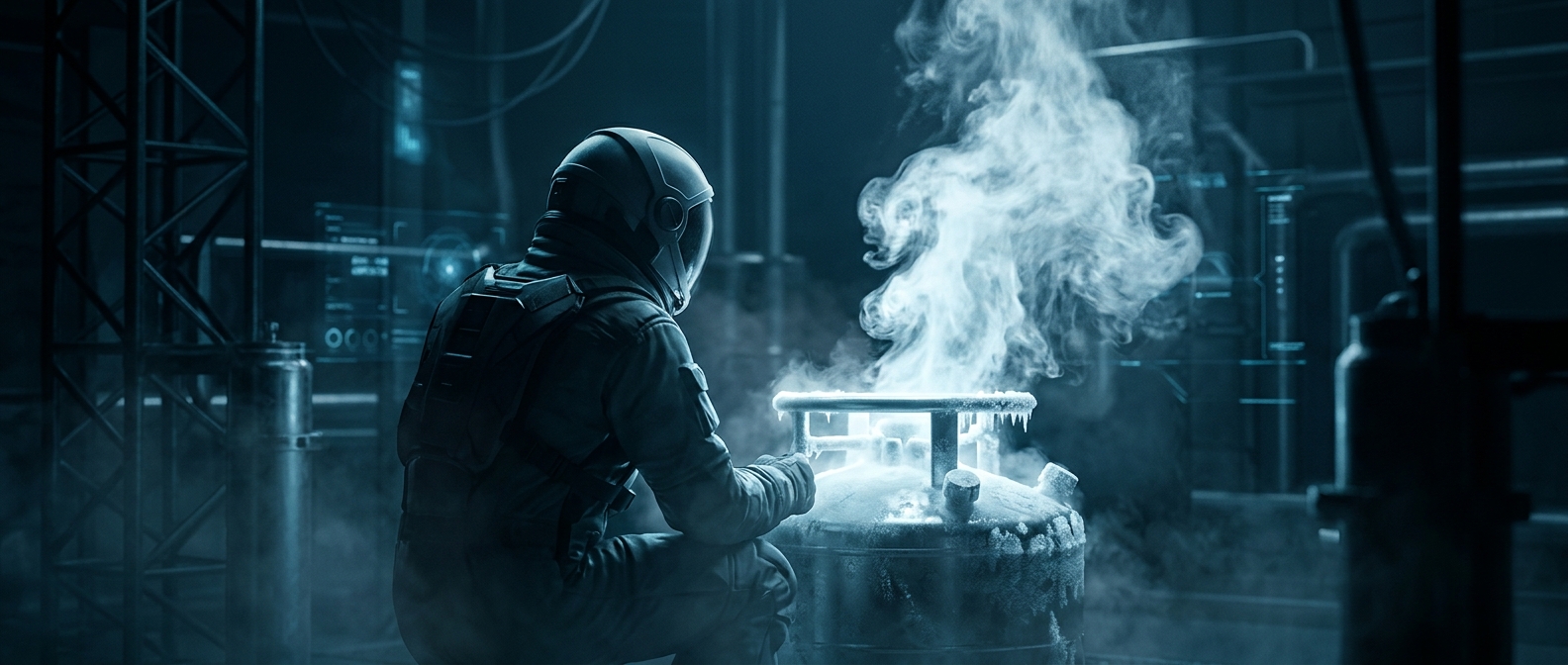
The smell arrives with the spacesuit
Outer space itself does not smell like anything an astronaut can sniff: it is nearly a vacuum, with too few molecules to carry an odor to the nose. The familiar descriptions come from a more practical moment—after a spacewalk, when astronauts return to the airlock and notice a smell on their suits, gloves, or equipment.
Astronauts have compared it to hot metal, welding fumes, or something burnt, sometimes with a sharp, ozone-like edge. The reports vary, but the common impression is less like a natural fragrance than the residue of an intense industrial process.
Why a walk outside could leave that trace
During a spacewalk, exposed surfaces encounter conditions very different from those inside a spacecraft: ultraviolet light, charged particles, and highly reactive oxygen atoms in low Earth orbit. Those encounters can alter materials at the surface. After the astronaut and equipment come back inside, warmed or released compounds can reach the air—and, finally, a nose.
That explanation is plausible rather than a complete chemical recipe. The odor could reflect reactions on different materials, along with substances carried back from the spacecraft or suit; astronauts’ descriptions alone cannot identify a single source. What they do establish is the striking contrast: the vacuum is odorless to a person, yet the gear that has passed through it can bring back a scent reminiscent of hot machinery.
So the most accurate answer is not that space smells like welding. It is that astronauts have noticed a burnt, metallic smell on returning from space, when the outside environment’s effects become detectable inside.