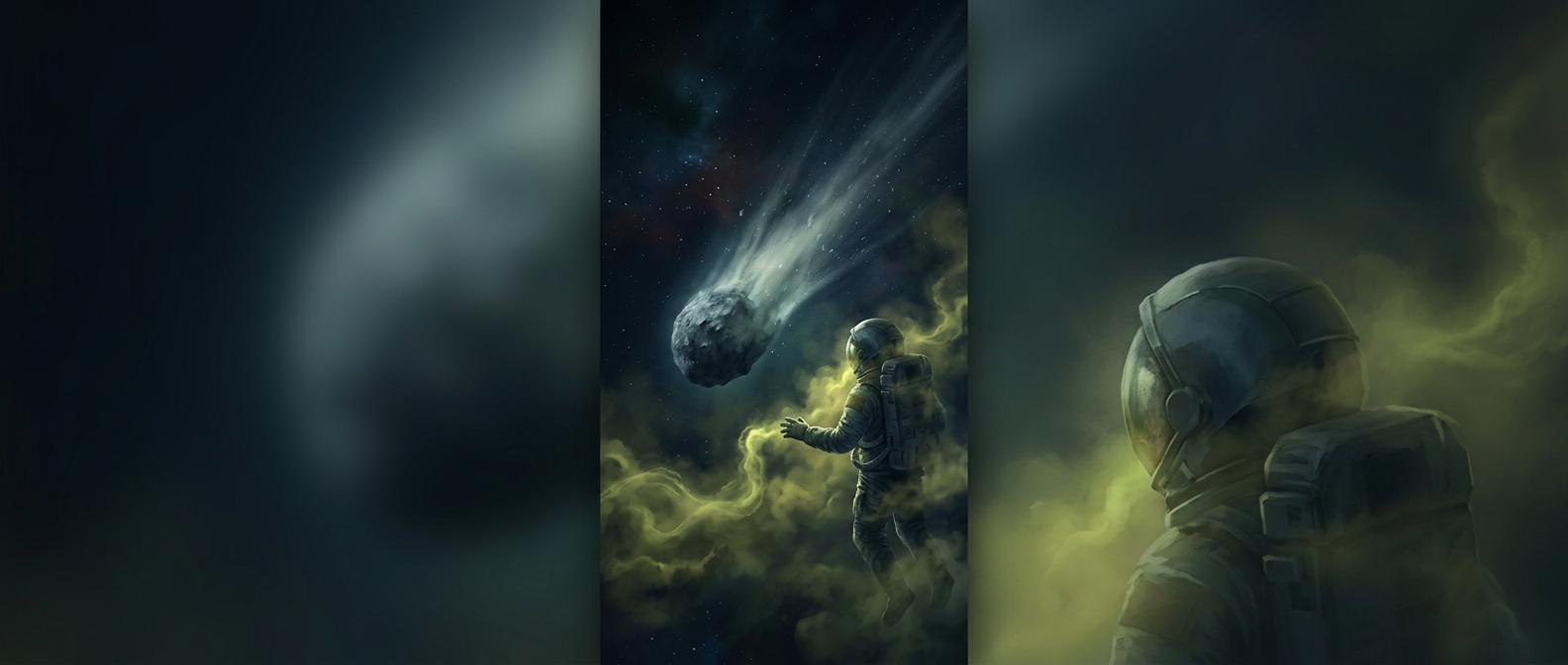
Sunlight turns a comet’s surface into a gas cloud
A comet’s nucleus is a small, cold body containing frozen material mixed with dust. As it approaches the Sun, its surface warms. Some ices change directly from solid to gas, carrying dust away and building a hazy cloud around the nucleus called a coma. That cloud is where scientists can study the comet’s released molecules.
Light reveals the chemical ingredients
Researchers identify gases by examining how they absorb or emit light. Each molecule interacts with particular wavelengths, leaving a pattern scientists can recognize—rather like a chemical fingerprint. Those measurements show which compounds are present without anyone collecting a breath of comet air.
Hydrogen sulfide and ammonia have familiar, pungent odors on Earth, so their detection gives the comet an imagined smell. But odor depends on molecules reaching a nose, and space is too sparse to carry them that way. The surprising detail is that a comet can broadcast the chemistry of a stink across its coma while remaining impossible to smell directly.