Why liquid nitrogen boils in a warm room
Boiling begins when a liquid’s vapor pressure—the pressure exerted by molecules escaping into gas—matches the pressure around it. At ordinary atmospheric pressure, nitrogen reaches that point at about –320°F. In a room, the surrounding air, container, and anything touching the liquid are all much warmer, so energy continually flows into the nitrogen.
That energy does more than raise its temperature: much of it goes into changing liquid nitrogen into gas. This energy demand is called the latent heat of vaporization. As heat arrives at the liquid’s surface, nitrogen molecules escape, and bubbles rise through the liquid.
The cold liquid cools what touches it
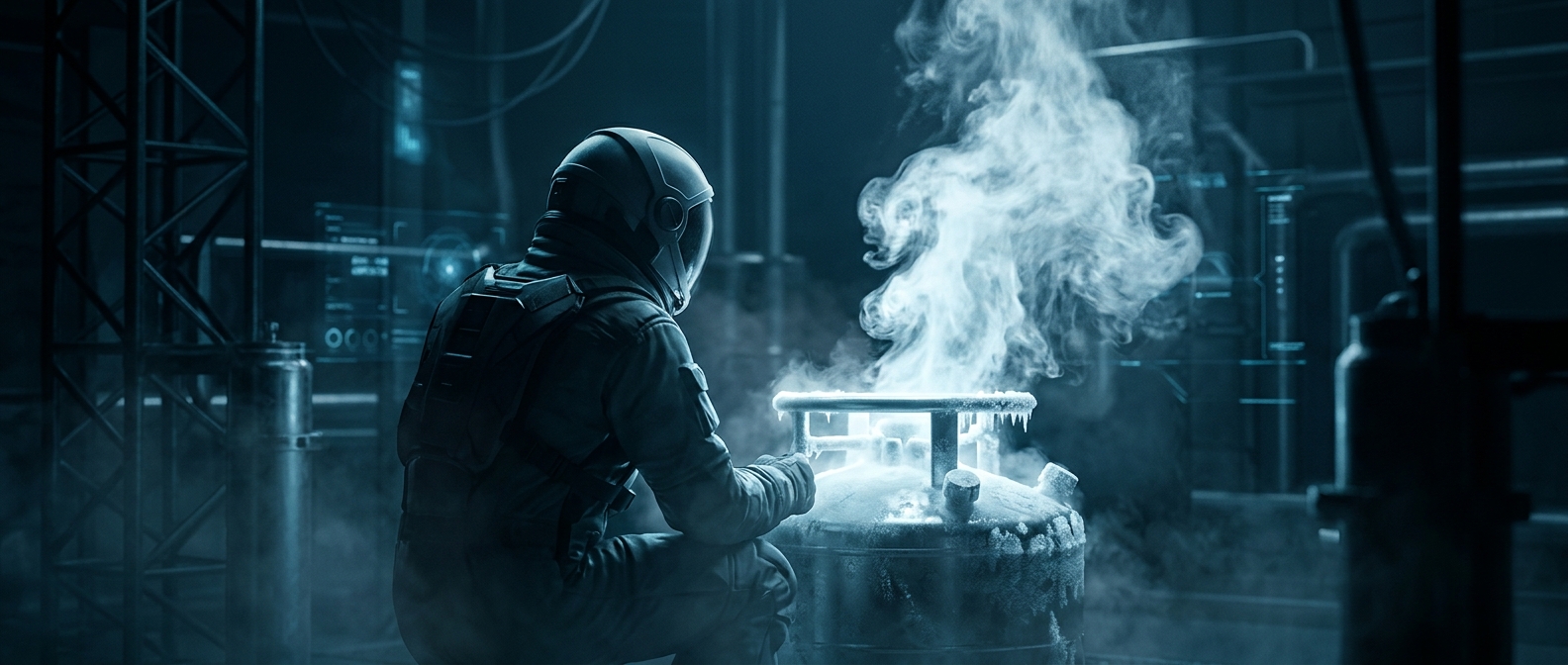
The same energy transfer that drives the boiling can cool nearby objects. A metal container, for example, gives up heat to the nitrogen and becomes cold; moisture from the air can then freeze on its surface. The nitrogen gas rising away carries energy with it, while more heat enters from the room and sustains the process.
The white cloud often seen above liquid nitrogen is not the nitrogen gas itself, which is invisible. It is mostly tiny water droplets formed when the escaping cold gas chills moist air. A visible plume can therefore make the effect look like smoke, even though it is the surrounding air’s moisture that is condensing.
As long as the liquid is exposed to warmer surroundings, it keeps absorbing heat and boiling away. The vigorous bubbling is a sign that energy is entering the nitrogen—not that the room is being chilled to the same extreme temperature.