How a spark can make ozone
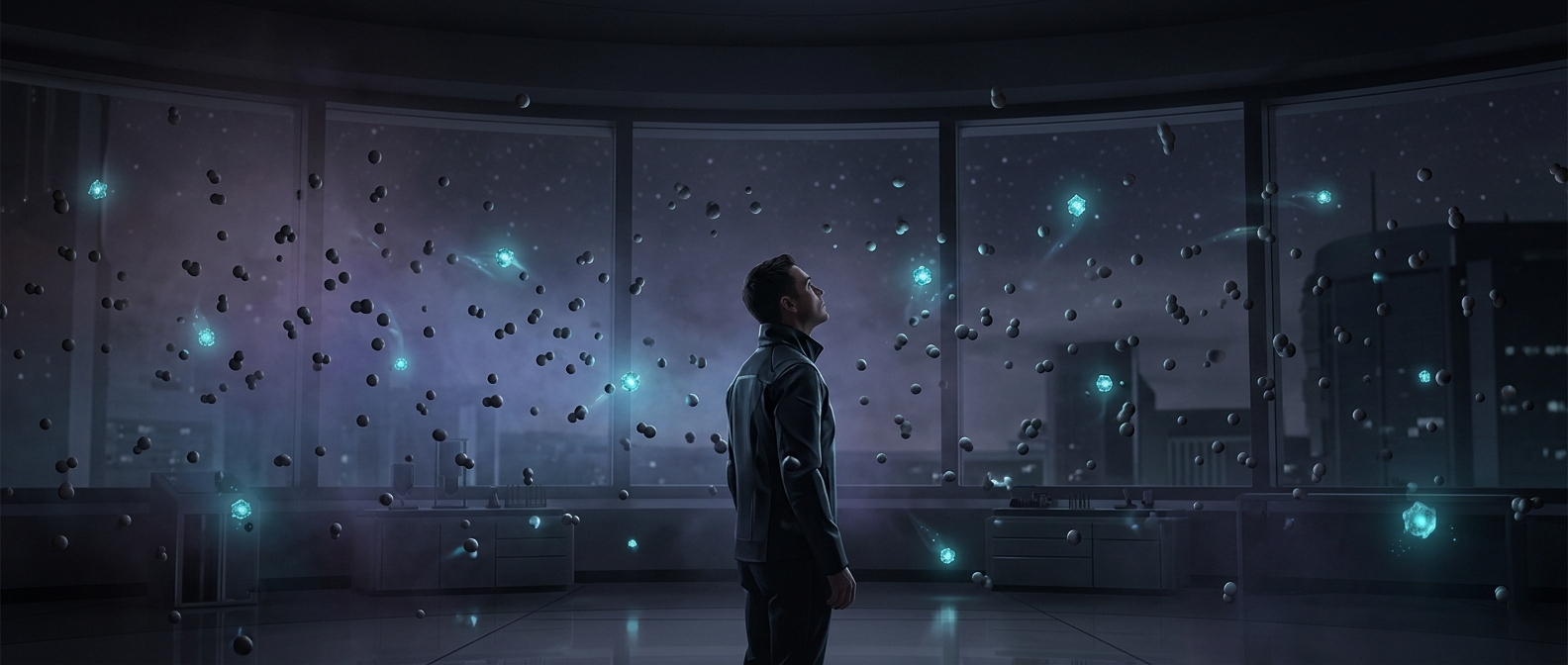
Ordinary oxygen in the air is mostly made of pairs of oxygen atoms, written O₂. A strong electrical discharge can break some of those pairs apart. The freed atoms may then join intact O₂ molecules, forming ozone, or O₃—a molecule with three oxygen atoms.
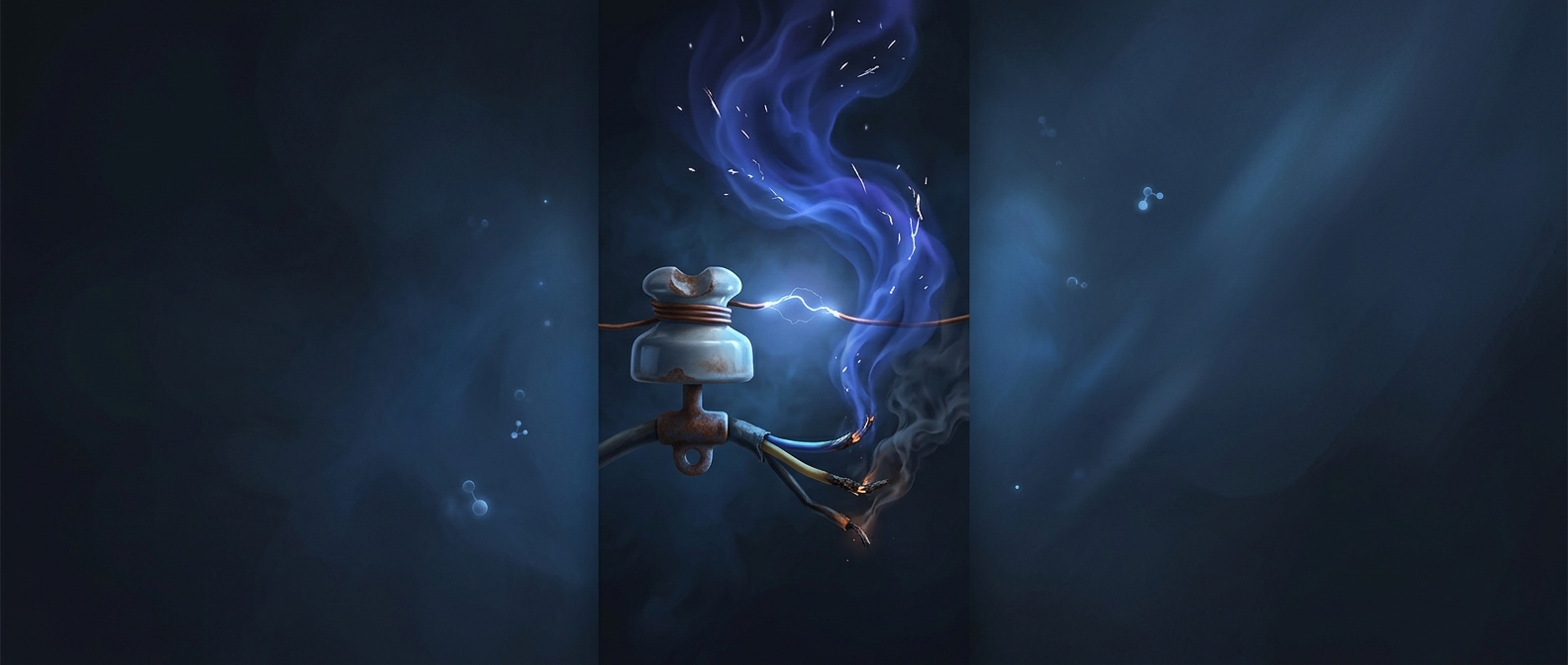
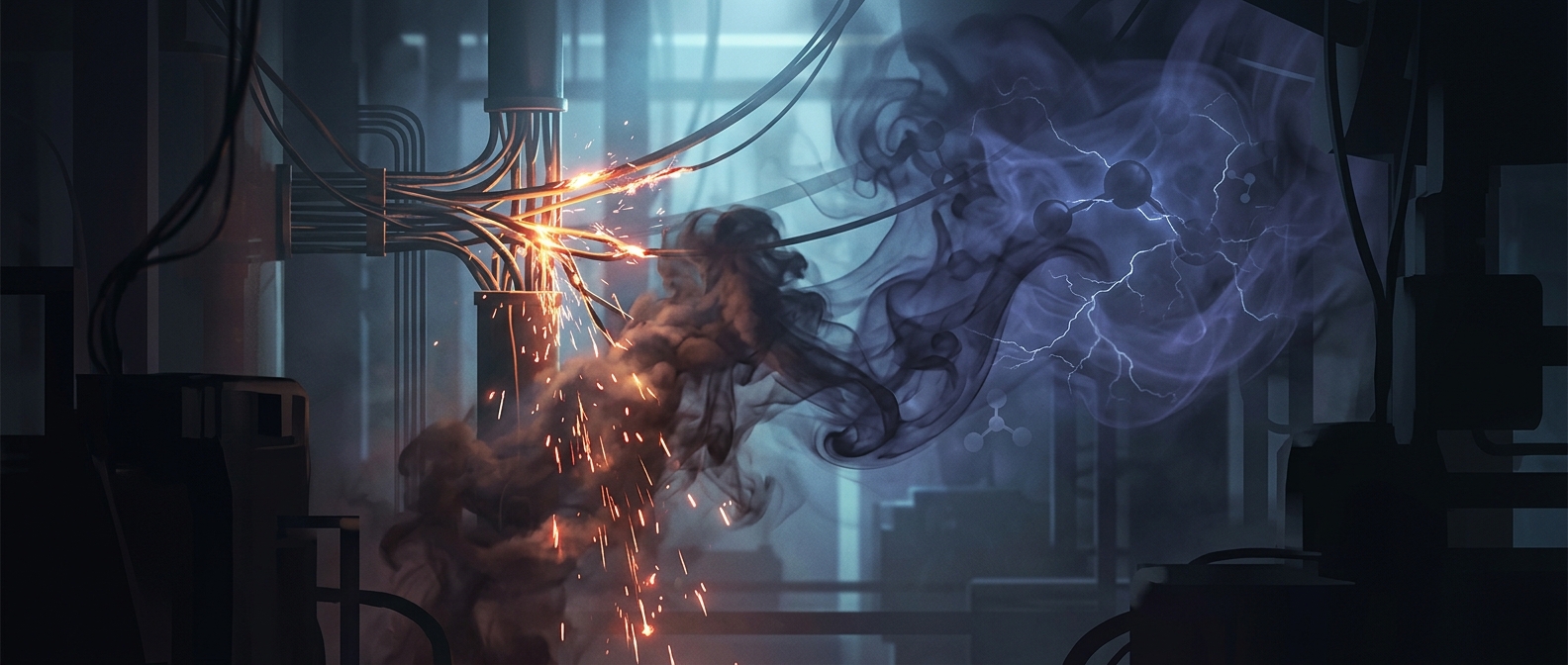
That chemistry can happen around a crackling spark, where the electrical energy is concentrated enough to rearrange nearby molecules. It does not require a wire’s coating to burn: the air beside the discharge can produce the odor on its own.
Why the smell resembles hot wiring
Ozone has a sharp, pungent odor that many people associate with electrical equipment or the smell after a lightning strike. The resemblance is a useful clue, but not a precise diagnosis. Hot insulation and other materials can also produce odors when overheated, and a spark may heat or damage nearby material at the same time it creates ozone.
So the smell comes from a chemical signal, not from the spark having a single distinctive scent. A brief whiff near a discharge may be ozone; a persistent burning smell can have another source and should not be dismissed as ozone alone.
The air changes, even when the wire does not
Ozone is a reactive form of oxygen, not simply a stronger version of the oxygen we breathe. Its formation shows how electrical energy can change the chemistry of the surrounding air in an instant. A crackle can therefore leave behind an odor even when no insulation has melted—though the smell by itself cannot establish whether equipment is safe.