A New Identity on Paper
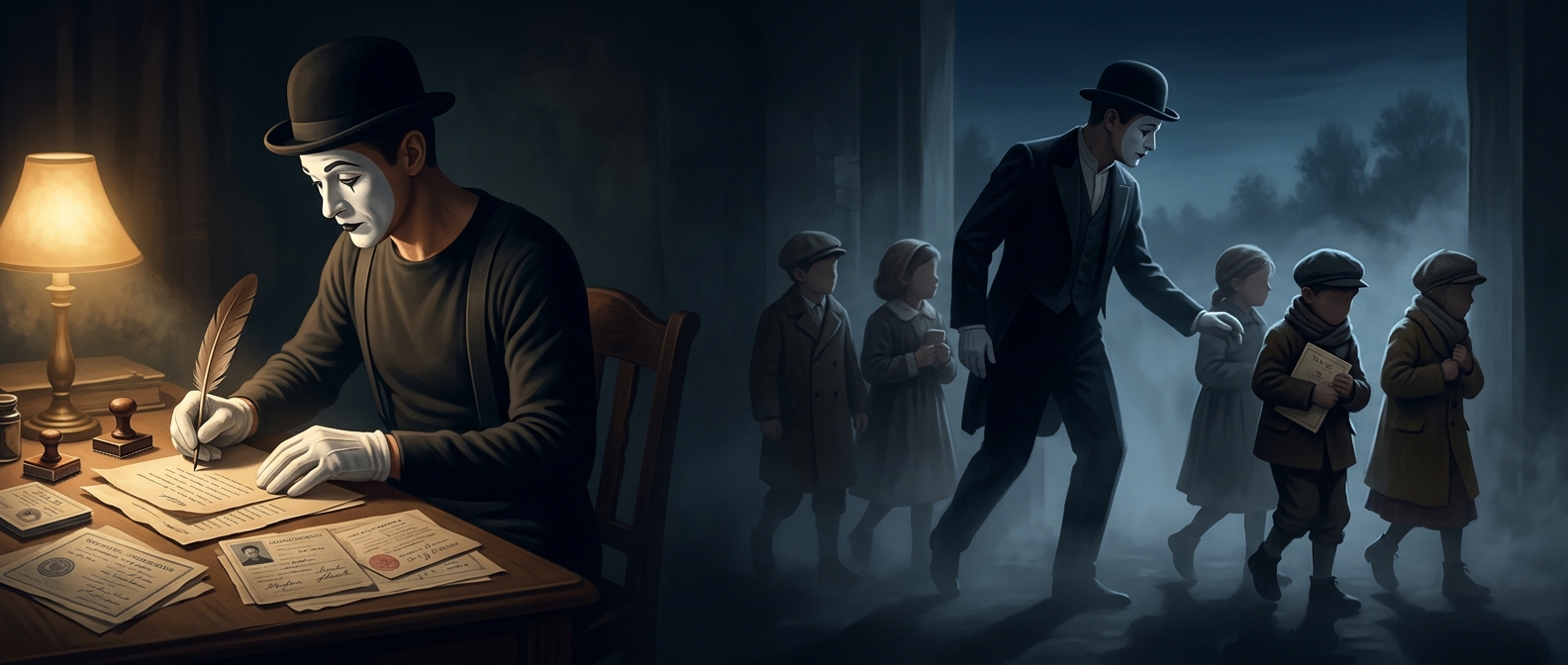
During the German occupation of France, Jewish children faced the danger of being identified and deported. Marcel Marceau, then a young man named Marcel Mangel, used his drawing ability to help create false identity papers for children in danger. The documents gave them a way to pass as someone else when authorities demanded proof of who they were.
A forged paper was useful because escape depended not only on finding a route, but on surviving each inspection along it. A child traveling under a new identity could be less likely to attract attention at a checkpoint or during a journey toward safety. The deception had to work in ordinary moments: when an adult asked a child’s name, or when papers were examined beside the road.
The Work Behind the Escape
Marceau’s role was part of a broader effort to move Jewish children out of danger. He helped them travel toward Switzerland, where they could reach safety. The papers were one piece of that effort; getting children through the journey also required trusted adults and careful coordination.
The episode connects a skill later associated with performance to a stark practical purpose. Marceau’s drawings were not simply artistic work: they helped make a false identity believable enough to give a child a chance to get past the next question.