A sink can look real without working like one
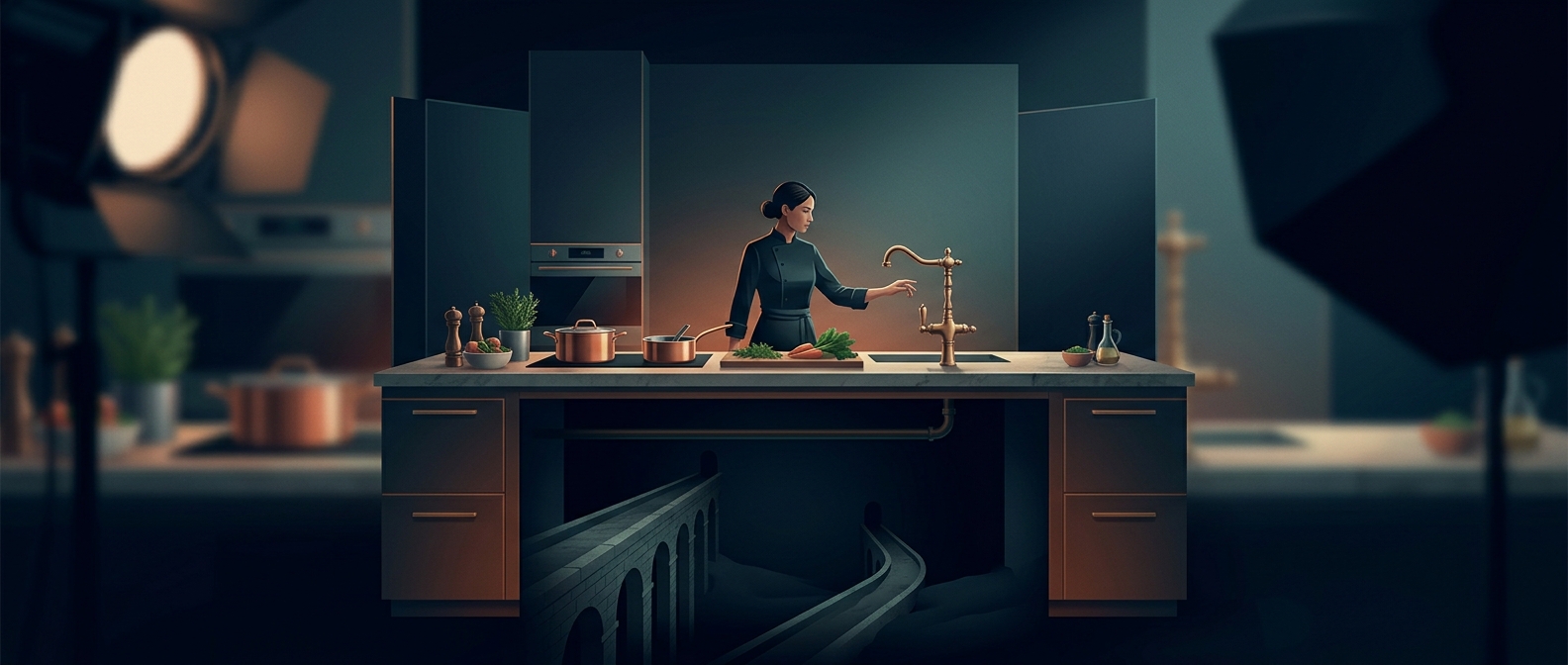
A television kitchen is built first as a place to film, not necessarily as a room meant for everyday cooking. Its counters, cupboards, and appliances need to look convincing from camera angles and leave room for lights, microphones, and crew. Connecting a sink to building plumbing can add work without adding much to the picture: viewers usually need to see the basin, not watch water travel through pipes.
A dry sink also gives production more control. Running water can create noise that competes with dialogue, while splashes and spills can disrupt a take or leave the floor slippery. A basin that does not drain lets the crew manage liquid and dirty dishes out of sight, then reset the set between shots.
The cleanup happens off camera
When a chef rinses a pot, the gesture can still read clearly on screen even if the faucet is not delivering water. Used dishes may be placed in a concealed container or moved away for cleaning after filming. The hidden bucket is a simple production workaround: it keeps the visible workspace tidy without requiring a fully plumbed kitchen.
Not every studio sink is fake, and a set may use working water when a scene needs it. But for many shots, a convincing basin and a controlled cleanup are enough. The camera gets the familiar image of a busy kitchen; the crew avoids turning every rinse into a plumbing and reset problem.