How Hitchcock Turned a Studio Into a Neighborhood
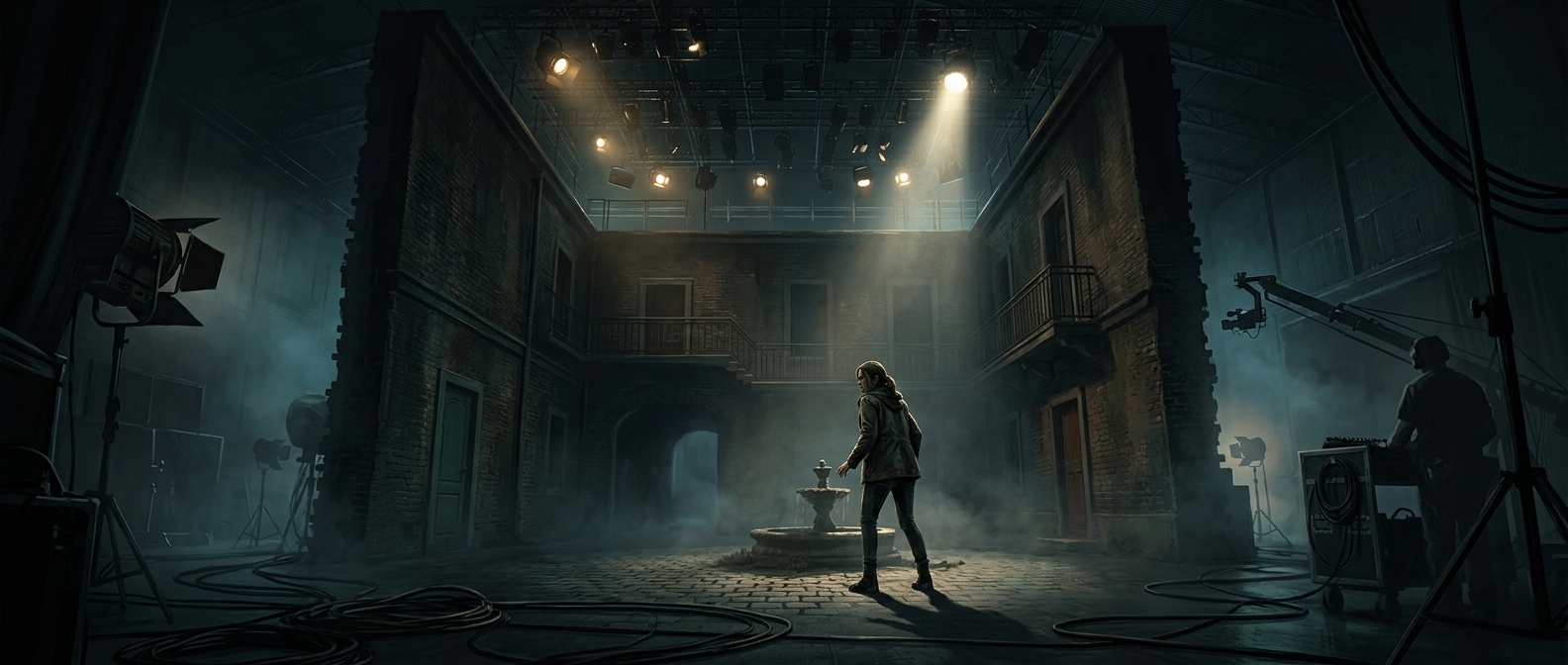
A courtyard is more than a backdrop: it gives every window a relationship to every other window. For Rear Window, Hitchcock’s production team built the apartment complex indoors so the camera could look across a believable shared space while the story unfolded in separate homes around it.
Building the apartments to scale helped preserve those relationships. A window had to sit at the right height and distance for a character—and the audience—to see into it. That geometry made the courtyard feel like one connected place rather than a collection of unrelated stage sets.
Why Working Utilities Made a Difference
Plumbing and electricity let the apartments function as inhabited spaces, not merely façades. Actors could move through rooms and carry out ordinary domestic routines; practical lights could switch on inside the set. Those details gave the distant windows changing signs of life, helping the viewer read the courtyard as a community even when its residents were not speaking to one another.
The indoor construction also gave the filmmakers control over the environment. They could arrange sightlines, light the windows, and keep the surrounding spaces consistent from shot to shot—conditions that would have been far harder to manage in a real apartment block. The result was a set that could serve both as a large, carefully composed image and as many smaller places where parallel stories seemed to be happening.
That scale turns the courtyard into part of the film’s storytelling machinery: a single glance across it can shift attention from one neighbor’s private life to another.