How a Car Carrier Makes Room for More Cars
A car-carrier trailer has to solve two problems at once: fit several vehicles into a limited length, and keep them low enough to travel safely beneath bridges and other overhead obstacles. Its decks move so the trailer can be tall while cars are being loaded, then compact for the trip.
Hydraulic Pressure Moves the Decks
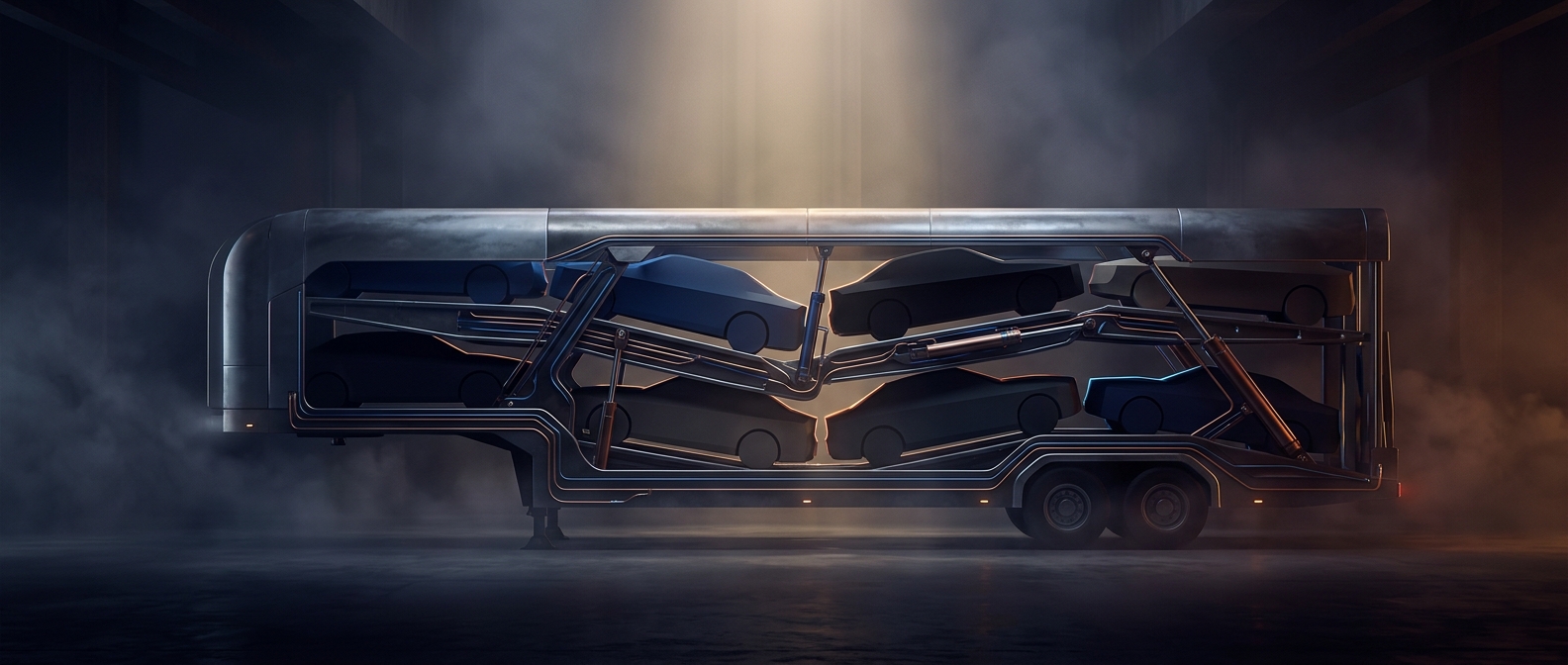
A hydraulic system uses pressurized fluid to push a piston inside a cylinder. In a carrier, those cylinders can raise, lower, or tilt sections of the deck. Tilting creates a ramp for a car to climb onto an upper level; adjusting the deck also opens space for vehicles below. Once the cars are in position, the sections are lowered into their travel configuration.
The moving parts let the driver work around the shape of each load. A car needs enough clearance to drive aboard, but a high deck can leave too little room for the vehicle underneath. By changing deck angles and heights during loading, the carrier can fit cars into spaces that would be inaccessible if every platform were fixed.
A Moving Arrangement, Then a Fixed Load
The trailer’s flexibility is mainly for loading and unloading. On the road, the decks must be secured in their travel positions so the vehicles remain supported as the trailer moves. The result is a useful engineering compromise: the carrier temporarily changes shape to make loading possible, then settles into a more compact arrangement for transport. What looks like a stack of cars simply placed one above another is really a carefully arranged set of adjustable platforms.