Why a Small Wheel Can Move a Heavy Load
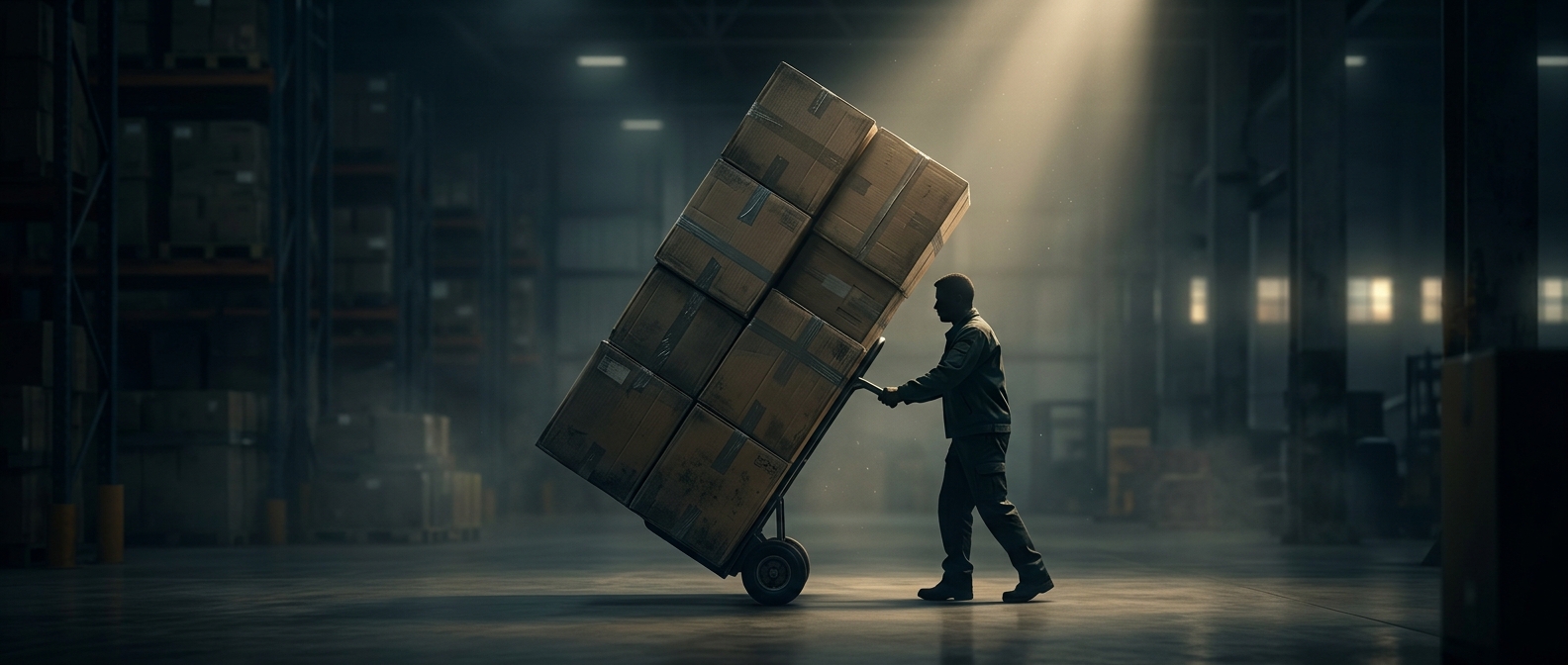
A hand truck works by turning a difficult lift into a controlled rotation. Its frame supports the box, while the wheel’s axle—the rod through its center—serves as a fulcrum, the pivot point around which the truck tilts. Pulling the handles back rotates the frame and raises one edge of the load off the ground.
The wheel does not erase the box’s weight. Instead, the long handles give the user leverage: force applied farther from the axle can produce a useful turning effect with less effort than lifting the box straight up. The tradeoff is distance. Your hands travel through a longer arc as the load rises a shorter distance.
The Load’s Position Matters
Where the box sits changes how hard the truck is to tilt. A load placed close to the axle has a shorter lever arm, so its weight creates less turning force against the user. If the box slides outward, its weight acts farther from the pivot and the handles feel heavier. That is why the toe plate—the flat metal platform at the bottom—should slide fully beneath the load, and why keeping heavy items low and close to the frame helps with control.
Once tilted, the wheels carry much of the load as the truck rolls. They reduce the need to lift, but they do not make every route easy: bumps, stairs, and uneven surfaces demand extra force and can throw the load off balance. The practical advantage is precise: a person can move a weight that would be exhausting to carry by letting the frame and wheels support it, one careful tilt at a time.