A move is a route, not a single drop
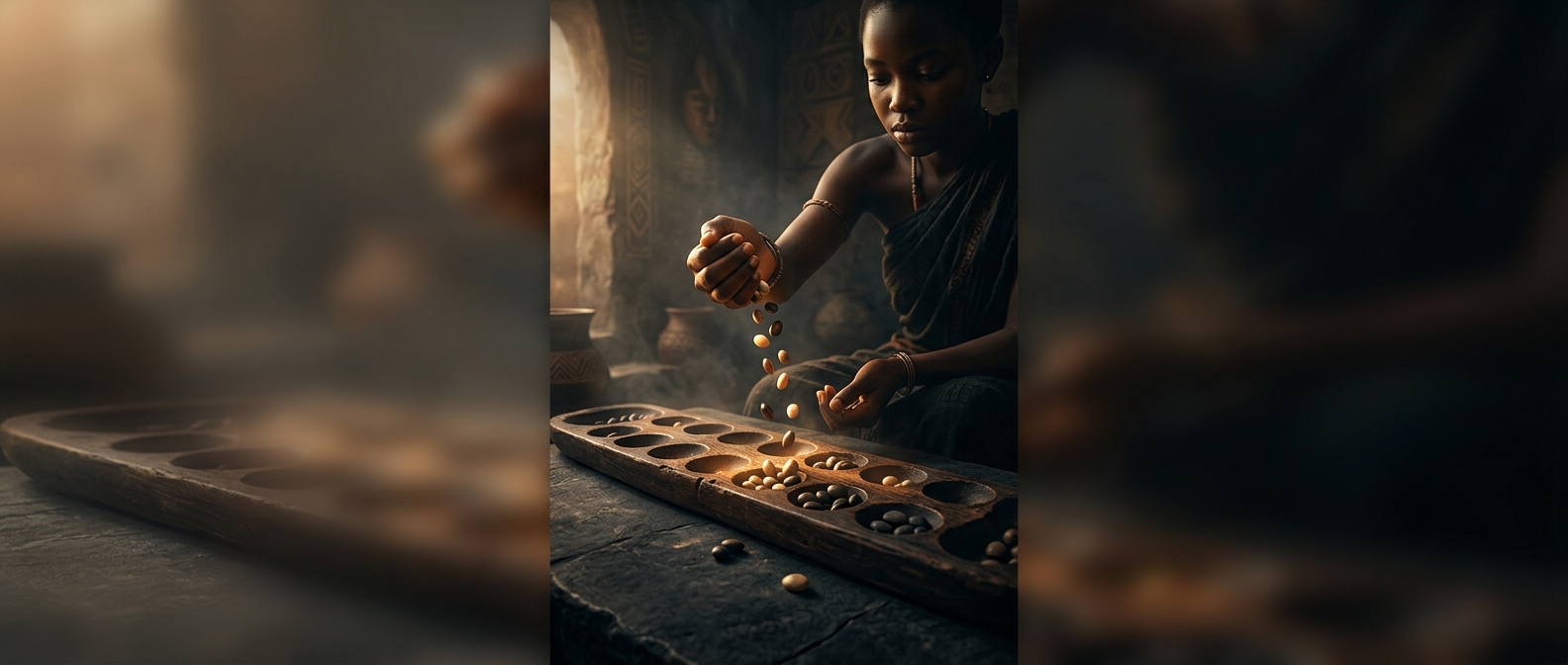
In mancala, a player picks up the stones from one pit and sows them by placing one stone in each successive pit. Because the stones are distributed across the board, choosing a pit means choosing a route: the number of stones in it determines where the final one will land.
That last landing can matter more than the first. Depending on the version, it may trigger another move, capture stones, or affect whether a player can keep taking turns. Mancala is a family of games, so the exact consequences vary; players need to plan around the rules of the version they are playing.
Counting ahead changes the board
A pit with many stones offers a longer sowing route, while a nearly empty pit gives a shorter one. A player must count not only where their own final stone will fall, but also which pits will be left stocked—or emptied—for the opponent. A move can build a future opportunity while accidentally setting up the other player’s next turn.
This makes the board feel less like a row of separate piles and more like a shared, shifting track. Every sowing rearranges the choices available to both players. The skill lies in seeing how a handful of stones will travel before picking them up.