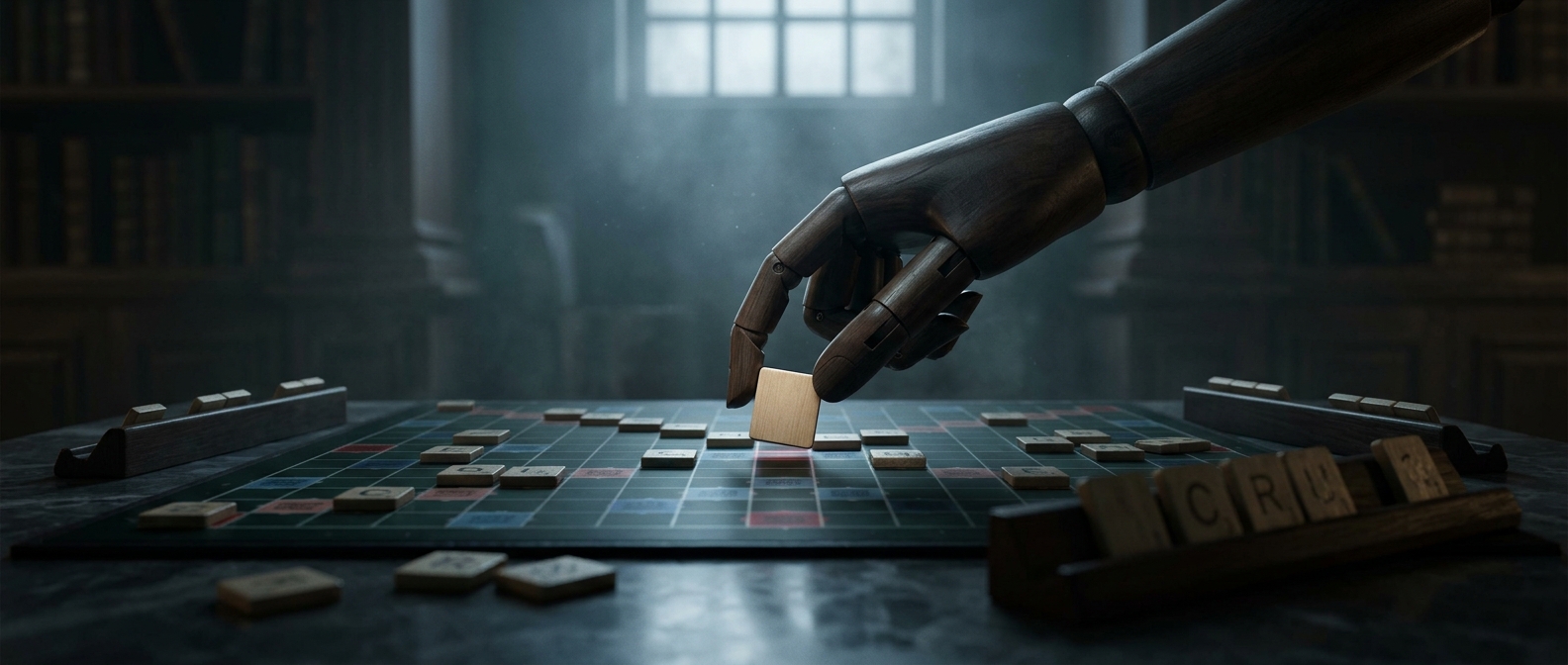
A Blank Tile Trades Points for Flexibility
A blank is a zero-point tile, but it can represent any letter when played. That makes it a kind of emergency substitute: if a rack is missing the one letter needed to complete a word, the blank can fill the gap. It can also help form a word that uses several awkward tiles at once.
The choice of letter becomes part of the move. Once the blank is placed, it stands for that letter for the rest of the game; it is not a wild tile that can later be reassigned. Its value comes from unlocking a legal play, not from adding points directly.
Why Giving Up Points Can Pay Off
Scrabble scores the letters in a word, then applies any relevant board bonuses. Since the blank’s letter value is zero, even a letter bonus square adds nothing for that tile. But the blank can still help build a longer word, reach a valuable premium square with another letter, or use all seven tiles in one turn for the game’s rack-clearing bonus.
That creates a strategic tradeoff. Playing a blank now may produce a modest score, but keeping it can leave a player stuck with an unworkable rack—or deny them a chance to make a much stronger move. The tile’s power is not in its face value; it is in the options it opens. A blank can turn a hand that cannot make a useful word into one that can, even though the blank itself never scores a point.