Before trousers came the “breeching” milestone
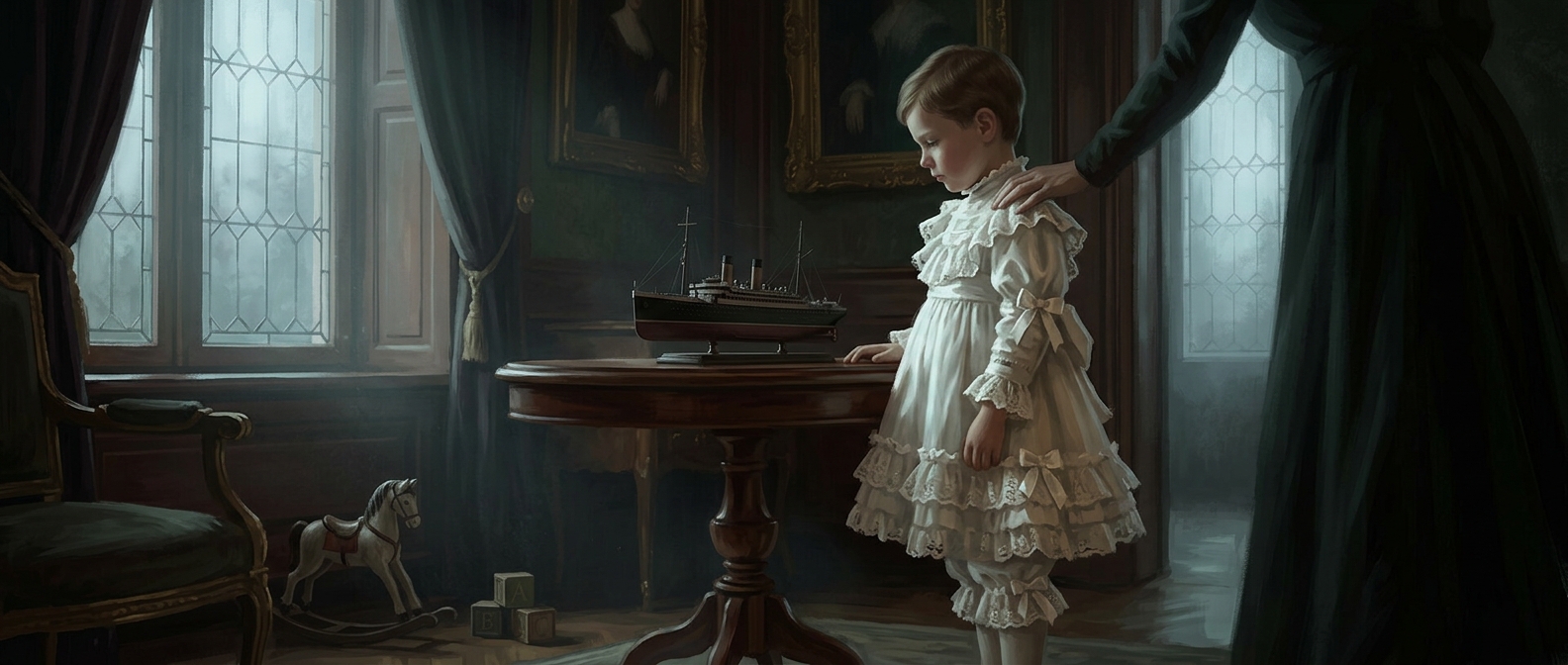
For many families in the 18th and 19th centuries, a young child’s clothes did not yet announce the same distinctions as an adult man’s. Small boys and girls could both wear gowns or dresses: loose garments were easier to put on, allowed room to move, and were practical for children who needed frequent changing. Long hair could also be part of a child’s appearance rather than a declaration about adult identity.
The change to trousers was often called breeching. It marked a boy’s passage from early childhood into a more grown-up stage, though the age and timing varied by family and period. Breeches or trousers brought a different silhouette—and a visible sign that the child was expected to take on more mature roles.
Clothing made growing up visible
That transition mattered partly because clothing helped other people read age and status. A child in a gown was still being presented as little; a boy in trousers could be treated as older. For affluent families, portraits and carefully chosen outfits made these distinctions especially visible. Franklin D. Roosevelt’s childhood clothing fits a custom that was ordinary for boys of his social world, not an unusual personal choice.
The practice faded as children’s clothing became more sharply divided by sex and trousers became standard for boys at younger ages. What can look like a surprising reversal today was once a familiar way to mark the boundary between being a small child and becoming a boy in the adult sense.