Why a Cold Battery Takes Longer to Fill
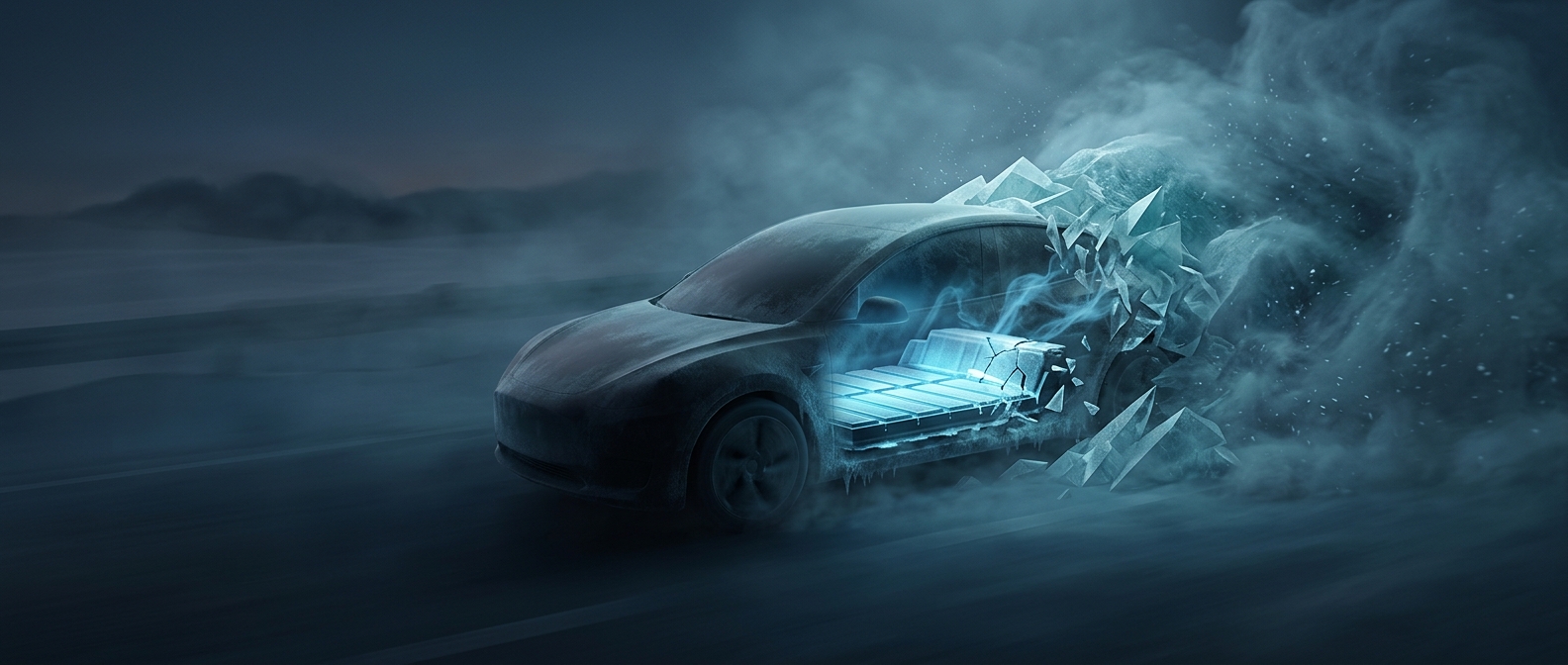
An electric-car battery stores energy through chemical reactions that move charged particles between its electrodes. Cold slows that movement. The battery-management system—the electronics that protect and monitor the pack—therefore limits how quickly the battery can accept power. That is why a fast charger may deliver far less than its advertised peak on a freezing day, especially before the pack has warmed.
The limit is protective, not merely inconvenient. Pushing too much current into a cold lithium-ion battery can cause lithium to build up in the wrong place inside the cell, reducing performance and potentially damaging it. The car warms the pack so charging can proceed more quickly and safely.
The Energy Cost of Getting Warm
Warming takes energy before much of the charging can go into replenishing the battery for driving. Depending on the car and conditions, the pack may use its own stored energy or draw power while plugged in. In the first case, some energy from the charging stop goes to heating rather than increasing the range available afterward. In the second, the meter records that heating load along with the charge.
In severe cold, that extra demand can make the energy needed for a charging stop much larger than in mild weather—potentially close to twice as much in a particular situation. It is not a fixed winter penalty: the starting temperature, battery size, charger, and heating strategy all matter.
Why Preconditioning Changes the Stop
Some cars can warm the battery on the way to a fast charger, often when the charger is set as the navigation destination. The pack then arrives closer to a temperature at which it can accept power quickly. Preconditioning does not make the heating energy disappear; if the car is plugged in beforehand, some of it may come from the outlet instead of the driving battery.
The practical tradeoff is time versus energy: a cold pack may sip power slowly, while a warmed pack can charge faster—but the warmth has to come from somewhere.