A copy-protection signal in the picture’s margins
A VHS picture contains more than the scene viewers see. Each frame also has timing information that tells a television or VCR where one line ends and the next begins. Some of that information sits in the vertical blanking interval, the brief gap between frames when an old TV’s electron beam returned to the top of the screen.
Macrovision placed extra pulses in this otherwise unseen part of the signal. They were not a message for a person to read; they were designed to interfere with how a recording VCR judged the picture’s brightness.
Why the copy’s brightness lurched
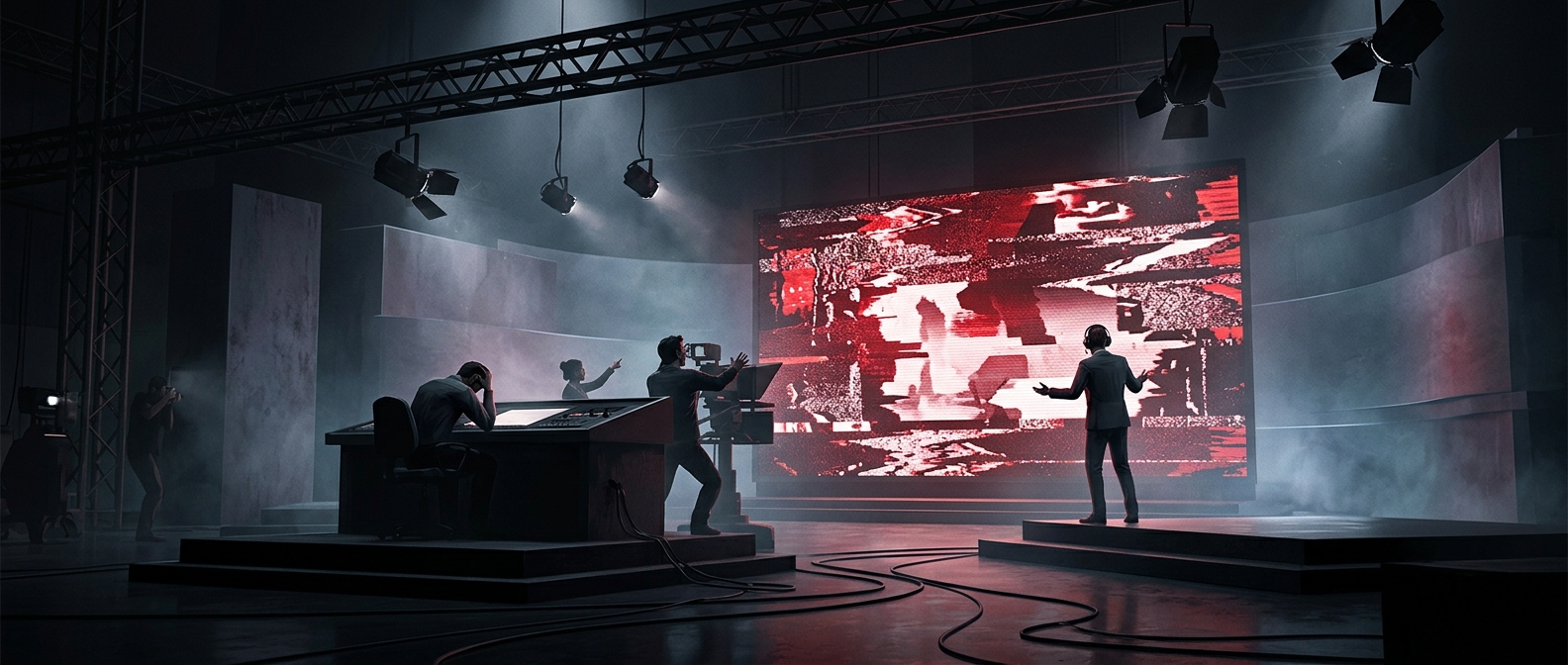
A VCR’s automatic gain control, or AGC, adjusts the strength of a video signal so the recorded image has a usable brightness level. It relies on expected signal levels around the picture’s timing information. Macrovision’s added pulses could make the recorder misread those levels. As the AGC repeatedly corrected for a signal that seemed to change, the copy could swing between too bright and too dark, with unstable picture bands or other distortion.
The effect depended on the equipment and the particular recording chain. The original tape could still look normal on a television because the protection targeted the behavior of recording electronics, not simply the visible image. A television displaying the signal and a VCR trying to measure and record it did not necessarily respond the same way.
Why a normal-looking tape could make a bad copy
The trick exploited a mismatch: the pulses were largely outside the part of the picture viewers focused on, yet they fell where a VCR’s control circuitry paid attention. That let a rental tape play normally while frustrating straightforward tape-to-tape copying. The picture’s hidden timing machinery became the lock—not a message on the screen, but a signal the copying VCR could not reliably ignore.