A supply route that doubles as a journey
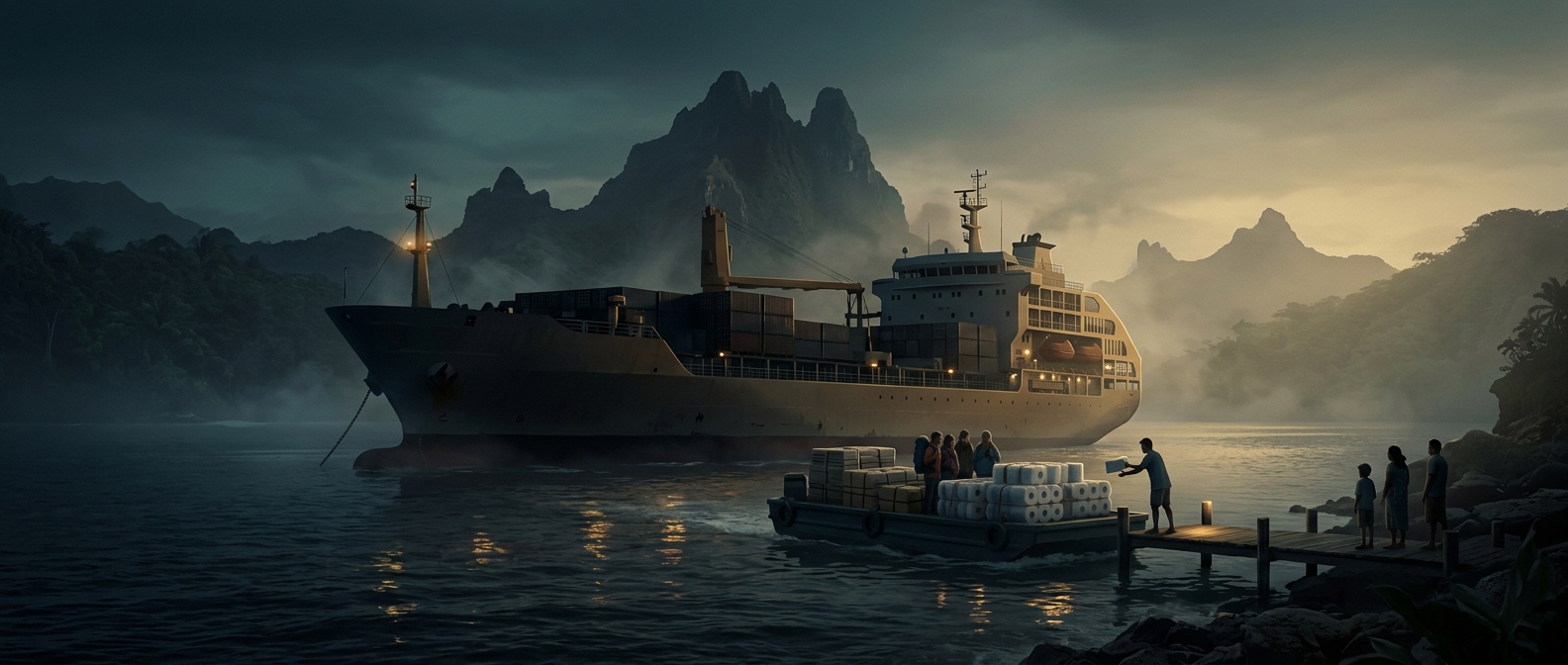
In the Marquesas, distance changes what a ship is for. These islands lie far across the Pacific from major commercial hubs, so ordinary goods cannot simply arrive by road from a nearby city. A cargo vessel has to carry the necessities that keep island communities and projects running—and make the long crossing worthwhile for travelers as well.
The Aranui 5 combines freight space with passenger accommodation. Its working side carries bulky goods such as building materials and vehicles; its passenger side turns the same route into an organized visit to the islands. Instead of treating cargo delivery and sightseeing as separate trips, the ship links them along one circuit.
The cargo shapes the itinerary
A delivery voyage is not just a cruise with a few boxes added. Freight must be loaded, transported, and unloaded at the places that need it. That gives the route a practical rhythm: the ship calls at island communities to move goods ashore, while passengers have opportunities to visit the surrounding landscape and settlements.
The arrangement also explains why a working ship can bring visitors to places that feel far removed from conventional resort travel. Its stops are tied to the needs of the route, not solely to the most convenient sightseeing schedule. For travelers, the islands are encountered through the same logistical connections that supply them.
One crossing, two kinds of connection
The striking part is the overlap. Cement and pickup trucks are evidence of the everyday work of building and moving things; volcanic scenery and carved tiki belong to the cultural and natural experience visitors come to see. Both arrive in view on the same voyage, without making the ship’s freight role merely decorative.
That pairing gives the journey a concrete lesson in remoteness: reaching the Marquesas is not only about getting people there. It also means carrying the heavy, ordinary goods that make life and development possible once the ship leaves.