How cigarette smoke becomes a repair problem
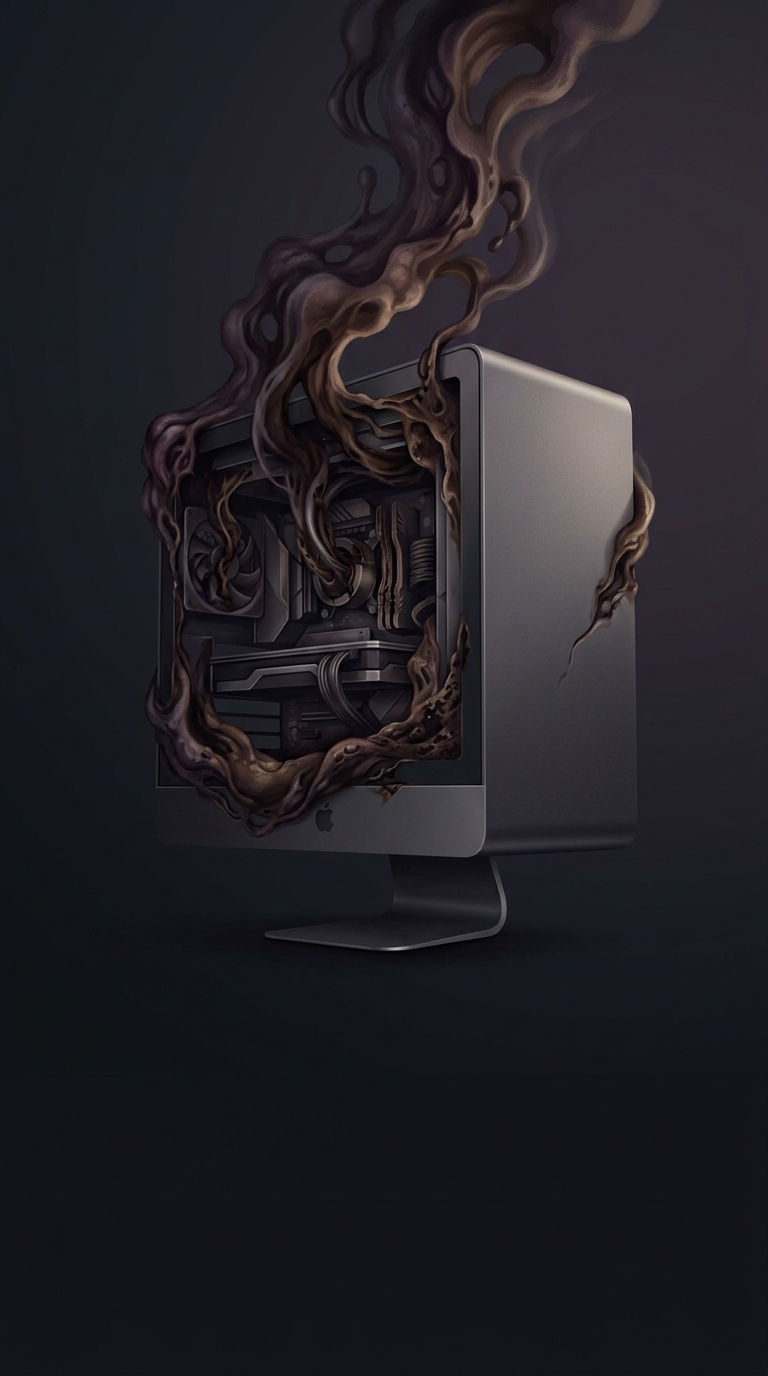
A desktop computer pulls air through its case to carry heat away from the processor and other components. In a smoky room, that airflow brings more than dust: it can carry fine particles and sticky compounds from cigarette smoke into the machine. Fans and nearby surfaces gradually collect the residue, leaving a film that ordinary household dust does not describe well.
The buildup matters when a technician opens the case. Handling or brushing contaminated parts can disturb the deposit, bringing it into contact with skin or allowing particles to become airborne. A repair that normally involves touching fans, cables, or a circuit board can therefore become a workplace-exposure concern—not just a question of whether the computer still works.
The conflict between repair and worker safety
Warranty service is built around diagnosing and replacing parts. It does not automatically mean a technician must accept every condition found inside a device. If contamination is severe enough to pose a health concern, a company may treat the machine as hazardous to handle, limiting or refusing routine service rather than asking a repair worker to clean it without appropriate precautions.
That creates an awkward boundary: the machine may have a mechanical fault, yet the material surrounding the fault can determine whether anyone will repair it. The residue also illustrates a less visible cost of indoor smoking. Smoke does not remain only in the air or on furniture; ventilation can carry it into equipment, where it accumulates until a later repair exposes the people who open the case.