How the Bladder Holds Back Urine
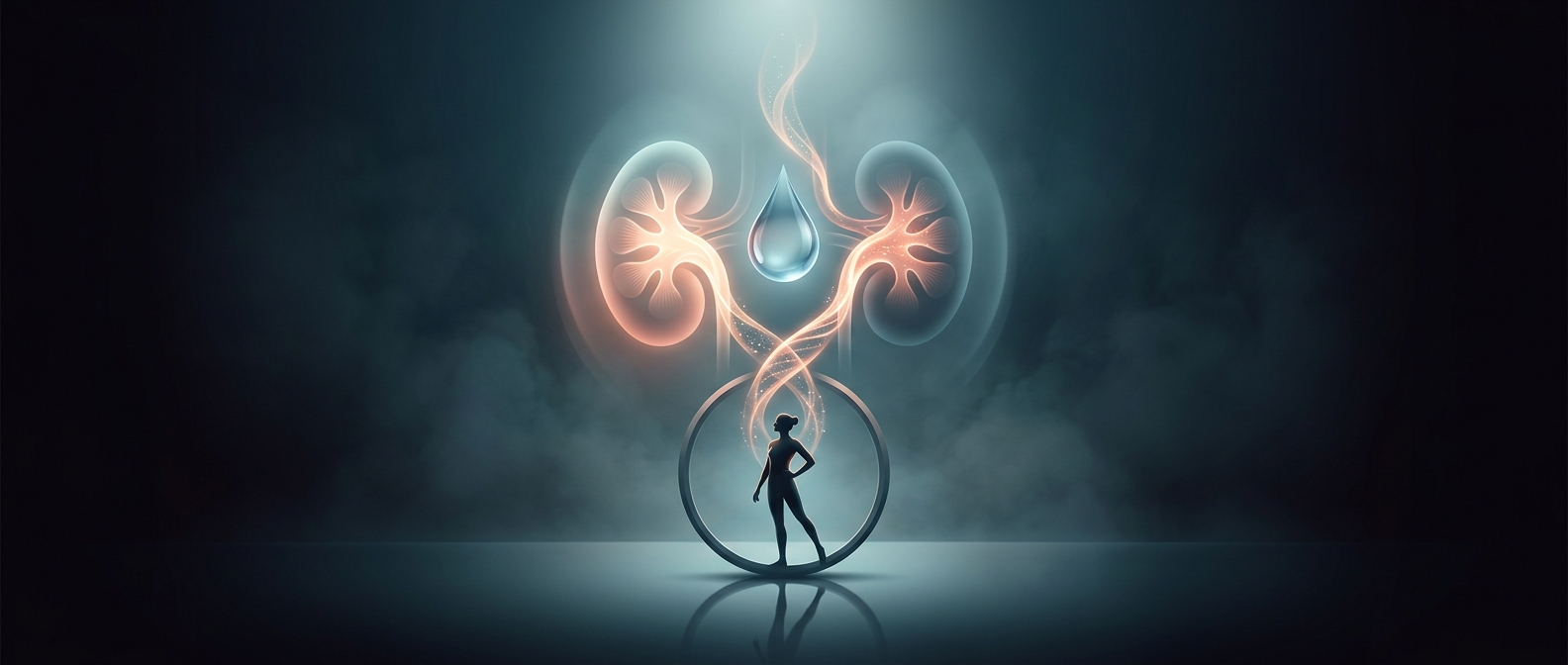
The bladder must do two jobs at once: expand to store urine, then contract to empty it. Its inner lining, the urothelium, helps make that possible by separating urine from the living tissue beneath it.
The surface is made of broad “umbrella cells.” Their urine-facing membranes contain tightly packed proteins that form a tough, low-permeability surface. Seals between neighboring cells help close the gaps, so water and dissolved substances in urine do not readily pass into the bladder wall. It is not an absolutely impermeable coating, but it is an effective barrier under normal conditions.
A Barrier That Can Stretch
When the bladder is relatively empty, the lining has folds. As it fills, those folds smooth out and the surface cells change shape, becoming flatter and broader. The cells remain joined while the lining expands, rather than behaving like a rigid sheet that would crack under tension.
That flexibility matters because urine contains dissolved salts and waste products that belong in the bladder’s interior, not in surrounding tissue. The urothelium gives the bladder a protected surface while allowing the organ to change size repeatedly.
The striking part is that the seal is living tissue: it must preserve its close-fitting barrier while being stretched and relaxed with each cycle of filling and emptying.