A Cat’s Stare as a Sign of Protection
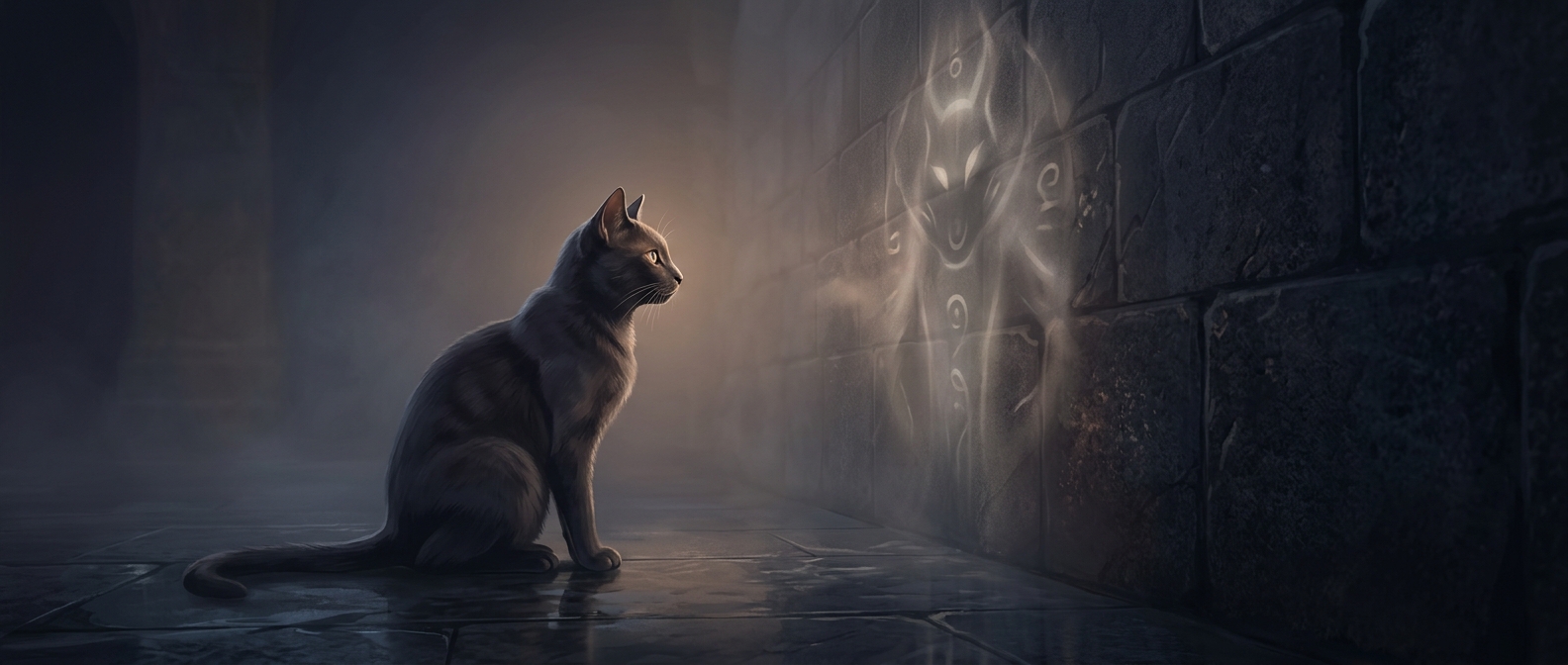
A cat facing an apparently empty wall can turn an ordinary household moment into a question: what, if anything, is the animal watching? In some folk traditions, the answer is a household guardian—a protective presence thought to inhabit or watch over the home, though unseen by people.
The interpretation gives an ambiguous scene a reassuring meaning. The cat becomes a kind of intermediary: its attention suggests that the home is not empty of watchers, even when human eyes find nothing there. The guardian is not necessarily imagined as a dramatic apparition; the idea can simply express that a household has a presence looking after it.
Why Cats Fit the Story
Cats are alert animals, and their sudden stillness or intense focus can be striking to the people around them. That makes them natural figures in stories about the boundary between what humans notice and what they might miss. The tradition does not establish that a guardian is physically present; it shows how a familiar animal’s unexplained attention can be read as a sign of care.
So the next time a cat fixes its gaze on a bare wall, the folk reading turns the scene from eerie to comforting: perhaps the cat is keeping watch over someone who cannot be seen.