How an elephant turns its trunk into a snorkel
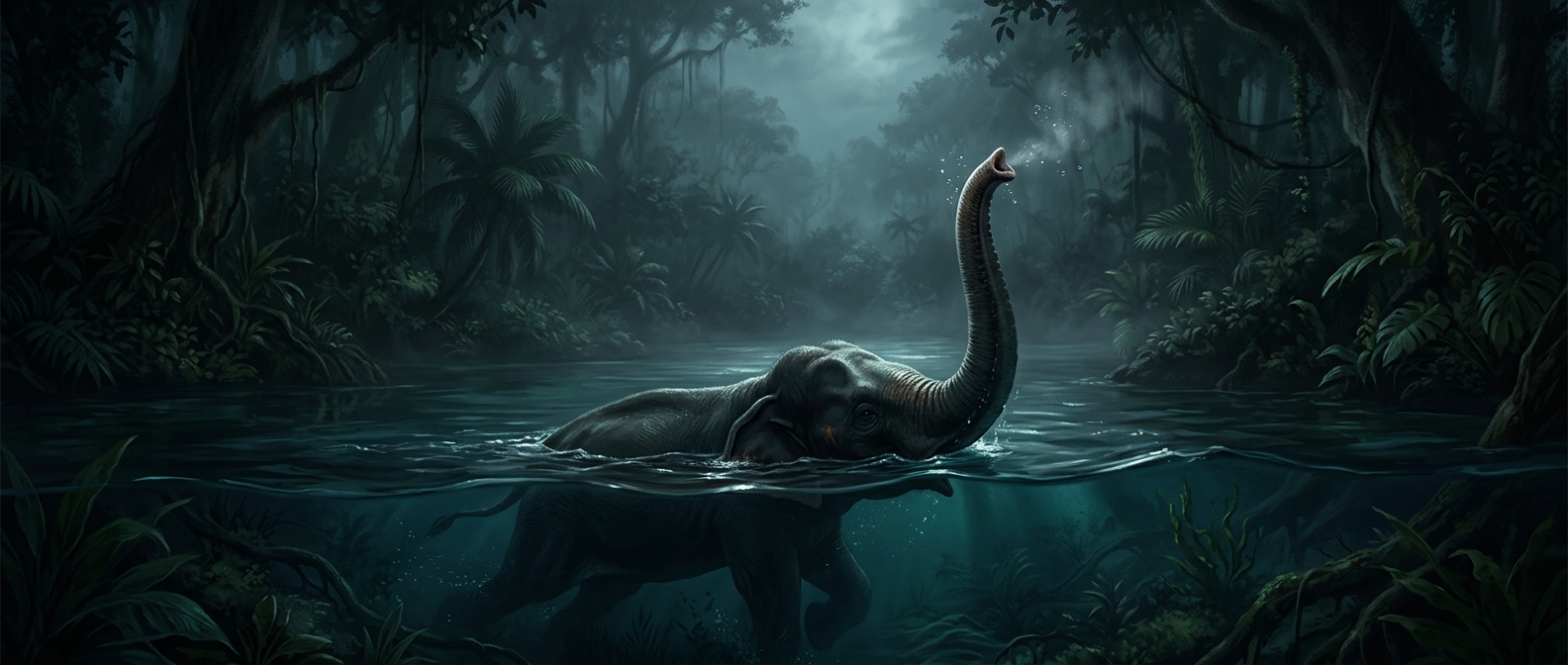
An elephant’s trunk is an elongated, muscular nose. The two nostrils run through it to openings at the tip, so when the elephant raises that tip above water, air can travel down the trunk and into its lungs. The trunk does not store the air; it keeps the airway connected to the atmosphere while most of the animal is submerged.
That arrangement lets an elephant keep its head and body underwater as it moves through a river. If its feet can reach the bottom, it can walk along the riverbed rather than holding its head above the surface. In deeper water, elephants can also swim, using their legs to paddle while the trunk tip remains above water.
A breathing tube with a long reach
The useful feature is not simply that the trunk is long. Its tip is mobile, so the elephant can adjust its position as the animal changes depth or moves forward. The trunk’s reach effectively extends the nose above the waterline, much as a snorkel does for a person—but it is part of the elephant’s own airway.
The result is a striking combination: an elephant can move through water with its body submerged while still taking breaths from the open air. A river crossing can therefore involve a seemingly impossible sight—an enormous animal below the surface, with only the end of its trunk showing.