A moose reacts before a rider can steer
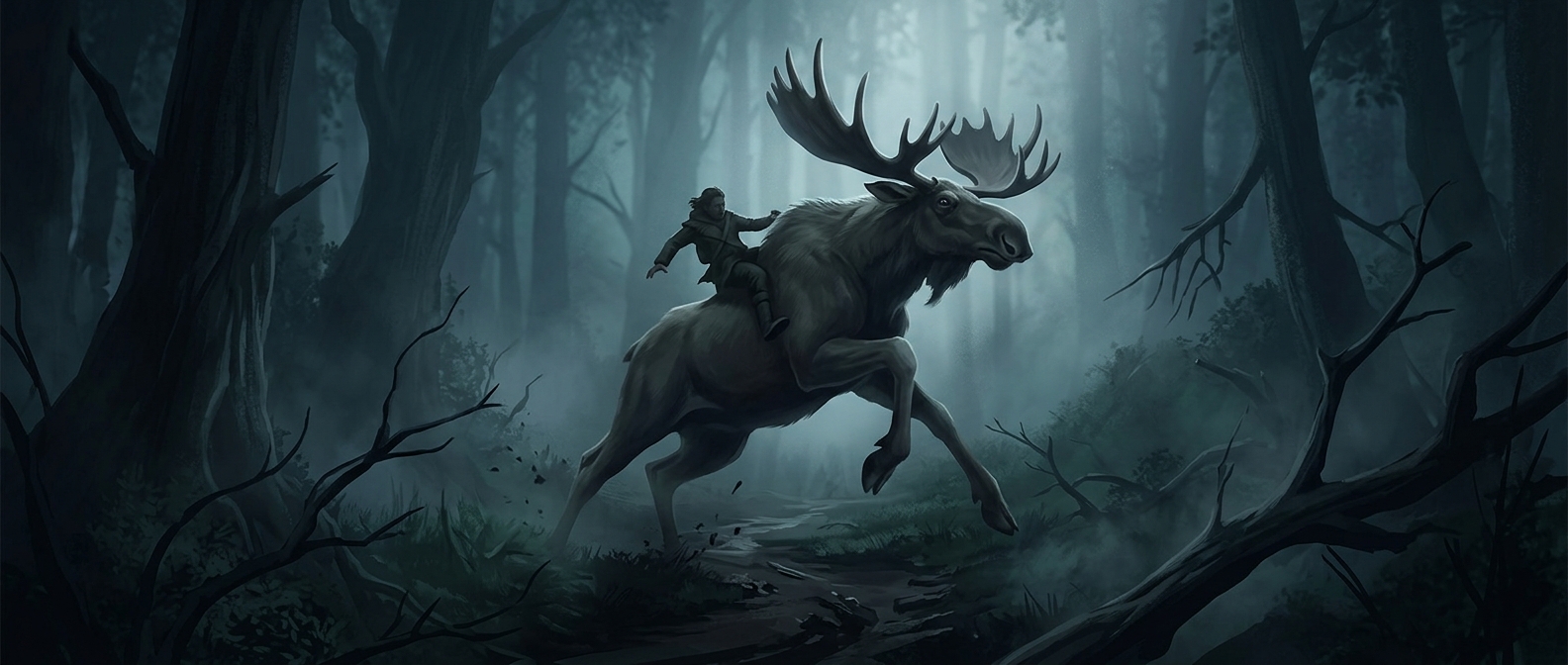
A moose is built to move through forests and wetlands on its own, not to follow a person’s commands. It may tolerate familiar conditions, but sudden noise, movement, or contact can trigger a rapid defensive or escape response. In that moment, the animal is reacting to what it perceives as danger—not weighing a rider’s signals.
That difference matters because riding depends on predictability. Reins work only when an animal has learned to respond to them and is calm enough to do so. They cannot reliably stop a powerful animal that is startled and struggling.
Size turns a startle into a serious hazard
Moose have long legs and substantial bodies. If one bucks, twists, or bolts, its movements can knock a rider off balance; close contact can also injure the animal. A horse’s history of domestication and selection for work helped make it a more manageable riding partner. A moose has no comparable long-standing relationship with humans as a riding animal.
So the problem is not simply that a moose is large or stubborn. It is that its natural reactions, strength, and lack of dependable training make a startled moose difficult to control—leaving both animal and rider exposed to the same sudden movement.