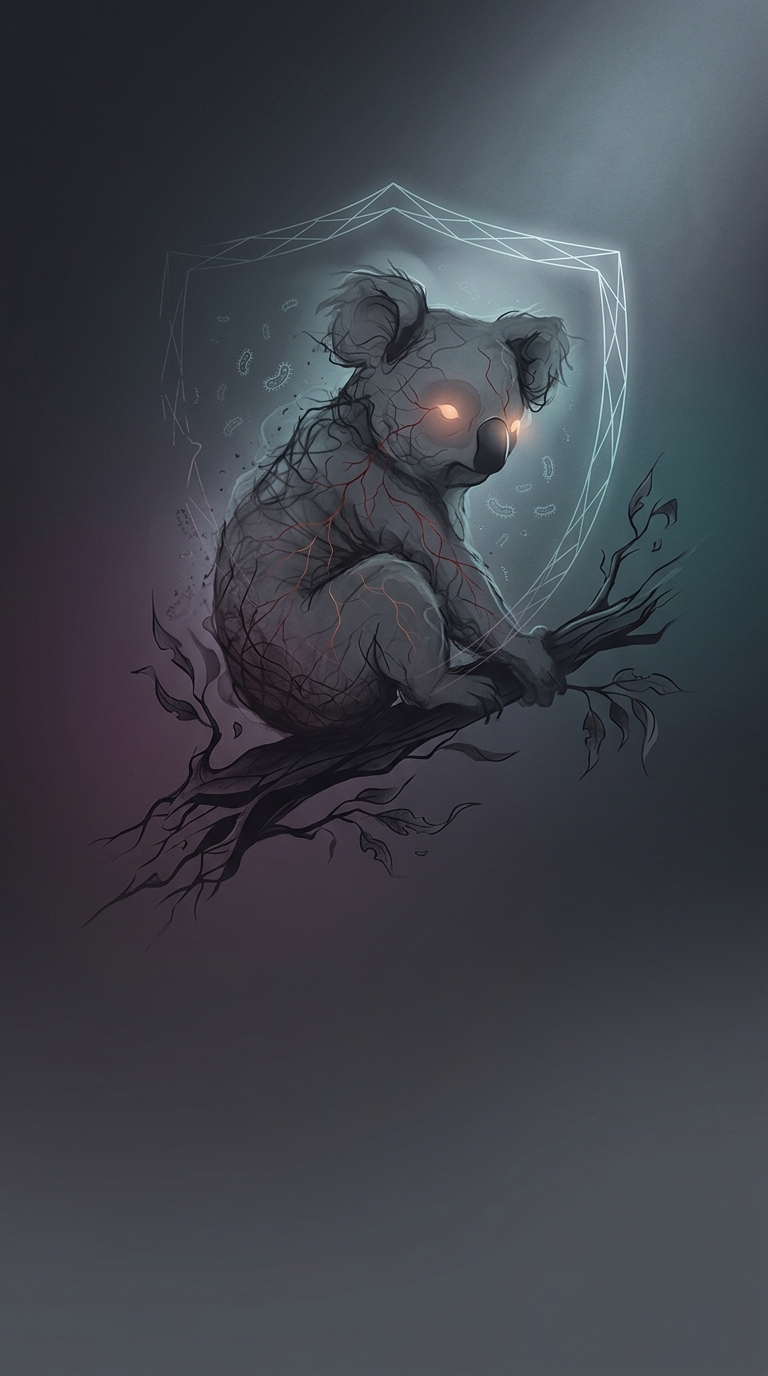
How infection damages a koala’s body
In koalas, chlamydia is usually caused by bacteria that invade cells and trigger inflammation. The infection can affect the eyes and the urogenital tract—the organs involved in urination and reproduction. In the eyes, inflammation may damage tissue and lead to blindness. In the urinary tract, it can cause painful, severe inflammation; in the reproductive tract, lasting injury can reduce fertility.
The harm is not simply the presence of bacteria. As the immune system responds, inflammation can injure delicate tissues, and repeated or prolonged disease can leave damage that is difficult to undo. That makes the timing of protection important.
What a vaccine can—and cannot—do
A vaccine gives the immune system a safe preview of parts of a germ, so it can recognize the real infection and respond sooner. If that response blocks infection or limits its spread, it may prevent the inflammation that would otherwise cause new injury.
But a vaccine is preventive, not a repair treatment. It cannot restore vision lost to damaged eye tissue or reverse reproductive scarring that has already formed. Protecting a koala before infection can therefore matter more than trying to treat the consequences afterward.
Why prevention has broader stakes
When disease impairs vision, urination, or reproduction, it can affect more than one animal’s health: it can also reduce the number of koalas able to survive and produce young. Vaccination aims to interrupt that chain early—before infection becomes lasting damage.