How a waste tip became a moving flow
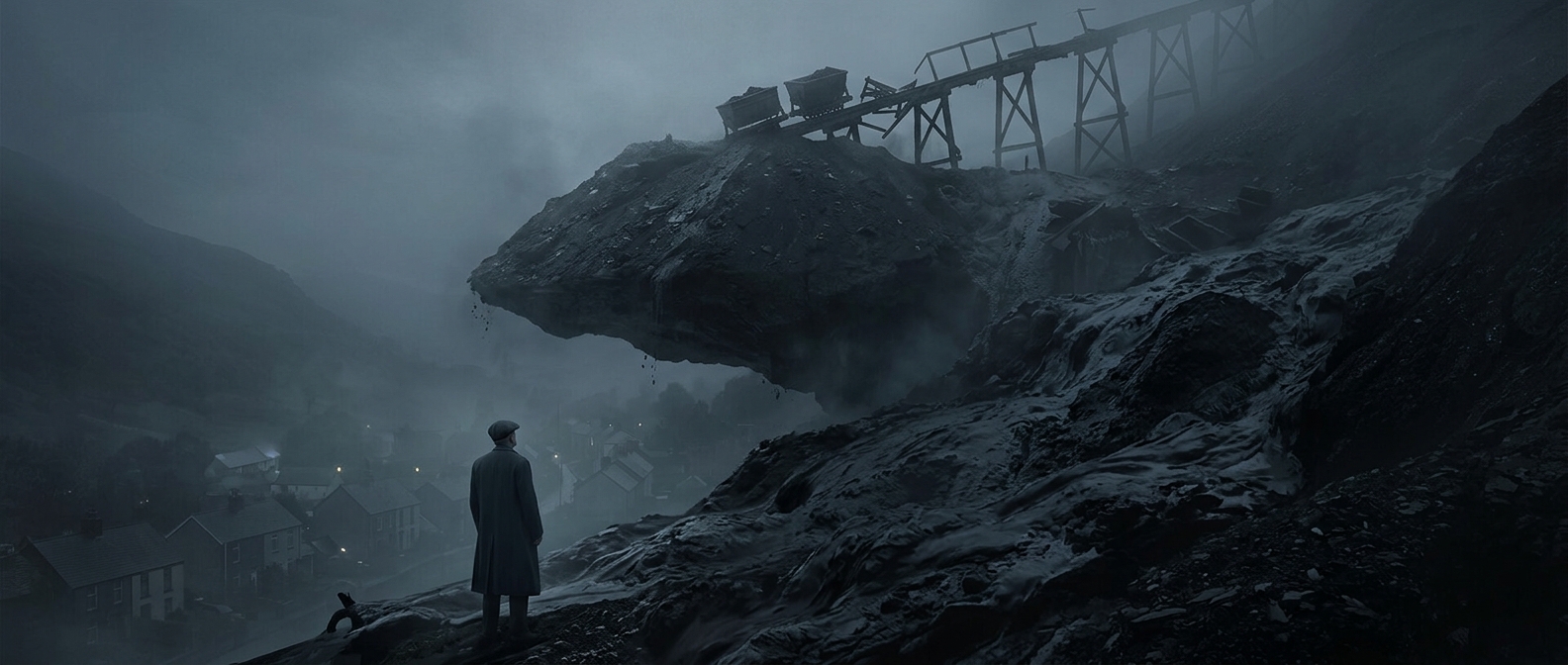
Coal mining left behind vast quantities of broken rock and fine debris. At Aberfan, this waste was piled high on a steep hillside above the village. A spoil tip can look solid while dry, but rain changes its behavior: water fills the gaps between particles, making them heavier and reducing the friction that holds them in place. Once the saturated material begins to slide, it can behave less like a heap of rocks and more like a thick, fast-moving slurry.
That is what happened on October 21, 1966. After heavy rain, part of Tip 7 gave way and swept downhill into Aberfan, reaching Pantglas Junior School. The slope turned the tip’s height into force: the waste accelerated as it descended, carrying debris into buildings and streets.
The danger was created uphill
The disaster was not simply a case of weather striking an unavoidable hazard. The National Coal Board, which operated the mine and controlled its waste tips, had placed the spoil above homes and a school. Tip 7 was also sited on ground affected by underground water, making drainage and careful monitoring especially important. Water had been observed at the tip before the collapse, yet the material continued to accumulate there.
The distinction matters. Rain supplied the immediate trigger, but the risk came from decisions about where waste was deposited and how its stability was managed. A safe tip requires suitable ground, control of water, and attention to signs that the slope is shifting or becoming saturated. Without those safeguards, routine mining waste can become a destructive mass poised above a community.
A warning written into the landscape
Aberfan’s school and homes stood below a structure whose danger was difficult to see from the village: a growing mound whose stability depended on what was happening inside and beneath it. The collapse killed 144 people, including 116 children at the school. It remains a stark example of how industrial infrastructure can place its costs far from the worksite—and how, when waste is stored uphill, gravity makes the people downhill bear the consequences.