A move is a path around the board
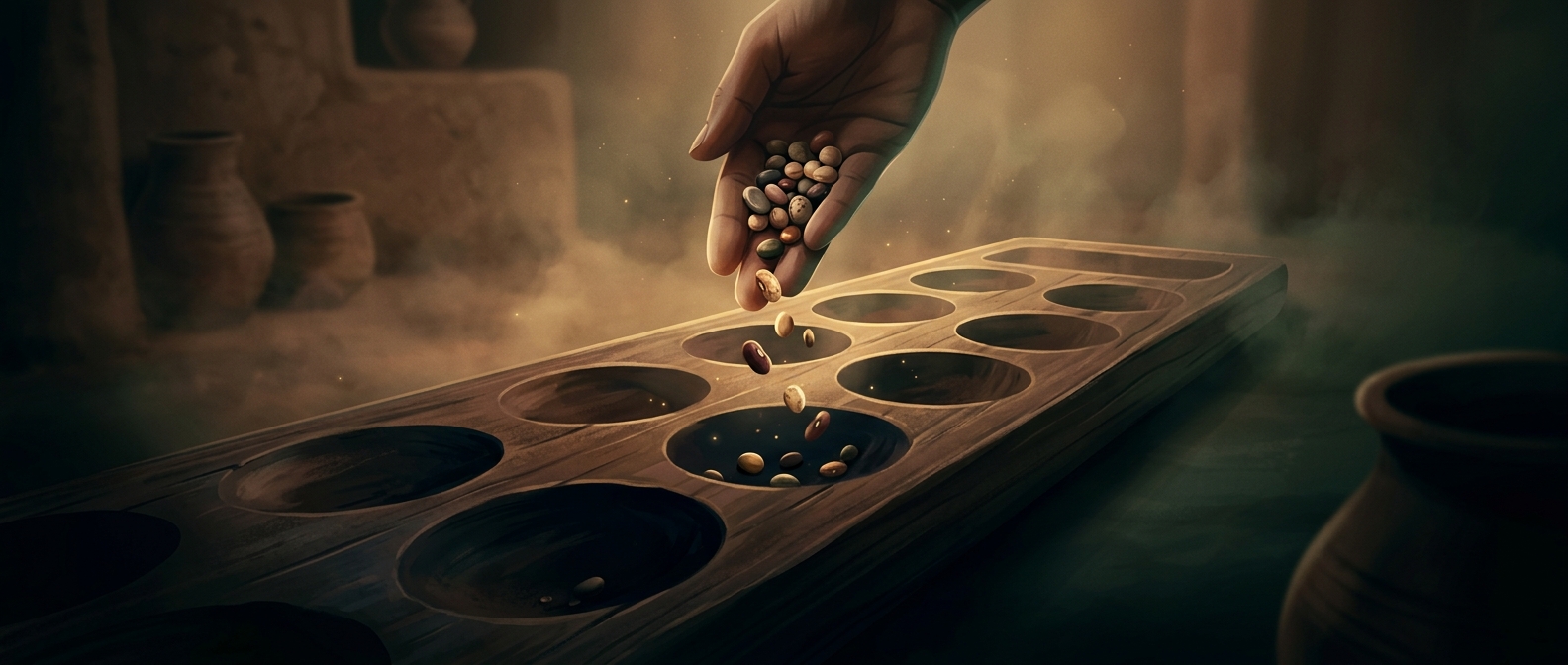
Mancala is a family of games built around a simple action called sowing: a player picks up all the seeds from one pit and distributes them one at a time into subsequent pits. The pieces are often seeds or stones because the game’s central task is moving and counting small objects—not controlling a particular figure or character.
That distribution makes each choice a calculation. Before lifting a handful, a player can count where its last seed will land and predict what the move may set up. Depending on the version, seeds may be captured when they land in certain pits, or a move may earn another turn if the final seed reaches a designated place.
Counting creates the strategy
The board is more than a collection of containers: its pits form a route. A handful that seems promising can carry seeds past the intended target, while a smaller handful may land precisely where it matters. Players therefore track both the number of seeds in a pit and their positions around the route, while watching how a move changes the opponent’s options.
Rules differ across mancala games, so there is no single universal capture rule or board layout. But the shared mechanic makes the materials especially revealing: the seeds are the game’s moving units, and their count determines what moves are possible. A handful is not just a pile to take—it is a sequence of future landings, one seed at a time.