When a Joke About the Emperor Became a Political Offense
Roman mime was not silent performance in the modern sense. It was a popular, often bawdy stage genre built around speech, familiar characters, and situations drawn from everyday life. Because audiences recognized its types and jokes, performers could turn a scene toward current affairs—and toward the powerful people in the crowd’s world.
That made political mockery more than entertainment. An emperor’s authority depended partly on public displays of loyalty and respect. A joke that portrayed a ruler as foolish or corrupt could be treated not simply as criticism, but as an affront to the ruler’s standing and, by extension, the state.
The Risk Was Real, but Not Automatic
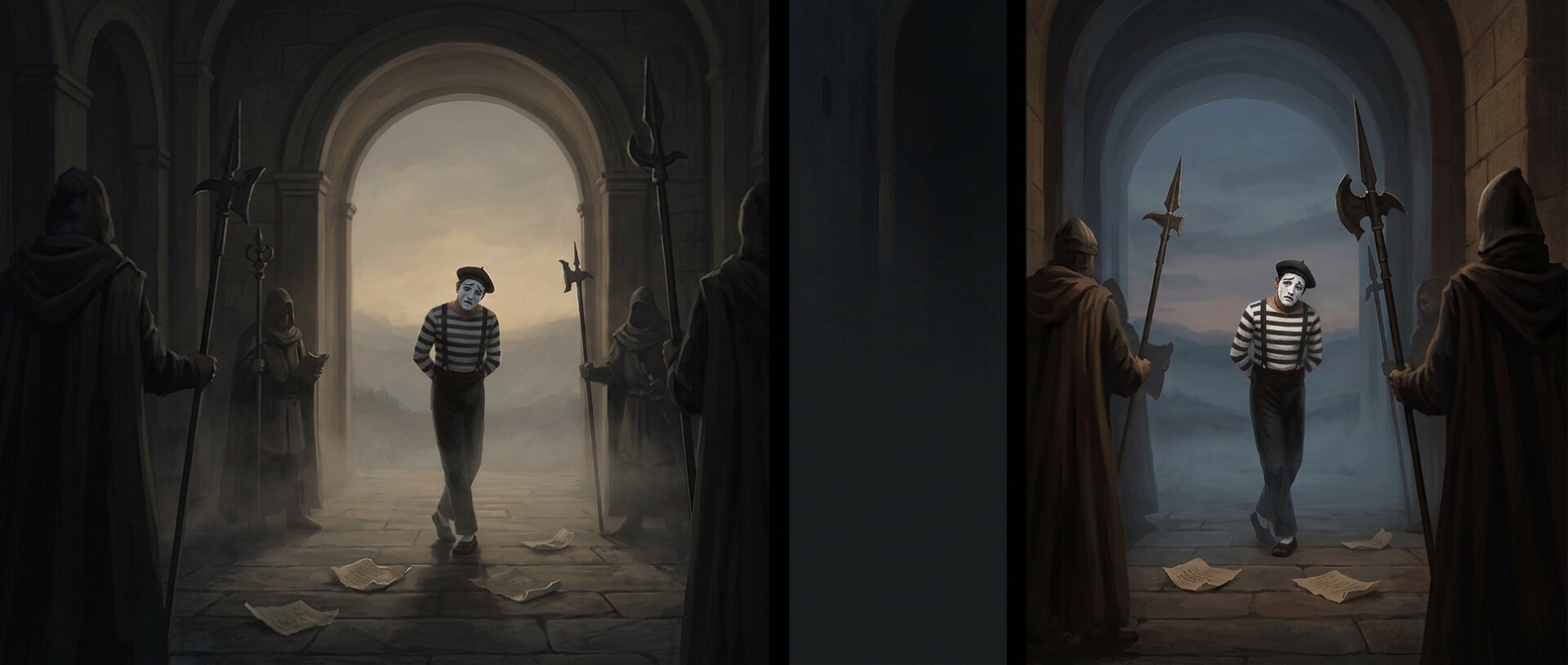
Roman authorities had broad ways to punish people accused of threatening public order or insulting imperial authority. Performers could face exile or, in especially dangerous political circumstances, death. But this was not a fixed penalty applied whenever a mime made fun of a ruler. The consequences depended on the target, the performance, and the officials who chose to interpret it as a political challenge.
The stage gave satire an unusual reach: a joke could be delivered to a gathered audience, remembered, and repeated beyond the theater. At the same time, performers had little protection if a ruler or official decided that laughter had crossed into defiance. The same public visibility that made mimes effective satirists also made them vulnerable.