Why GTA’s Radio Works as More Than Background Noise
In Grand Theft Auto, radio is built into an ordinary action: getting from one place to another. A player may spend long stretches driving, with little to do besides steer. That quiet interval gives fictional broadcasters room to turn the game’s setting into commentary. Unlike a joke delivered in a cutscene, a radio bit can drift in while the player is busy—and keep going whether or not the player stops to listen.
A Satire You Can Tune In and Out Of
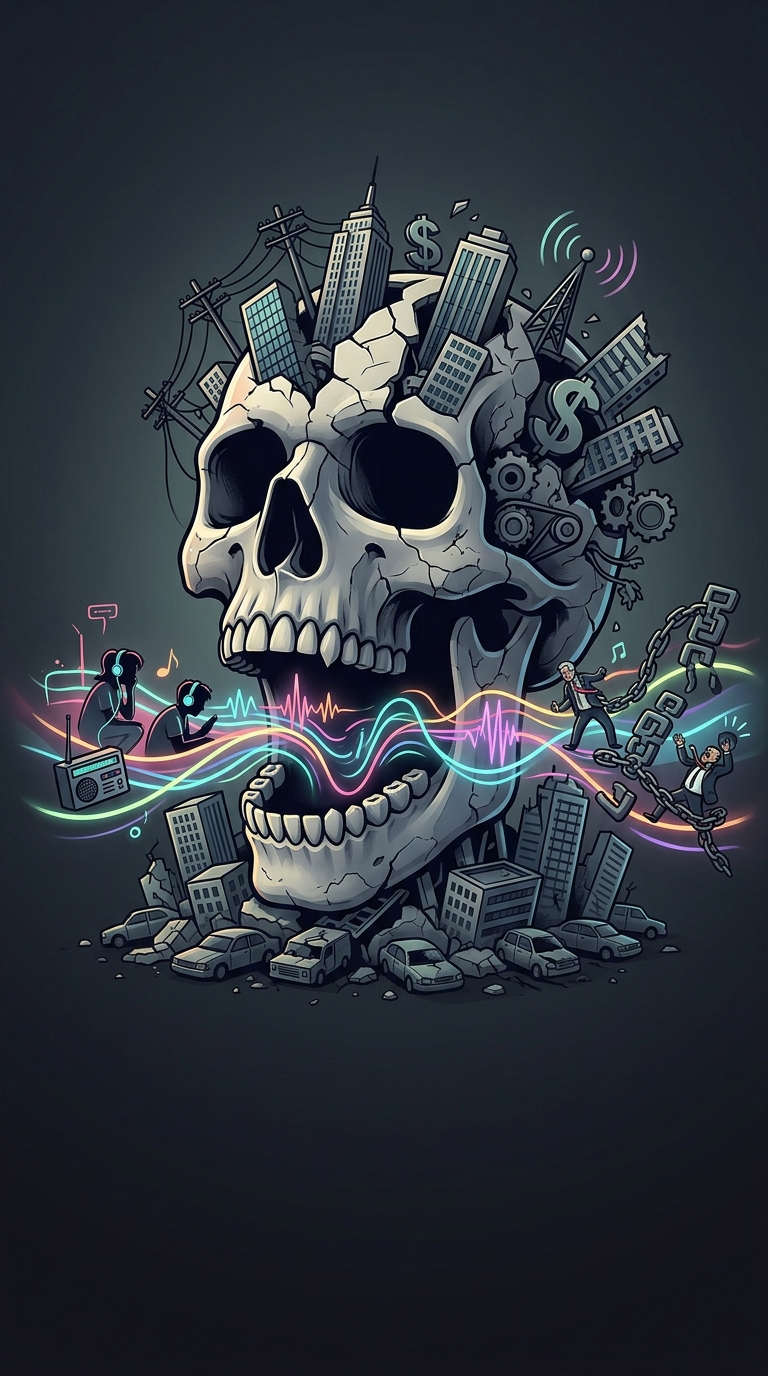
The stations imitate familiar commercial broadcasting: music, chat, advertisements, and hosts who speak with confident opinions. Their humor comes from the gap between that polished, persuasive tone and the absurdity of what they are selling or arguing. Parody ads make consumption itself a punchline; talk-show exchanges turn political posturing and media outrage into part of the fictional world.
Because the player chooses a station, the satire does not arrive as a single required speech. It is scattered across repeated drives and can be caught in fragments. That makes the fictional broadcasts feel less like an author explaining a theme and more like a noisy culture the player has entered.
The Joke Is Part of the World-Building
This approach also solves a design problem: a sprawling city needs to feel inhabited even when the player is traveling alone. Radio fills the car with voices and gives the imagined society its own habits, anxieties, and sales pitches. The same consumer culture that appears in the game’s stores, brands, and missions is audible in the background, constantly trying to persuade someone to buy, believe, or pay attention.
The result is a form of satire that depends on repetition and contrast. Players can treat the stations as entertainment, ignore them, or gradually recognize how their jokes echo the world outside the car. A drive across the map becomes a miniature tour of the game’s fictional public life.