Why the Last Jumps Raise the Stakes
In a speedrun, finishing quickly is not just a matter of moving Mario toward the exit. The runner has to reproduce a carefully practiced route while keeping small errors from costing time—or ending the attempt. Near the finish, even a brief hesitation can matter because there is little time left to recover from a mistake.
“Frame-perfect” describes an action that must happen on a particular frame, one of the individual images a game displays. At 60 frames per second, a single frame lasts about one-sixtieth of a second. The phrase does not mean every jump is necessarily that strict; it signals how narrow the timing window can be.
A Pulse That Makes Tension Visible
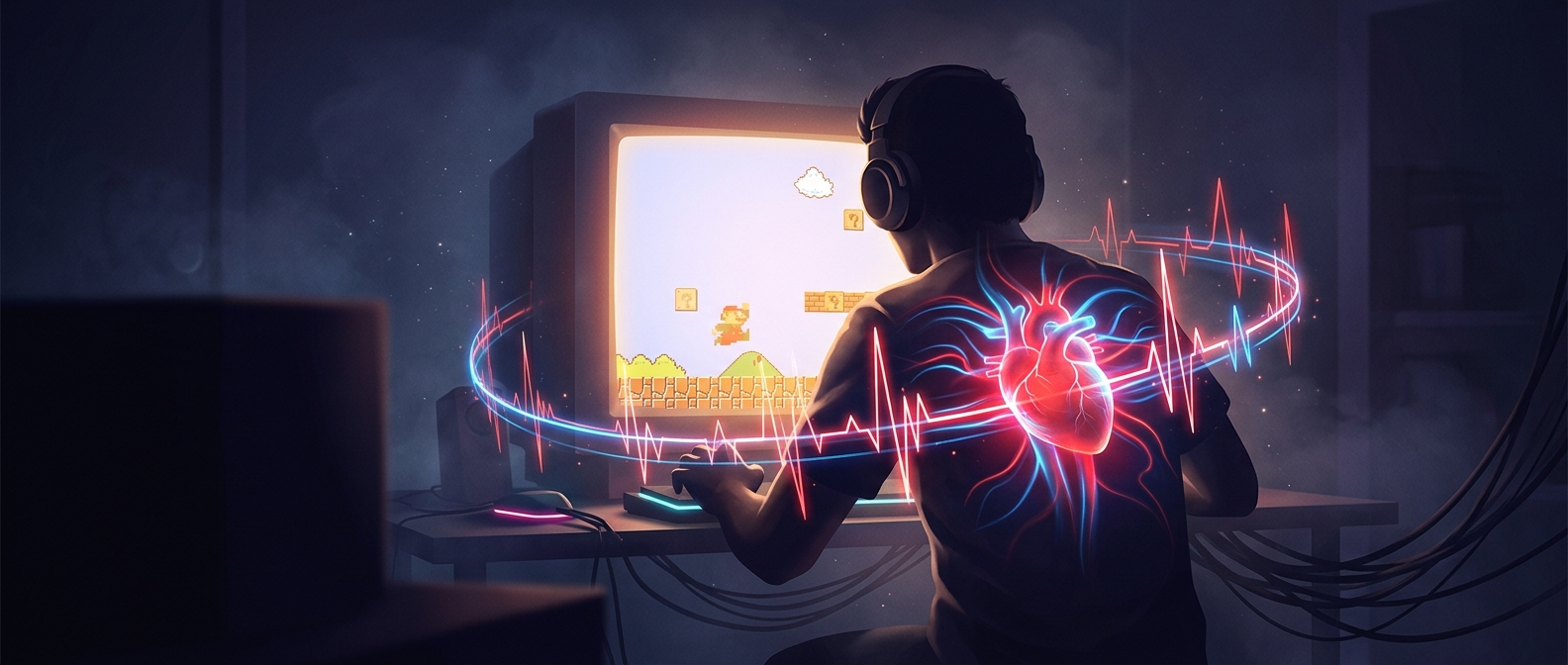
A heart-rate monitor turns some of that pressure into something viewers can see. A pulse above 170 beats per minute shows a strongly elevated heart rate, but the number alone cannot identify its cause or say whether it is medically dangerous. Concentration, excitement, and stress can all contribute to a faster pulse; the monitor does not distinguish among them.
That visibility changes the viewing experience. The game shows whether the jumps succeed, while the rising pulse offers a second, imperfect measure of how intensely the attempt is being experienced. The final obstacle is still on screen—but now the audience can also watch the runner’s body register the pressure of getting it right.