Why UNO Doesn’t Let You Stack Draw Cards
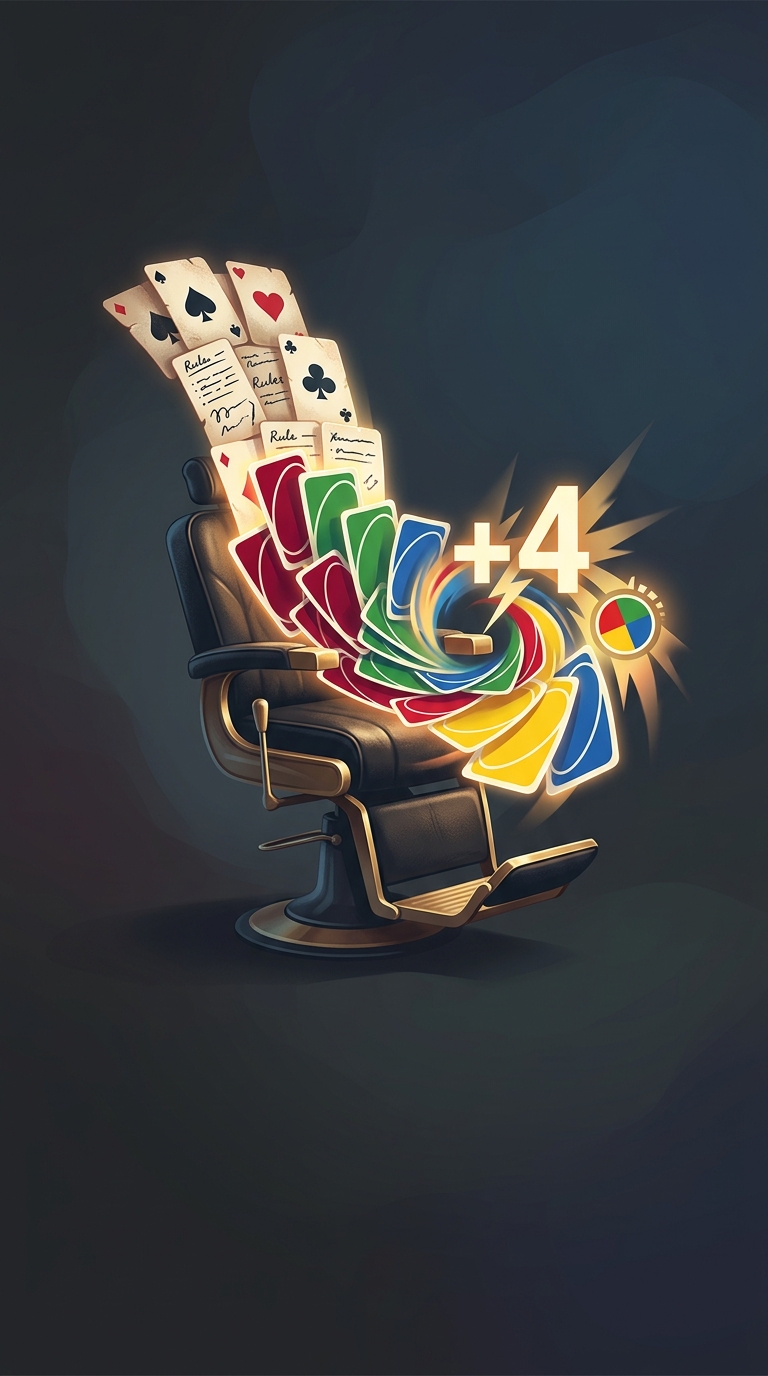
The disputed move is stacking: after one player plays a Draw Two or Wild Draw Four, the next player adds another draw card and passes the growing penalty along. Under UNO’s official rules, that chain is not allowed. The player hit by the card must draw the specified number of cards and lose their turn; they cannot answer with another draw card to make the next player pay instead.
That distinction comes from how the cards are designed to work. A Draw Two is an action with a fixed result, not an invitation to raise the penalty. A Wild Draw Four also makes the next player draw four and miss a turn, though it has a separate challenge rule: the player may challenge whether the card was legally played. Neither card’s effect includes passing or adding its penalty.
House Rules Change the Consequences
Stacking is popular as a house rule because it turns a forced draw into a high-stakes contest: players can escape a penalty by passing it on, but the eventual recipient may face a much larger hand. That makes the rule feel familiar even to people who learned UNO differently. It also changes the game’s pacing and strategy, since players may save draw cards for defense rather than use them only for their printed effect.
So the argument is less about what players are allowed to do at their own table than about which version they are playing. If the group wants stacking, it needs to agree on that house rule before the first penalty lands. Otherwise, the official result is simple: draw the cards, miss the turn, and let play continue.