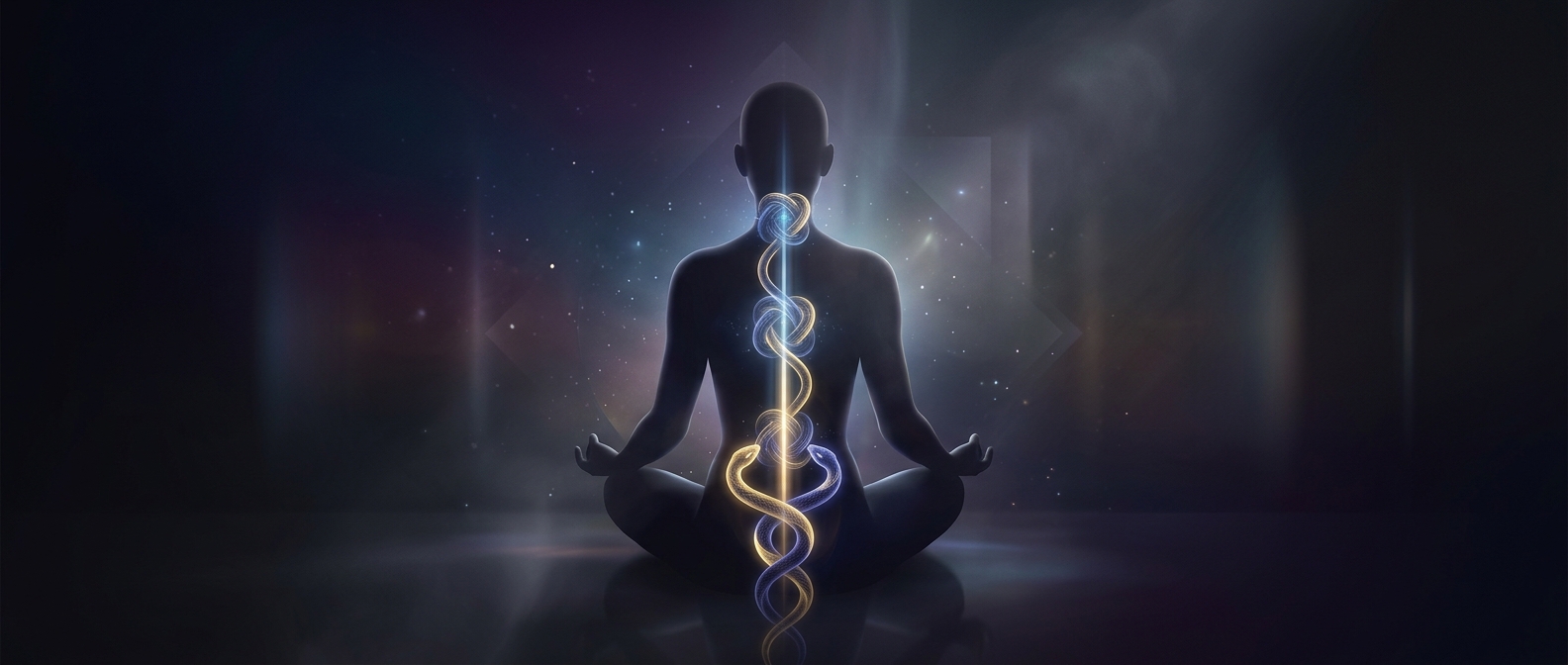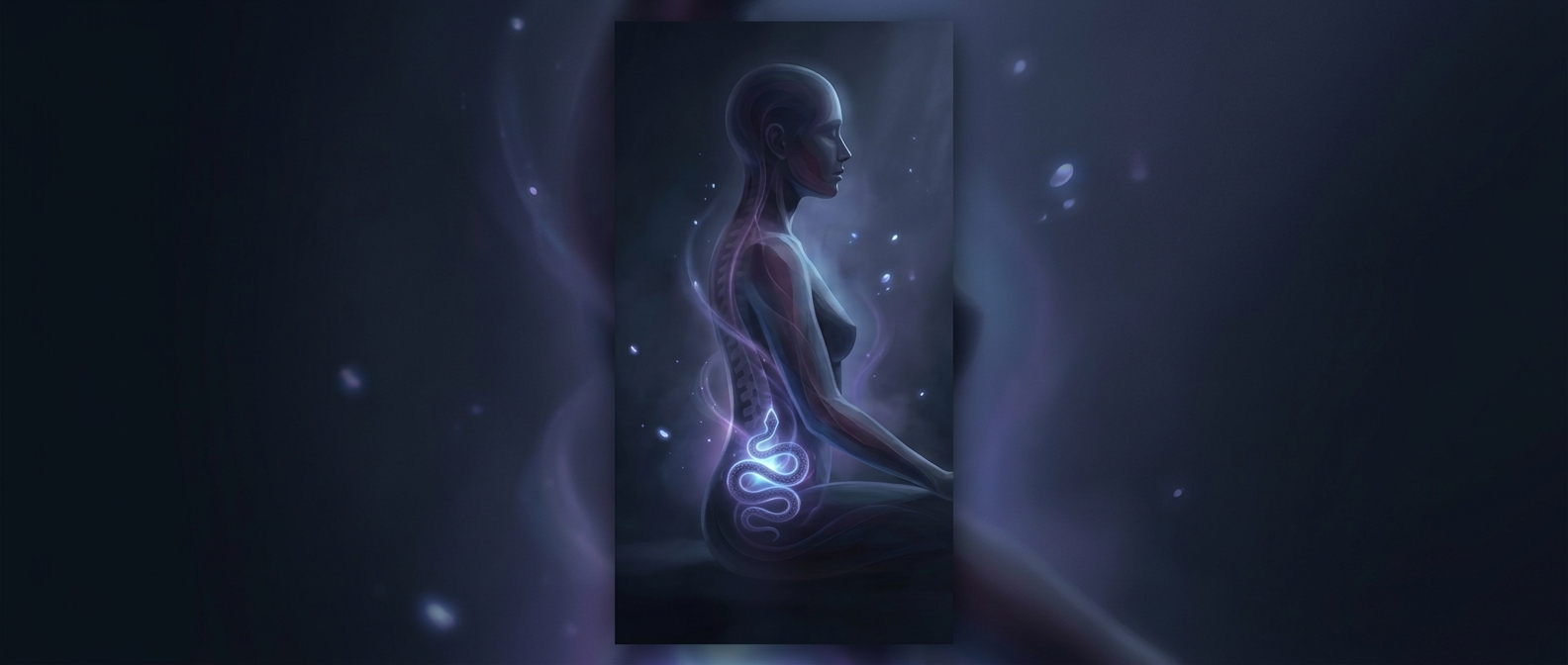
The serpent is a map, not an anatomical claim
In some forms of Hindu Tantra and yoga, this rising force is called kundalini. The name is associated with a coiled serpent, an image for spiritual potential thought to lie dormant near the base of the spine. In the tradition’s subtle-body map—a spiritual model of the person, not a description of nerves or organs—that force is said to rise through centers called chakras, or “wheels,” toward the crown of the head.
The image gives a striking bodily sensation a spiritual storyline: something latent begins to move, passes through stages, and may bring a shift in awareness. The serpent’s ascent is therefore more than a colorful way to describe tingling; it represents transformation.
Why the sensation can feel like a revelation
People who use this framework may understand warmth, trembling, pressure, or waves of sensation as signs of an awakening. The experience can feel especially meaningful because it is vivid and seems to travel through the body. Within the tradition, its significance is not simply that a person felt something unusual, but that the sensation is interpreted as part of a larger movement toward spiritual insight.
These interpretations differ among teachers and lineages, and the same bodily feeling does not carry one universal meaning. The central image remains memorable because it turns an invisible inner change into a scene the mind can picture: a coiled force beginning to rise.