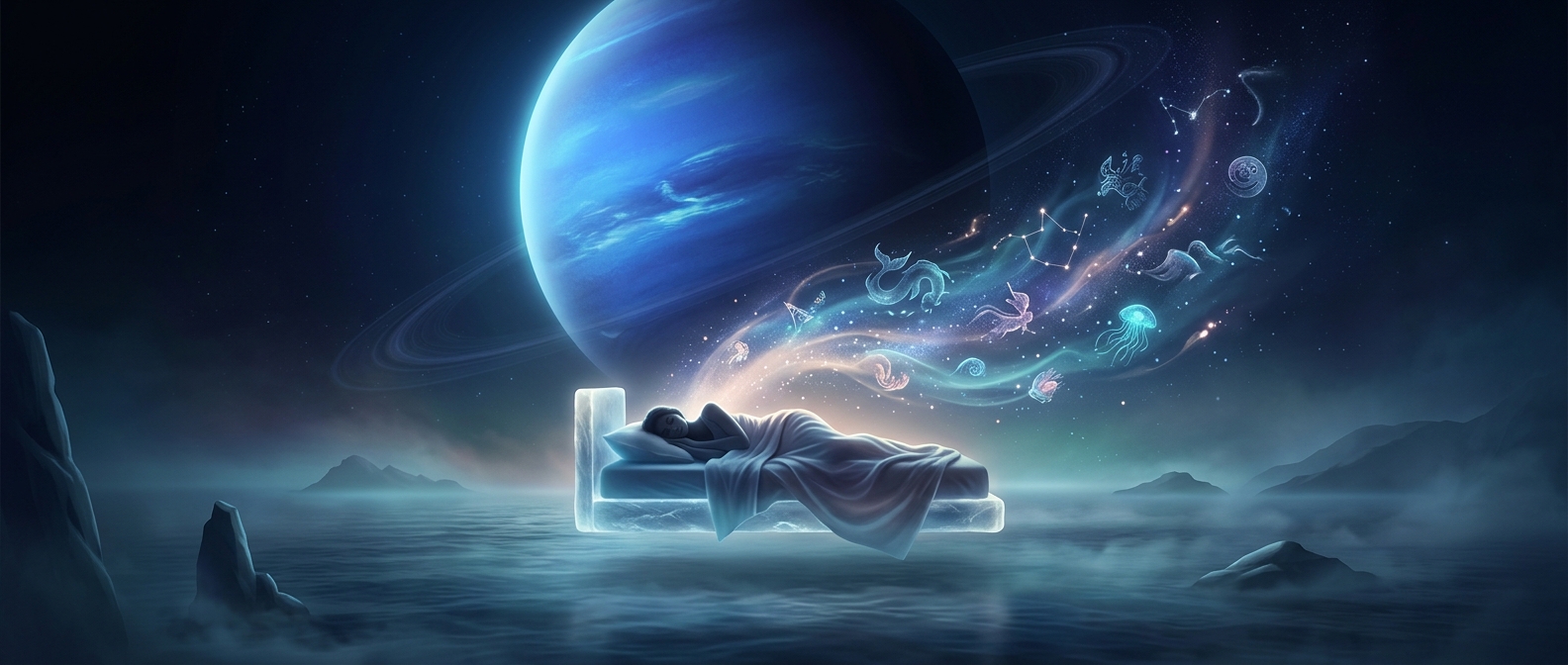
Neptune’s symbolism begins with what cannot be seen clearly
In astrology, Neptune is associated with dreams, imagination, and blurred boundaries. Its influence is therefore read less as a straightforward event-maker than as a symbol for experiences that feel vivid but are hard to pin down: a dream remembered only in fragments, an intuition without an obvious source, or a moment when wishful thinking colors what someone sees.
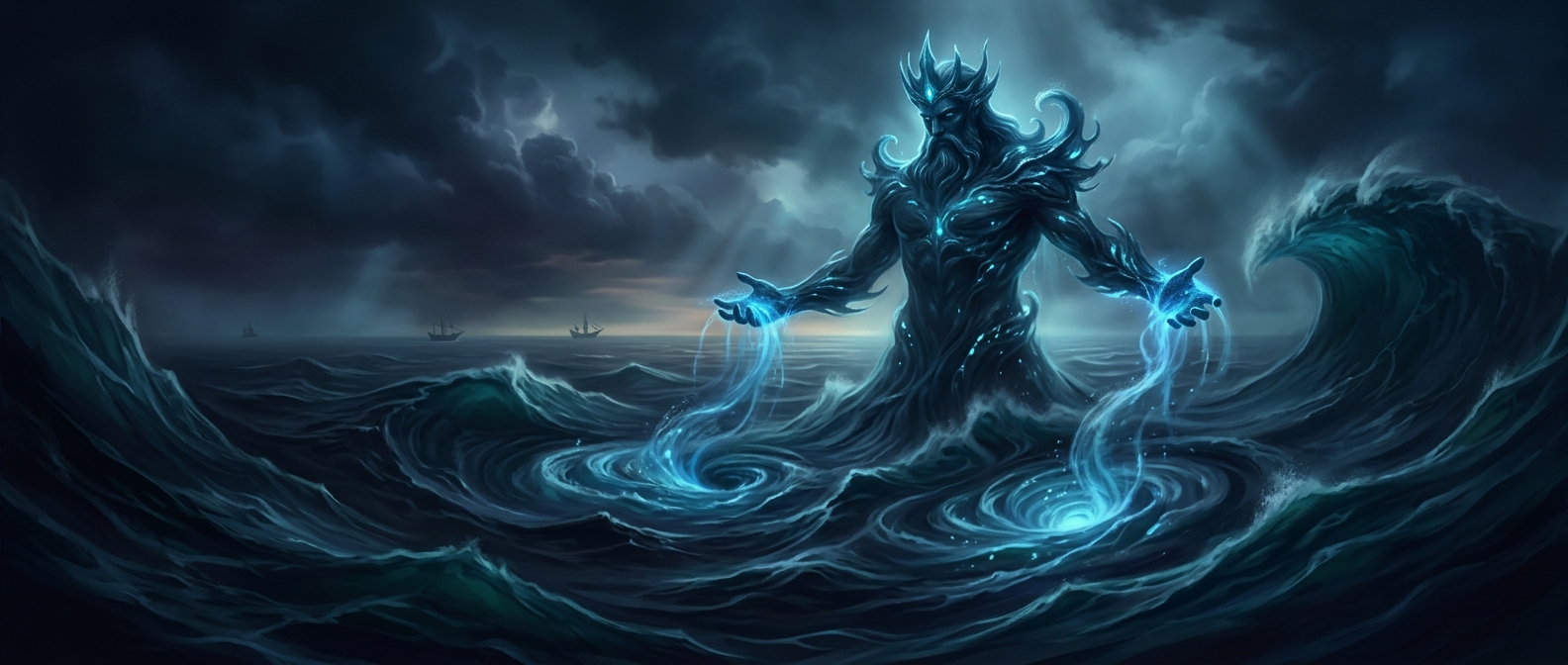
That symbolism draws on the planet’s namesake, the Roman god of the sea. A vast, changeable ocean offers a fitting image for the inner life: deep, difficult to map, and capable of making familiar things look strange. In this framework, Neptune’s connection to sleep is about the mind’s passage away from ordinary waking clarity, not a claim that the planet physically controls anyone’s rest.
Reading the haze without taking it literally
Astrologers may use Neptune’s placement in a birth chart to explore how someone relates to fantasy, sensitivity, or uncertainty. The interpretation is usually about a tendency or theme, not a reliable forecast of what a person will dream on a particular night. A “Neptunian” dream, in this language, might be treated as emotionally suggestive rather than as a literal message.
The useful distinction is between symbolic meaning and prediction: Neptune gives astrologers a vocabulary for talking about elusive inner experiences. Its hazy reputation is also a warning within that vocabulary—when feelings or images are compelling but unclear, they may invite reflection, not certainty.