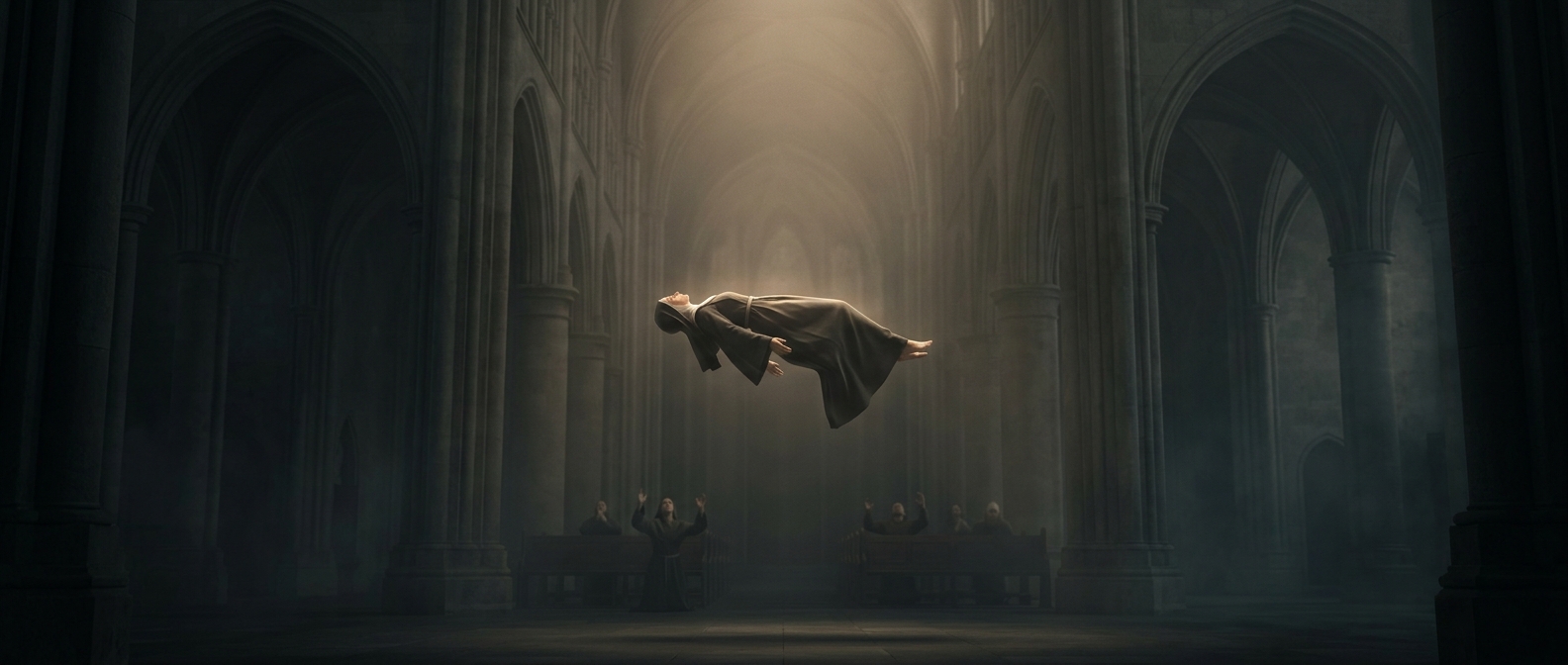
The problem is not height—it is control
A person who could hover would still need to stay in one place. A cot provides more than a soft surface: it limits how far the body can roll or slide. In midair, even a small shift could carry a sleeper toward a wall or ceiling unless the hovering itself included precise, automatic stabilization.
That makes the ceiling a particular hazard. Sleep relaxes the muscles used to correct posture while awake, so a drifting sleeper might not notice the approach or brace for contact. The result could be a bump rather than a comfortable landing.
Rest needs a reliable stopping point
The same issue applies to getting into and out of sleep. A bed gives the body steady pressure and a clear sense of where it is; unsupported hovering would remove those cues. A magical ability that kept someone perfectly still could solve the collision problem, but it would not automatically make the experience feel restful.
So the practical question is not simply whether a person can float. It is whether they can remain safely anchored in space while asleep—without waking up against the ceiling.