Why Liquid Oxygen Can Make Carbon Glow and Burn
Carbon does not need to be a flame to burn; it needs enough heat and oxygen to react. In a demonstration, the carbon is heated first, then liquid oxygen is poured over it. The oxygen supplies the oxidizer—the ingredient that lets fuel release energy in combustion—and the hot carbon provides the fuel.
A Sudden Change From Liquid to Gas
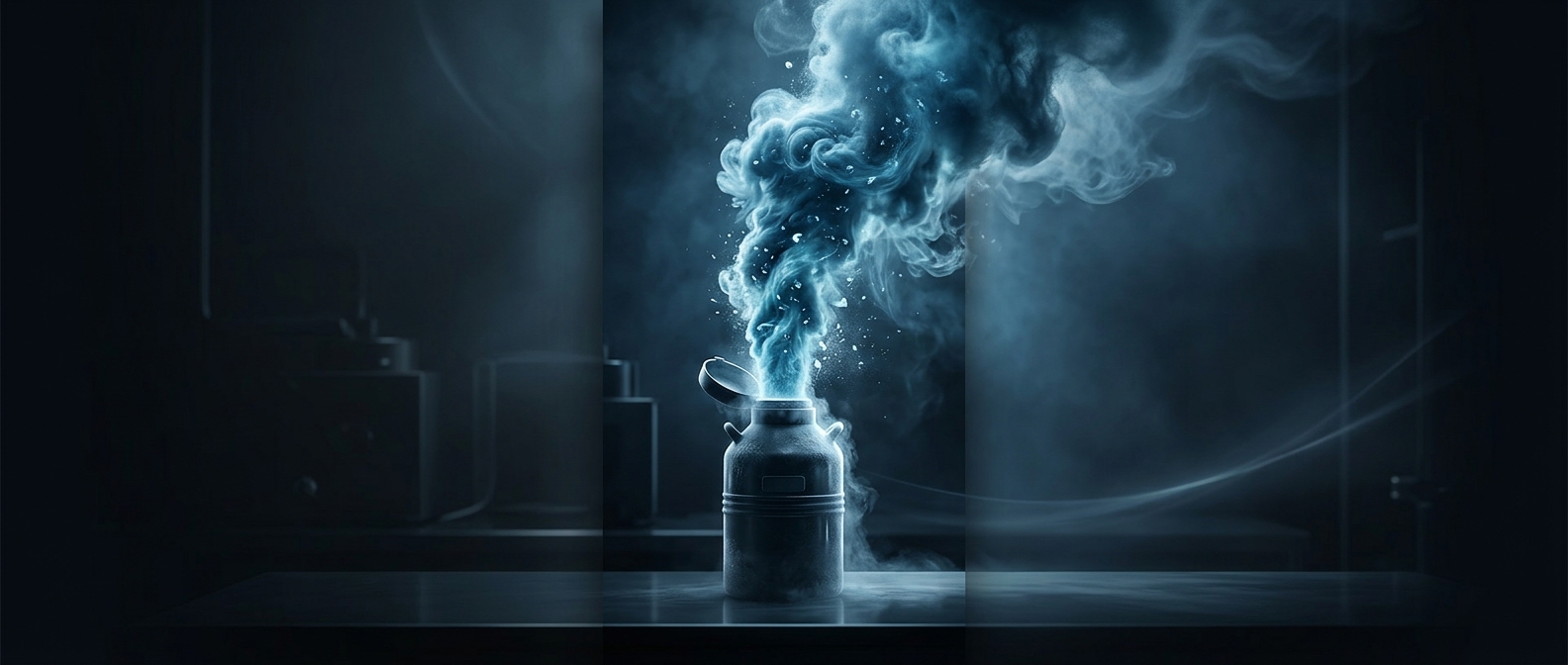
Liquid oxygen is extremely cold, but at ordinary pressure it boils at about −183°C (−297°F). When it touches hot carbon, heat rushes into the liquid and makes it boil rapidly. The resulting oxygen gas surrounds the carbon, where it can react with the hot surface much faster than oxygen drawn from ordinary air.
That reaction forms carbon oxides and releases energy as heat. The added heat can keep more carbon reacting, while glowing carbon and hot reaction products produce the bright appearance. The liquid itself is not burning: oxygen supports combustion but is not the fuel. The apparent burst comes from a rapid increase in oxygen supply and reaction rate.
Why the Effect Is So Intense
Air contains oxygen mixed with mostly nitrogen, which does not contribute fuel to the reaction and absorbs some heat. Liquid oxygen provides a concentrated supply of oxygen as it vaporizes, so the carbon can burn more vigorously than it would in air. The demonstration makes visible a basic feature of fire: fuel, oxygen, and sufficient heat must meet at the same time.
The same property makes liquid oxygen hazardous. Materials that burn slowly or are difficult to ignite in air can react fiercely in oxygen-rich conditions, especially if they are already hot. What looks like oxygen catching fire is therefore a vivid reminder that changing the oxidizer can transform how quickly an ordinary fuel burns.