The séance became a reportable event
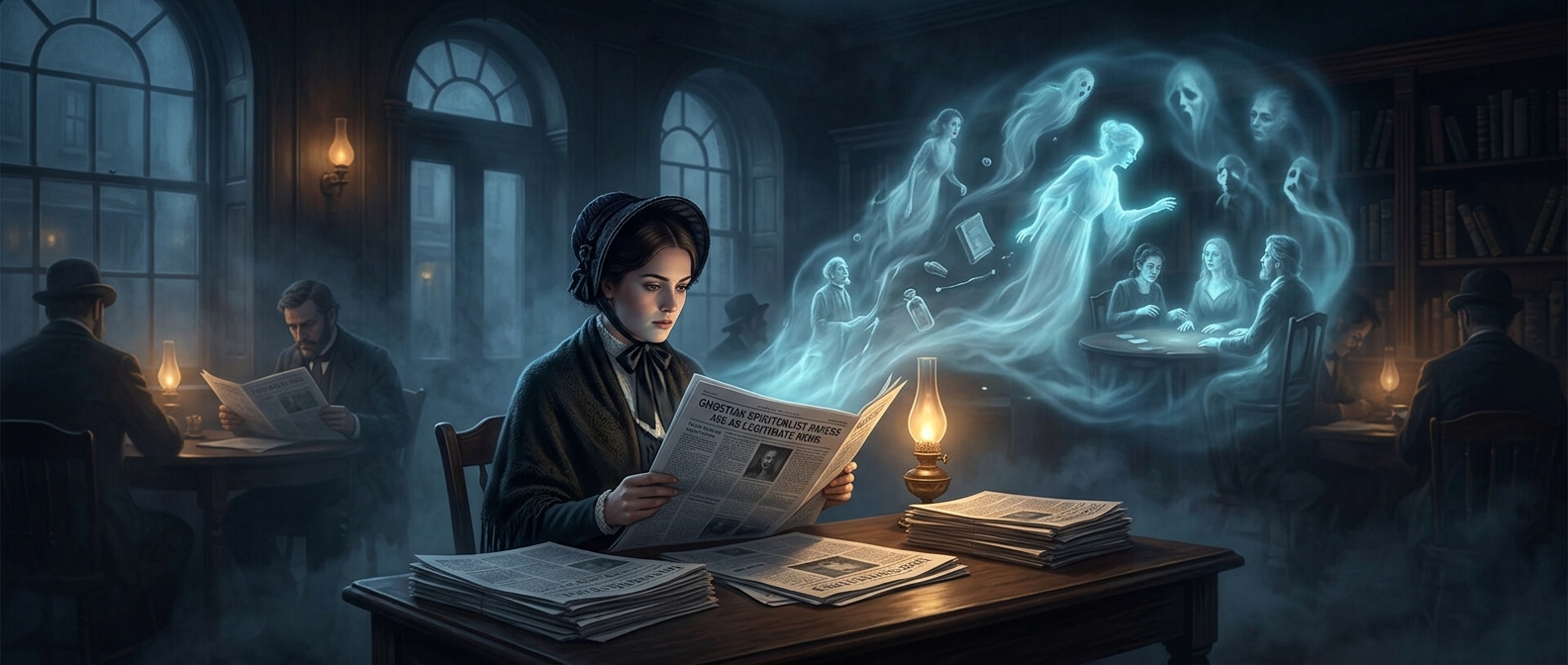
In the late nineteenth and early twentieth centuries, spiritualist periodicals such as Light and The Medium and Daybreak treated séances not merely as private gatherings but as events readers could assess from a distance. A reporter’s account could describe who was present, how the room was arranged, what happened in the dark, and what witnesses said they saw. That detail gave an extraordinary claim the shape of ordinary news: something observed, narrated, and circulated for discussion.
The reports appeared in a press where spiritualism—the belief that the living could communicate with the dead—was a subject of public debate. For believers, a table rising or a medium producing “ectoplasm” (a supposed substance emerging from a medium’s body) could count as evidence of spirit contact. Printing such episodes made them available to readers who had never attended a séance, and helped build a shared record of purported phenomena.
Description was part of the argument
A straight-faced account did not, by itself, prove that a table had floated or that ectoplasm was real. But the way an event was described mattered: named witnesses, physical surroundings, and a sequence of actions could make a report feel testable rather than purely miraculous. Readers could compare accounts, accept them as testimony, or question what conditions allowed the event to be seen.
That made séance reporting more than colorful entertainment. It turned the private, often dimly lit encounter into a public claim about what counted as evidence—and who had authority to judge it. The striking consequence was that a phenomenon said to come from the spirit world could enter the same printed pages as everyday news, where readers had to decide how much weight a reporter’s account deserved.