The bathroom as an extension of the Oval Office
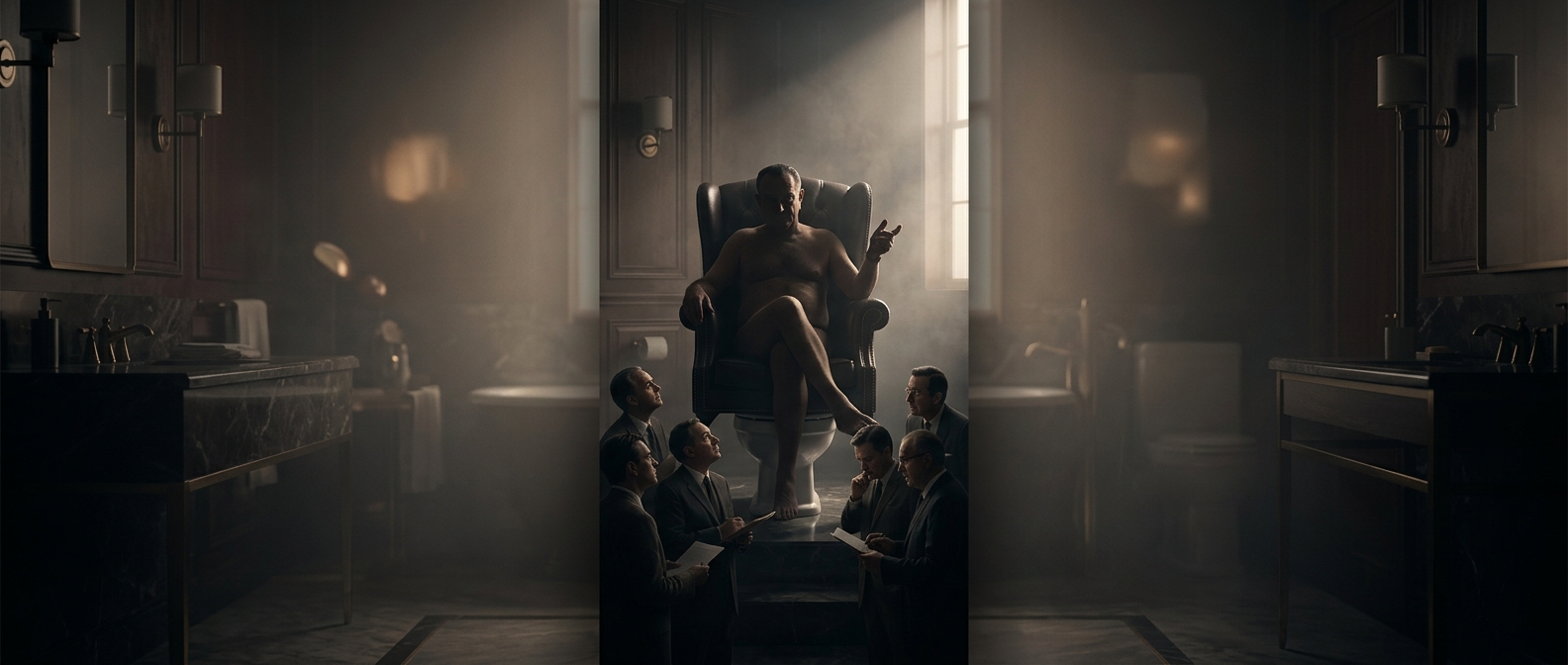
Lyndon B. Johnson’s bathroom meetings blurred a boundary that normally protects political conversation: the line between public business and private bodily routine. A meeting room gives participants chairs, a table, and familiar cues about when to speak or disagree. In the bathroom, those conventions disappeared. The president could keep talking without stopping his day, while everyone else had to adapt to the setting he chose.
That imbalance mattered. The informality was not the same as equality: Johnson remained the person with the power to summon people and set the terms of an encounter. Aides or visitors might be physically close to him, yet they were still in his workplace, on his schedule, and expected to discuss official business.
A meeting without the usual defenses
Formal surroundings can help people maintain composure. A desk offers a place to sit, papers to consult, and a little distance between negotiators. Johnson’s approach removed those props. Anyone trying to press a point had to do so while confronting an unusually personal scene, making it harder to treat the exchange like a conventional negotiation.
The tactic also made the presidency feel continuous rather than confined to the Oval Office: work followed Johnson into a space where others would normally expect privacy. The memorable part was not simply that business continued in an unlikely room. It was that the room itself reinforced who controlled the meeting.