A cue the audience can smell
A scent can change how a scene feels before a character says a word. The smell of baking may make a space seem welcoming; smoke or charred wood can suggest danger. Because smell reaches the audience directly rather than through dialogue or scenery, it can make a theatrical setting feel unusually immediate.
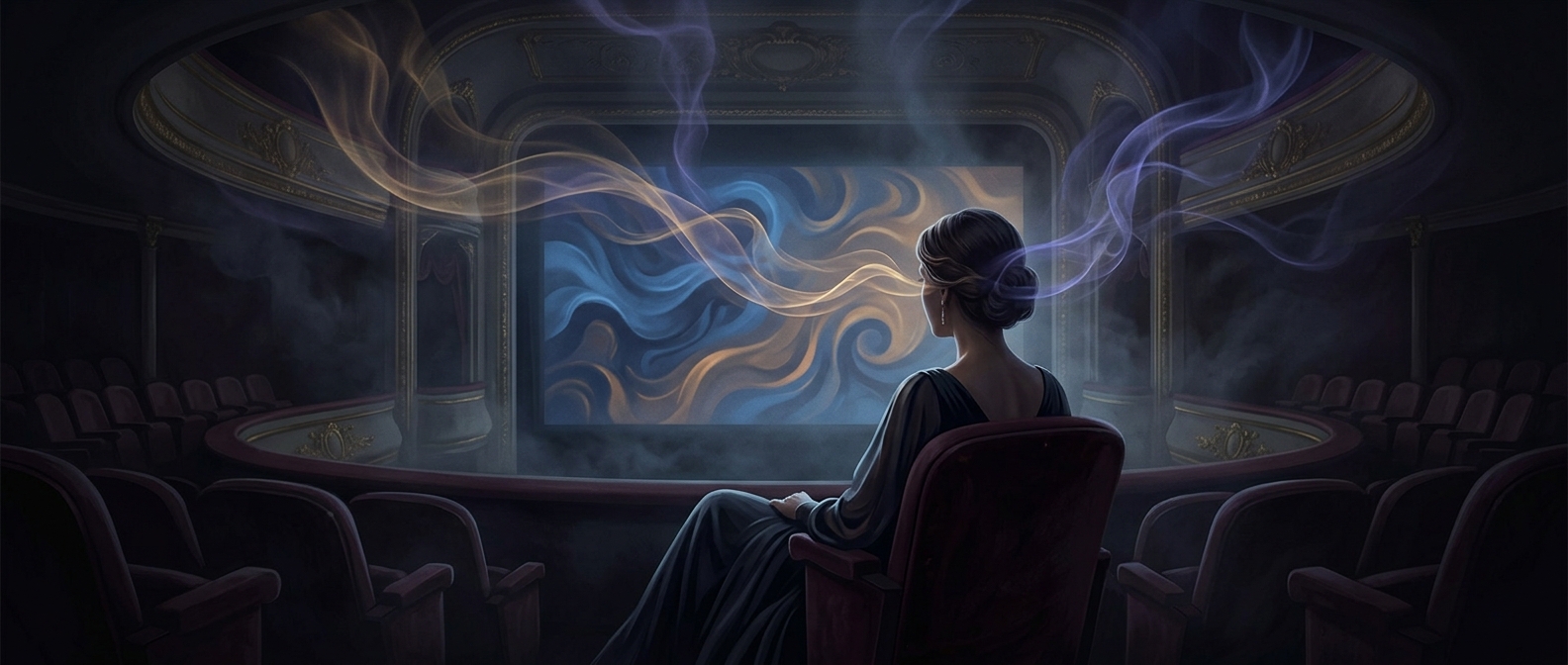
The effect depends on timing. A theater can release a fragrance during a particular moment, so the smell becomes part of the show’s cues, much like a lighting change or a sound effect. Hidden vents distribute it without drawing attention to the source. When the scent arrives alongside a visual or musical change, the audience can connect the sensory clues and experience the scene as warmer, more unsettling, or more vivid.
The hard part is controlling the air
Unlike light, a scent does not vanish when the cue ends. Air currents can carry it beyond the intended area, and it may linger into the next scene. The production must balance a noticeable effect against one that overwhelms the room; ventilation can help clear the air, but also affects where a fragrance travels.
That makes scent a carefully timed design choice, not just an extra decoration. Used sparingly, it can turn an imagined place into something the audience seems to inhabit—and a faint trace left in the air can outlast the scene that introduced it.