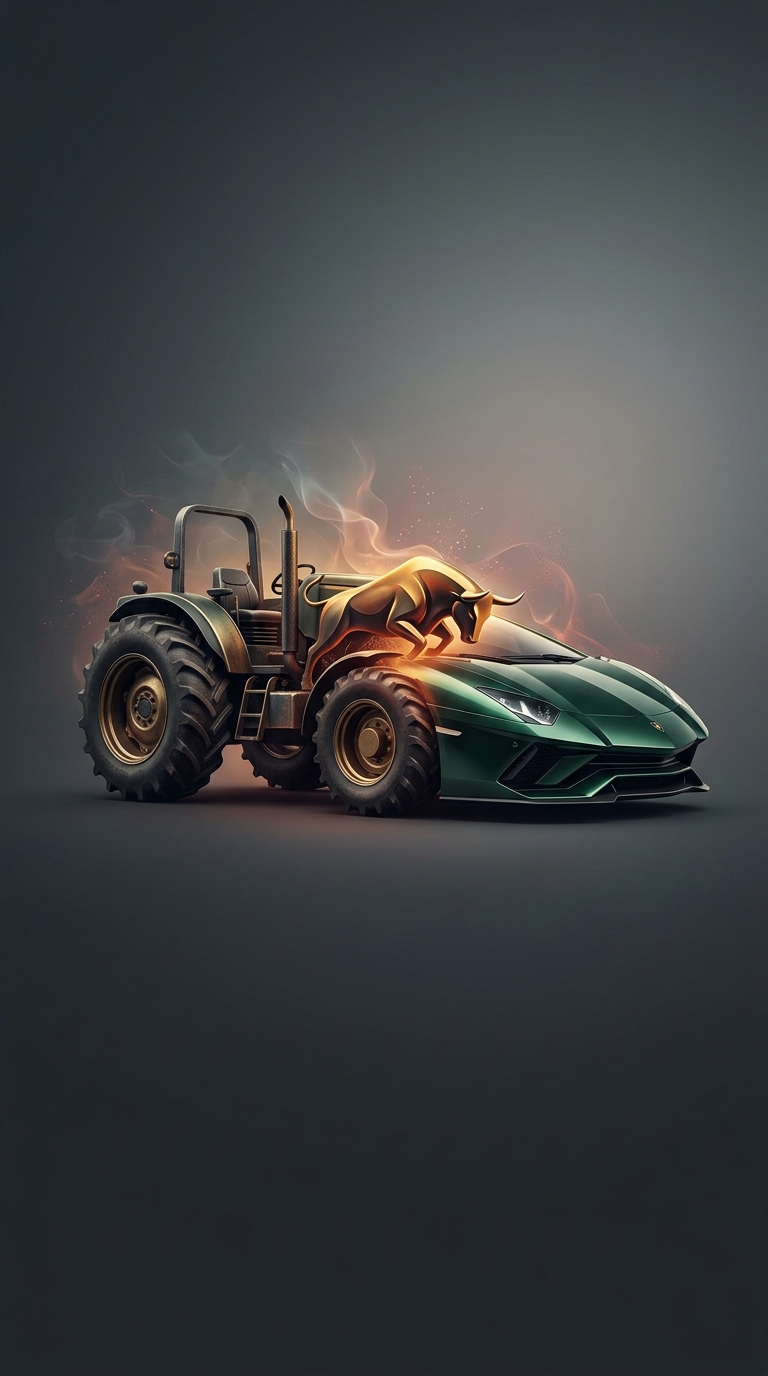
Turning wartime machinery into farm equipment
After the Second World War, Italy needed to rebuild, and farmers needed tractors to bring fields back into production. At the same time, military vehicles and equipment left behind by the war offered a supply of usable components. Ferruccio Lamborghini saw a practical opportunity in that overlap: instead of starting with an entirely new machine, he could adapt available hardware to do essential work on farms.
A tractor had to be sturdy and dependable, but it did not need the specialized design of a military vehicle. Reusing suitable parts helped make production possible when new machinery and materials were scarce. The result was a business aimed at customers with an immediate need: farmers who required equipment to work their land.
The tractor business came before the supercars
Lamborghini’s fortune grew from selling farm machinery, not from luxury cars. That distinction matters because the tractor business supplied the resources and manufacturing experience that made later ventures possible. A tractor factory had to turn components into working machines reliably and at commercial scale; those were practical skills and assets built long before Lamborghini became associated with high-performance automobiles.
The change in direction was striking, but it was not the starting point. Lamborghini first built a business around a postwar need, using what was available to make equipment people could put to work. The celebrated cars came later, after tractors had already established his fortune.