How opium helped pay for Britain’s tea
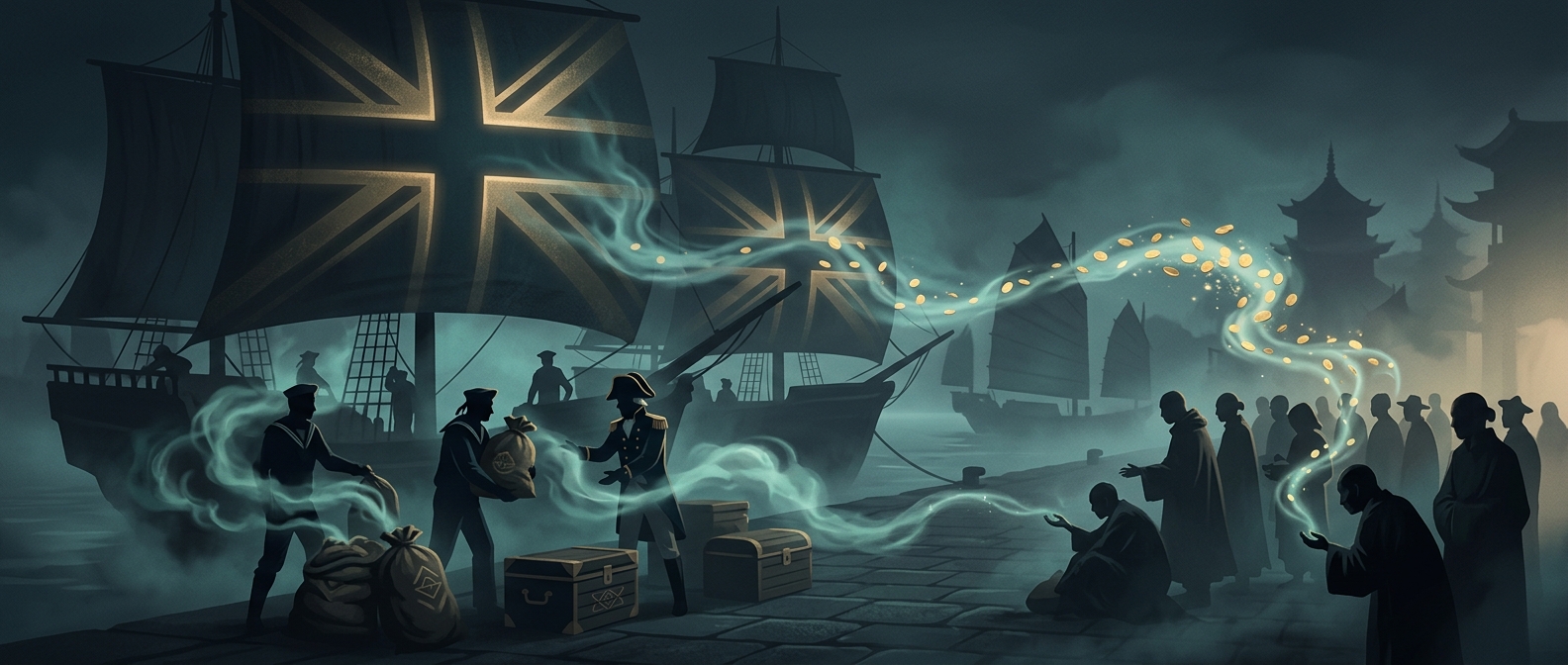
In the 18th and early 19th centuries, British demand for Chinese tea, silk, and porcelain sent large amounts of silver to China. China, meanwhile, had limited interest in British goods. To reduce that imbalance, the East India Company—Britain’s powerful trading company, which also ruled much of India—expanded the production of opium in India.
The company generally did not carry the drug directly into China. It sold opium at auction in India to private merchants, who smuggled it into China despite Chinese bans. Chinese buyers paid in silver, which merchants could then use to buy tea and other goods. Opium turned a costly trade imbalance into a profitable circuit, while spreading a highly addictive drug.
From confiscation to war
The Qing government saw opium as both a public-health threat and a drain on silver. In 1839, official Lin Zexu ordered foreign merchants to surrender their stocks at Canton, now Guangzhou; the seized opium was destroyed. Britain treated the action as an attack on British commerce and property, and sent a naval force. The ensuing First Opium War exposed the military gap between the two states: British steam-powered and sailing warships could strike along China’s coast and up its rivers.
The war was not formally declared as a campaign to preserve opium sales alone. British leaders also invoked trade access and compensation for seized property. But protecting merchants’ ability to trade—including the opium business—was central to the conflict. The 1842 Treaty of Nanjing forced China to pay an indemnity, open several ports to British trade, and cede Hong Kong. It did not itself legalize opium.
The result was a striking reversal: China had tried to enforce its prohibition on a damaging import, but military defeat left it with less control over its foreign trade. The opium trade continued, and later agreements further widened foreign access.