A small knot with a moral meaning
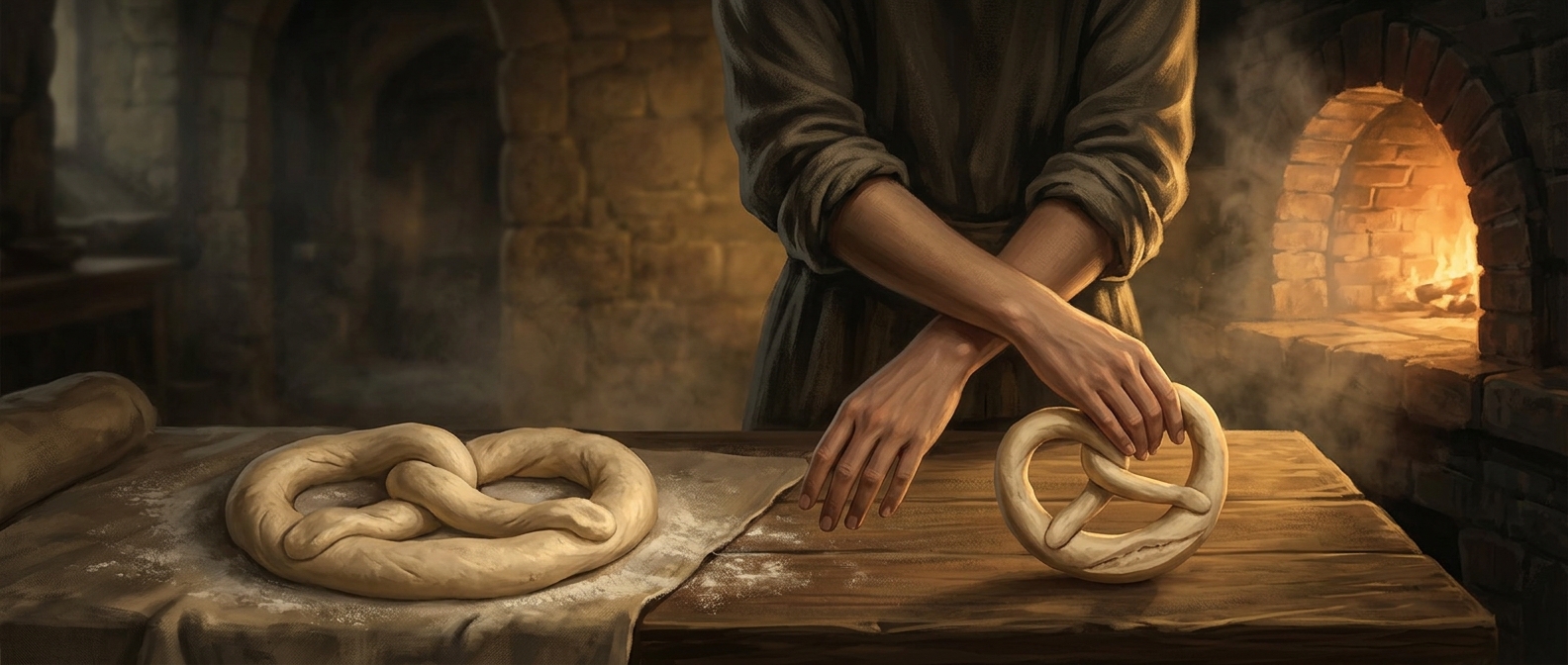
The pretzel’s crossed center was made to resemble arms folded across the chest—a familiar gesture of prayer and discipline. In the tradition behind the snack, that shape turned a piece of baked dough into a visual reminder: children who behaved well might receive a pretzel as a reward.
The gesture mattered because it could be recognized at a glance. A baker did not need to write a lesson on the food; the shape carried the message. The loops suggested folded arms, while the treat offered a child something pleasant for following the expected rules.
Manners, made edible
That pairing of reward and reminder gave the pretzel a role beyond filling hunger. It linked good behavior with a recognizable symbol, making an everyday snack part of a lesson in conduct. The idea is easy to picture: a child earns a treat, and the treat itself echoes the posture associated with proper behavior.
The shape has lasted long after that lesson faded from view. Today, the crossed loops may look like a clever baker’s flourish—but they also preserve the outline of a gesture once meant to teach.