Why gauze mattered before help arrived
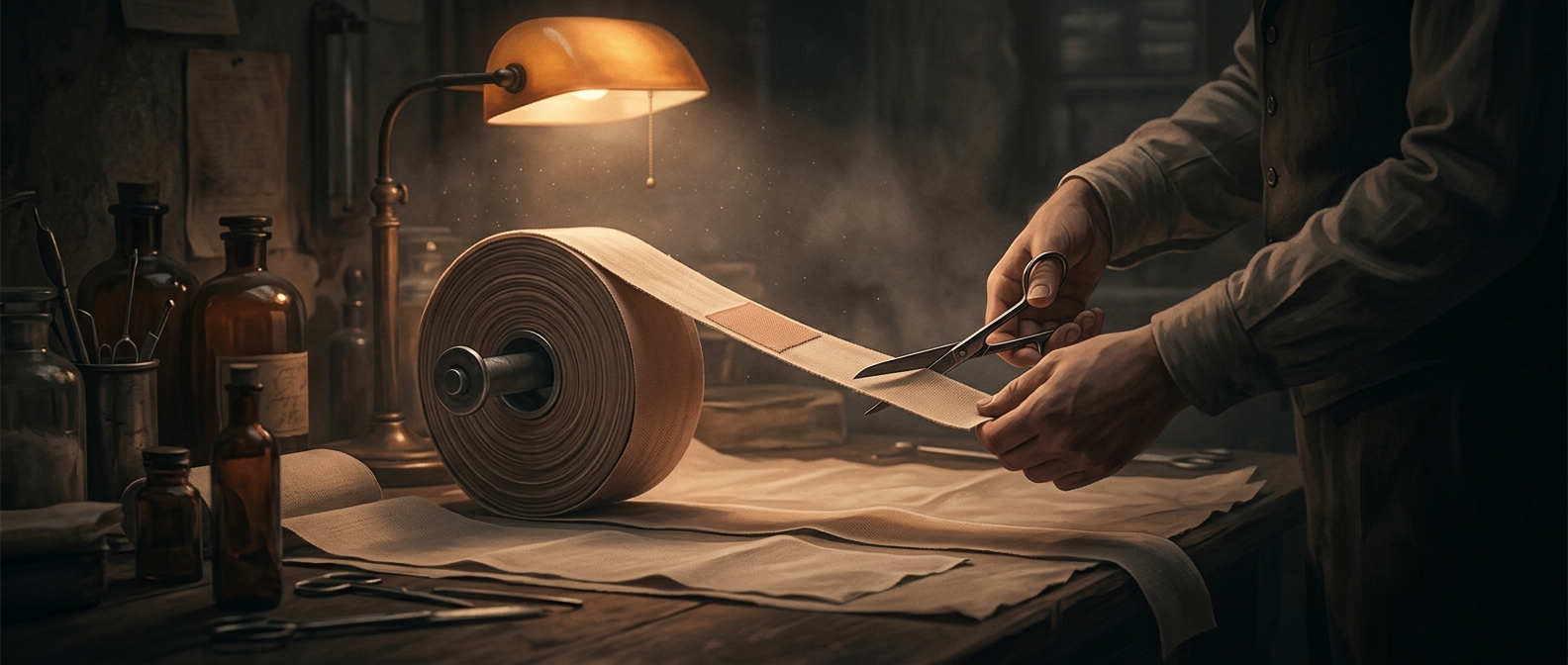
A serious injury on a rail line could become more dangerous while a worker waited to be moved or treated. Gauze gave a crew a practical first response: placed over a wound and held firmly, it could help slow bleeding and shield the injured area from dirt. It did not replace medical care, but it gave coworkers something useful to do during the delay.
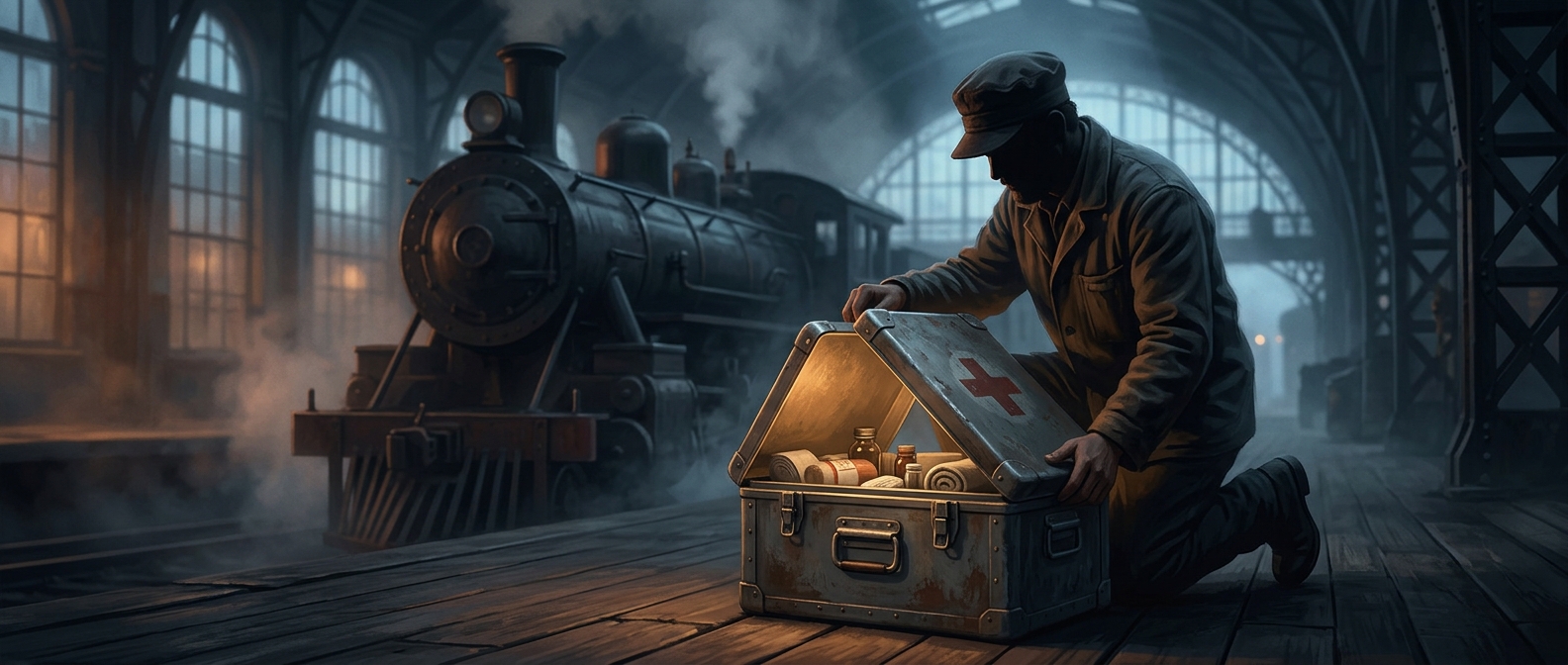
Packing the gauze tightly into a wooden box made the supplies easier to keep together and carry to an accident site. In a rail yard or along a track, a kit had to be ready for use amid dust, tools, and hurried movement—not stored like equipment in a nearby clinic.
A small change in where care began
The important shift was not a new medical technique but the decision to keep basic treatment supplies where injuries happened. That brought first aid closer to the work itself, making a foreman or coworker the first person able to respond rather than someone waiting for a town doctor. The wooden box was simple; its lasting idea was that emergency care should travel with the people most likely to need it.