Why Rest Wasn’t Always the Prescription
At some Victorian health retreats, recovery meant more than withdrawing from ordinary life. Physicians and retreat staff could assign manageable handwork—basket weaving among it—as part of a patient’s daily routine. The logic was practical as well as moral: a day with no structure might leave a person dwelling on distress, while a simple task offered something concrete to focus on.
What the Work Could Do
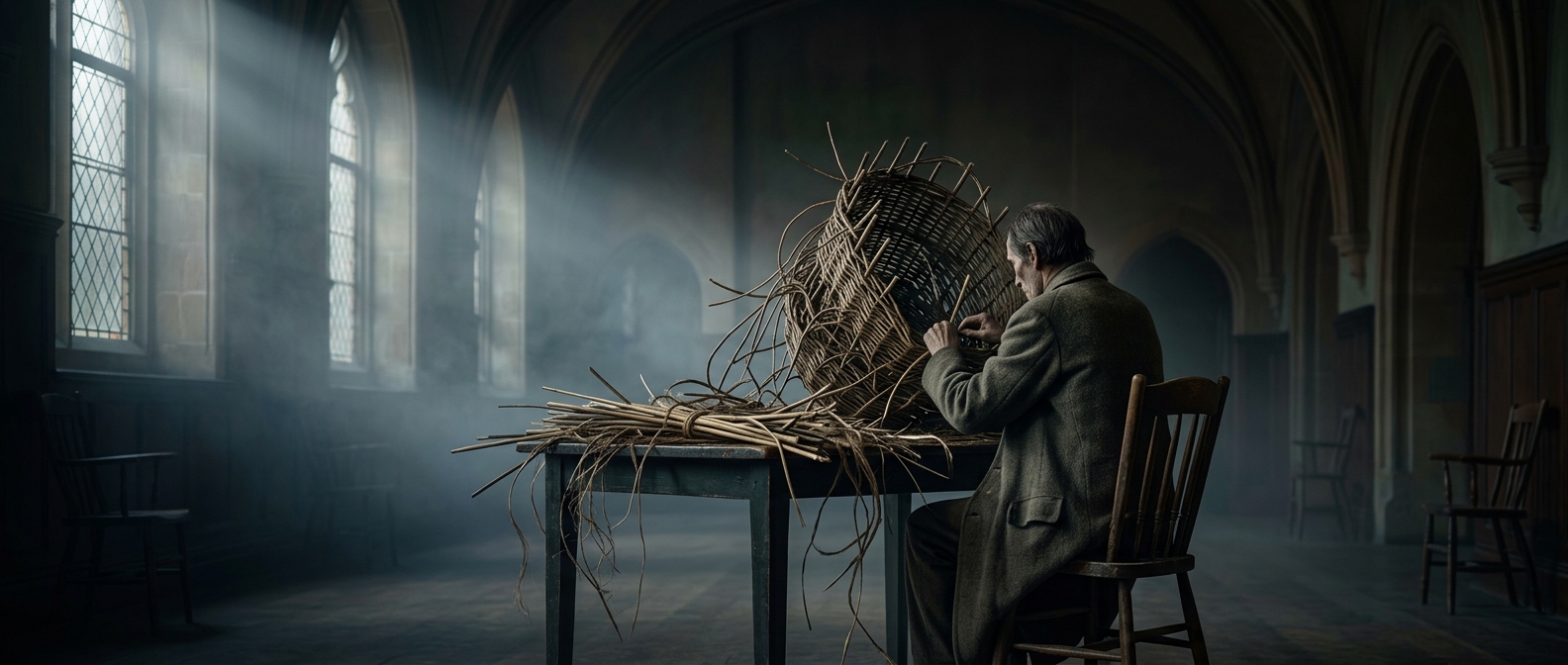
Basket weaving demanded steady attention and a sequence of small decisions: selecting and bending reeds, then fitting each strand into the growing pattern. That made it an absorbing occupation without requiring the pace or complexity of many jobs. The finished basket also gave the worker a visible result, turning an hour of otherwise empty time into a piece of useful work.
This was not a cure in itself. The task’s value lay in how it organized time and activity. In a retreat setting, crafts could help patients take part in a predictable routine and keep their hands and attention engaged. The same activity could also reflect Victorian beliefs that purposeful work was good for character, so treatment and social expectations were intertwined.
Care and Control in the Same Activity
The prescription reveals a tension in institutional care: keeping someone occupied could be presented as therapeutic, but it also made the day easier for a retreat to manage. Basket weaving was not simply a modern-style wellness hobby transplanted into the past. It belonged to a broader approach that treated structured activity as a way to shape both a patient’s experience and conduct.
A basket, then, could carry two meanings at once: a small accomplishment for the person who made it, and evidence that the retreat had given the day a prescribed form.