A New Kind of Passing Encounter
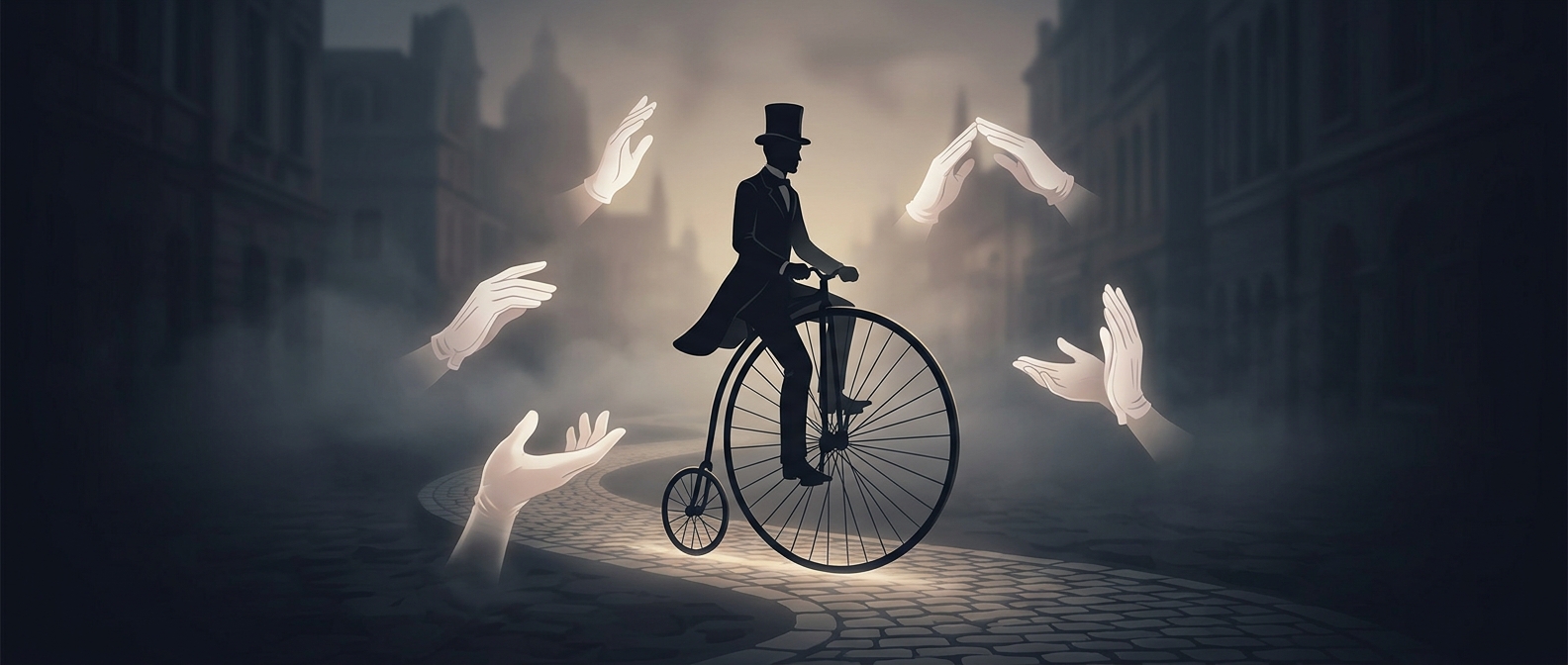
A bicycle changed more than how people traveled. It let riders move quickly through streets and country lanes, where they might pass someone on foot before either had much time to react. That created a small social problem: how could a rider acknowledge another person without stopping—or seeming to rush past rudely?
Etiquette books answered by adapting familiar rules of polite conduct to the new situation. Their instructions could specify how far away a gentleman should tip his hat to a woman. The distance mattered because a greeting had to happen early enough to be noticed, but the rider still needed to keep moving and control the bicycle.
Manners Made Mobility Legible
The advice also carried older expectations about gender and status into a new setting. A man’s hat-tip was not simply a practical signal; it was a recognizable gesture of deference. By spelling out how to perform it from a moving bicycle, etiquette writers turned an unfamiliar encounter into one people could interpret using established social cues.
That is why such rules are revealing: they show how people made new technology feel socially manageable. The bicycle altered the pace and distance of everyday encounters, but riders were still expected to make those encounters readable—and a few inches of hat-brim movement could do the work of a conversation.