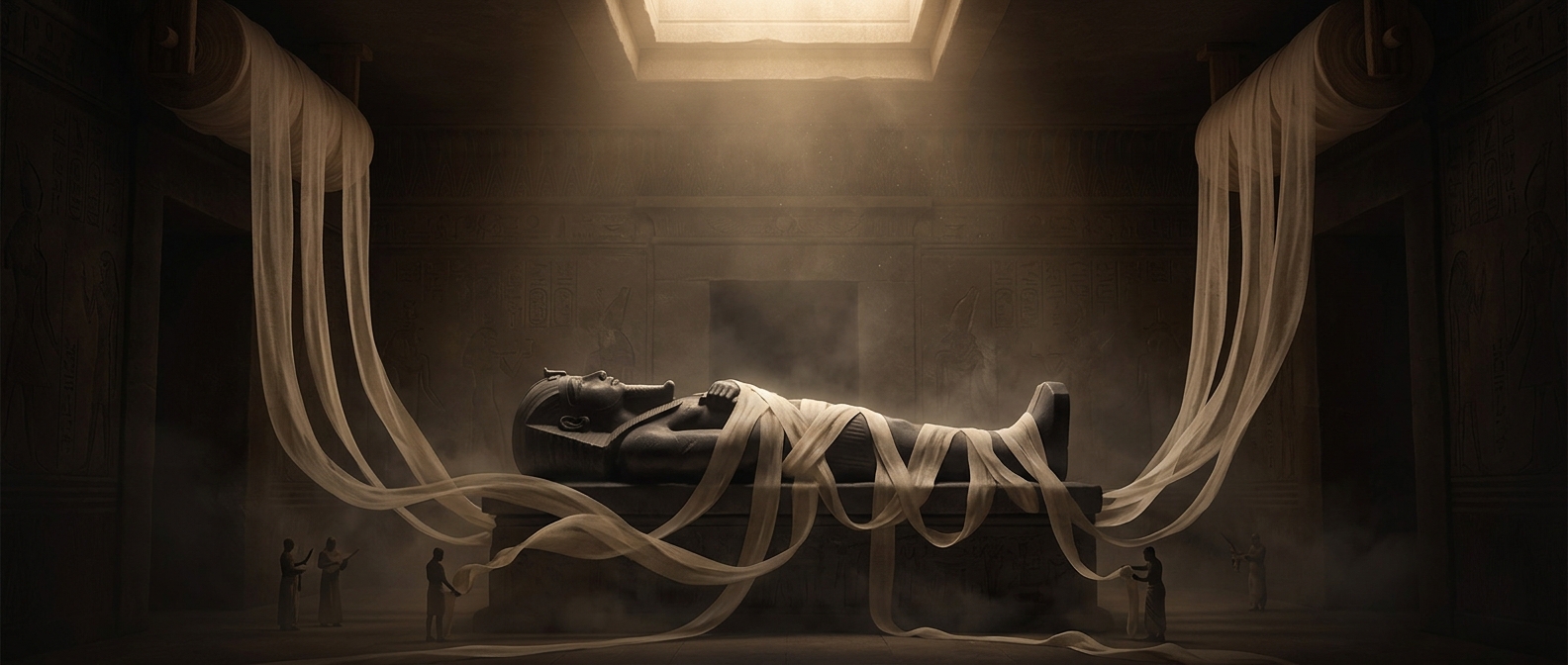
Linen Turned Preservation Into a Carefully Built Form
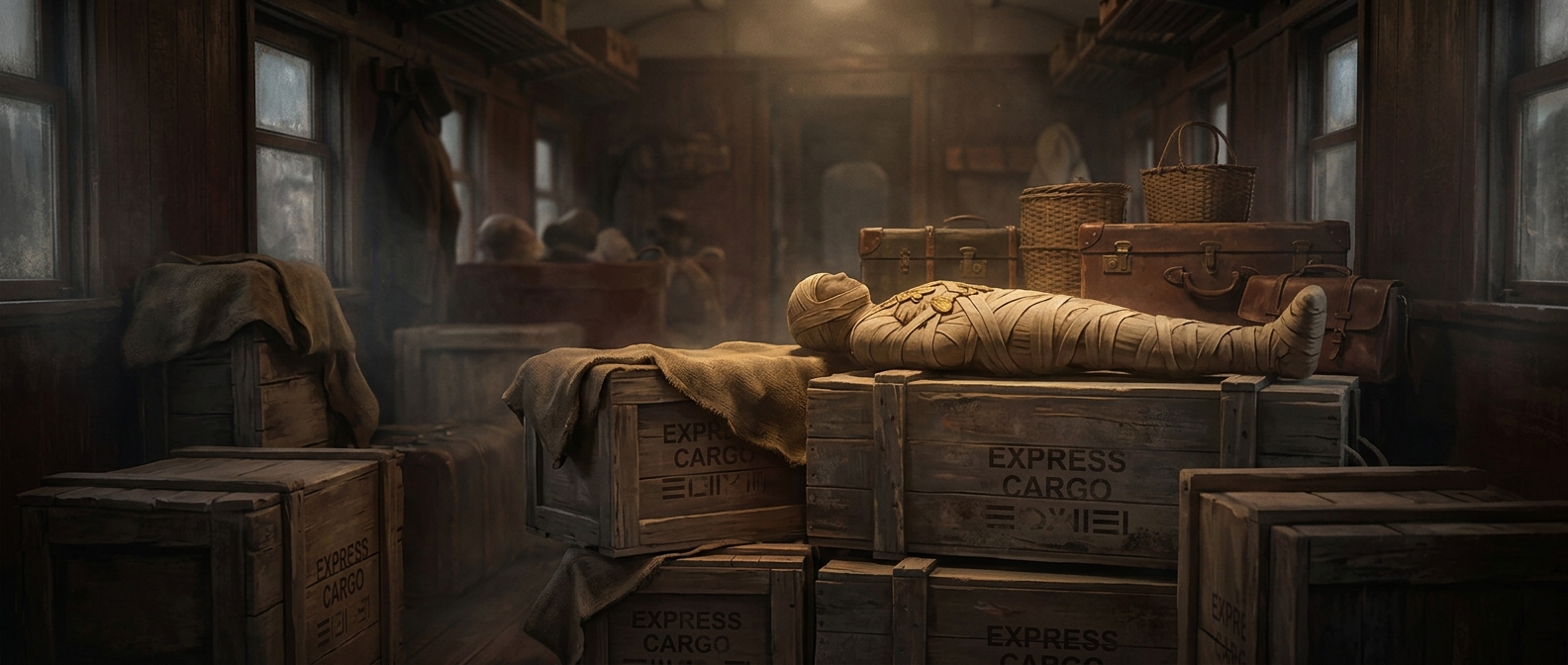
Drying did most of the work of preserving an Egyptian mummy; the linen gave that dried body a protective, shaped exterior. Mummifiers wrapped individual fingers and toes, then the limbs and torso, adding layers until the body was enclosed. This slow sequence helped keep fragile skin and tissues from shifting or breaking apart during handling.
The cloth was more than a dry bandage. Resins and oils applied during burial could make layers adhere, while linen helped contain them. The wrapping also let embalmers restore a more lifelike outline to a body that had lost volume during drying. In effect, they were building a durable outer form around something made brittle by preservation.
A Shroud With Ritual Work to Do
The layers could also carry religious meaning. Mummifiers sometimes placed protective amulets between them, so the wrapping became a way to position objects believed to help the deceased pass safely into the next life. The order and care of the work mattered: each new layer concealed and protected what had been prepared beneath it.
The result was not simply a body covered in cloth, but a body transformed through a sequence of practical and ritual acts. Every strip helped secure the remains, and every layer made the finished mummy more complete. That is why the wrapping could be so extensive: it had to protect a fragile body while giving it the form and safeguards expected for burial.