A mummy became merchandise
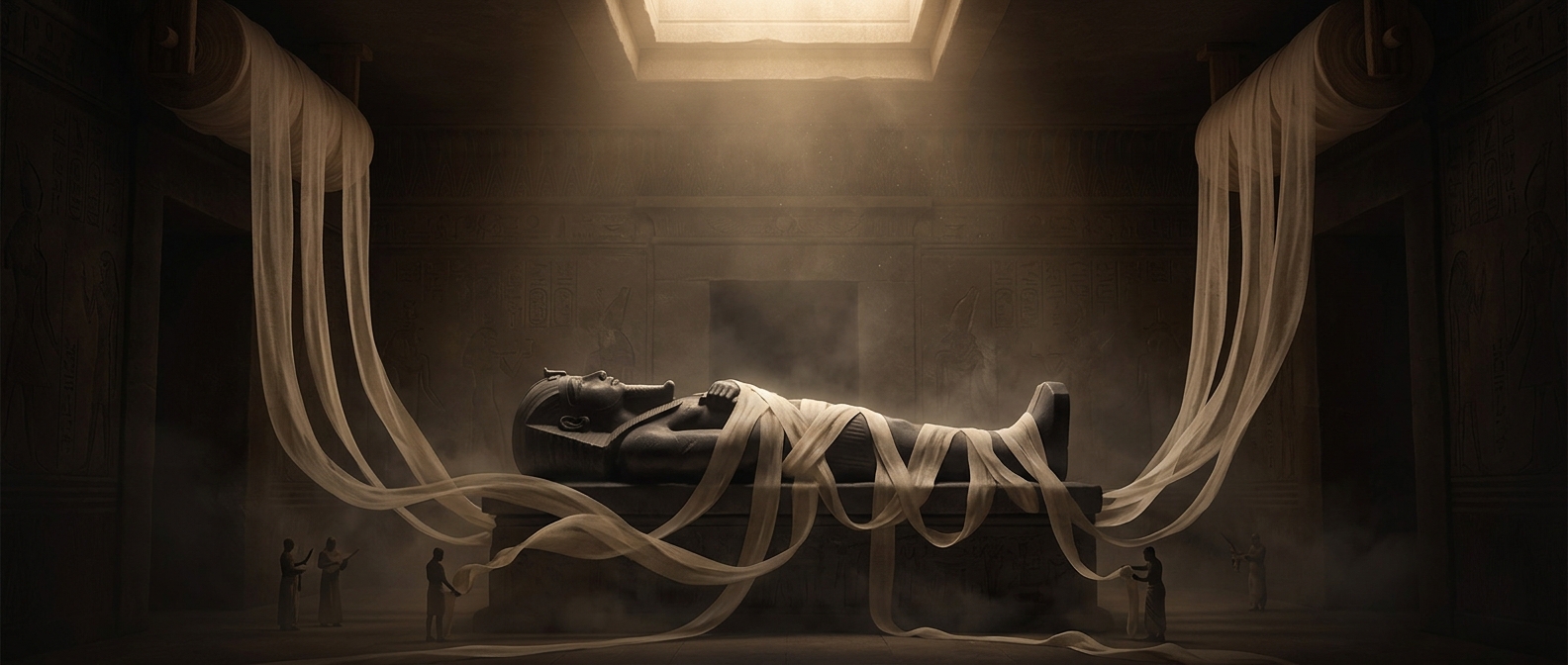
In the 19th century, European and American fascination with ancient Egypt—often called Egyptomania—helped create demand for mummies. They could be bought and sold as objects, not just studied as remains. Once a mummy entered that trade, its journey was shaped by commerce: it had to be packed, moved, and delivered to a buyer or destination.
Railways moved cargo, not curiosities
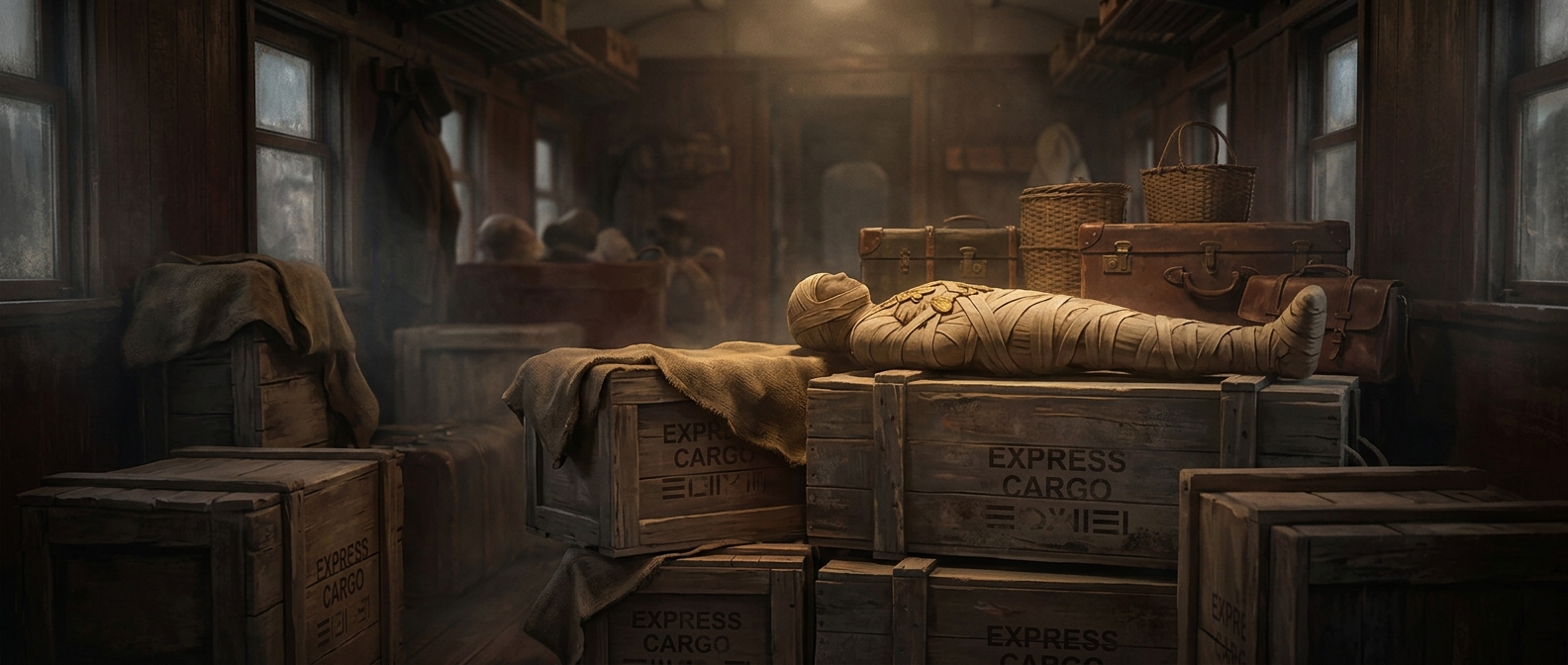
Rail companies organized transport around freight: goods were loaded into cargo cars and carried along the same routes as other shipments. A mummy being shipped as merchandise did not automatically receive a special service simply because it was ancient or unusual. In practical terms, the railway treated the shipment according to its role in the transaction—as cargo to be transported.
That contrast is what makes the image striking. Something now associated with museums and careful preservation could pass through an ordinary freight system, where the railway’s task was to move a consignment from one place to another. Egyptomania made mummies valuable enough to travel; the commercial machinery carrying them made their journey routine.