How an embryonic signal sets testis development in motion
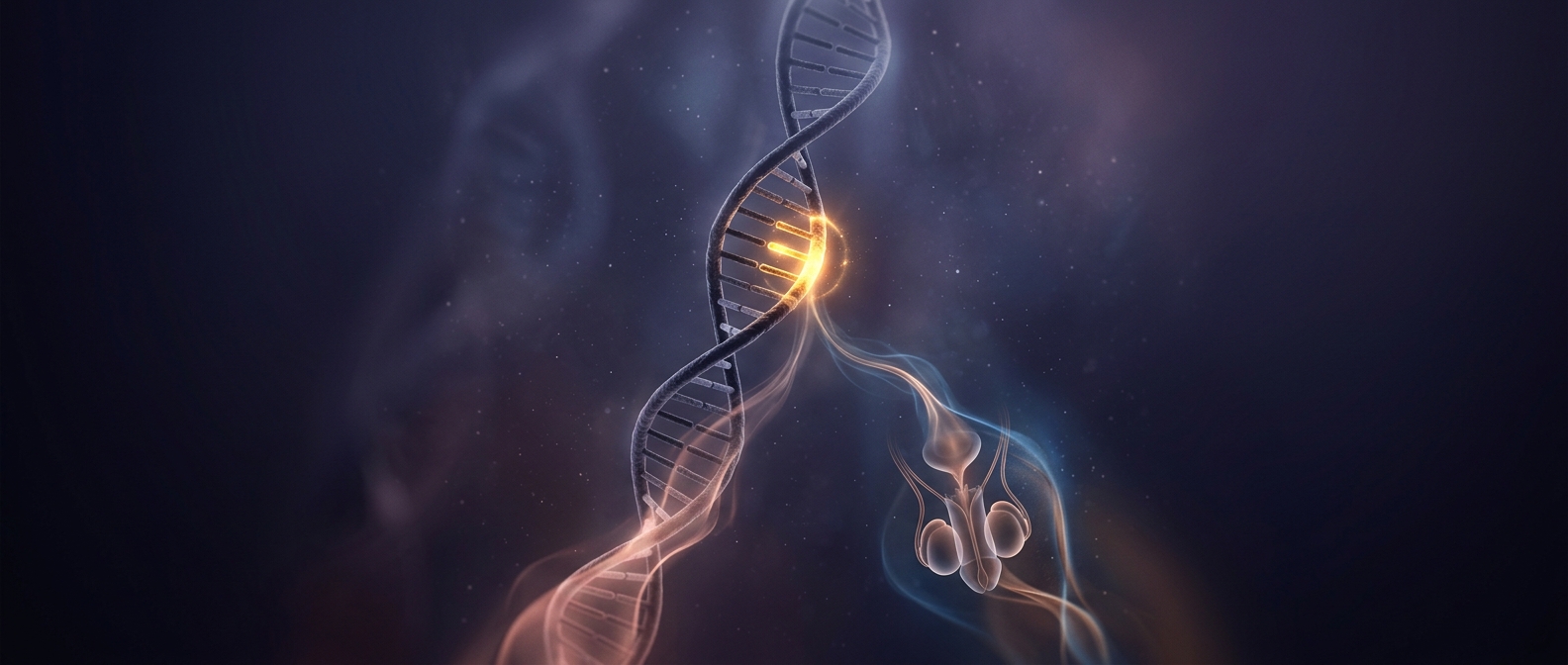
Early in development, an embryo’s gonads have not yet formed as ovaries or testes. In many embryos, the SRY gene—usually carried on the Y chromosome—becomes active in some cells of these developing gonads. It helps switch on other genes, including SOX9, which guide cells toward becoming Sertoli cells, a key support cell type in the testes.
As those cells organize, the gonad develops testicular tissue. This is a branching process: SRY helps launch it, while other genes help sustain and shape it. The timing and activity of those signals matter; SRY does not itself build every organ or determine every trait.
Hormones carry the signal to other tissues
Developing testes produce hormones that affect different parts of the embryo. Anti-Müllerian hormone, made by Sertoli cells, causes structures that could otherwise develop into a uterus and fallopian tubes to regress. Testosterone supports development of other internal reproductive structures. In some tissues, testosterone is converted into dihydrotestosterone, which helps shape external genital anatomy.
These effects depend on more than whether a hormone is present. Tissues must also be able to receive and respond to it, and additional genes guide their development. As a result, reproductive anatomy emerges from interacting signals across multiple tissues—not from a single gene acting alone.
Why the distinction matters
Changes in SRY or in genes and hormone pathways downstream of it can alter how gonads or other sex traits develop. The same initial signal can therefore be followed by different outcomes if later steps differ. SRY is an important early trigger, but the traits that develop depend on the whole developmental pathway.